
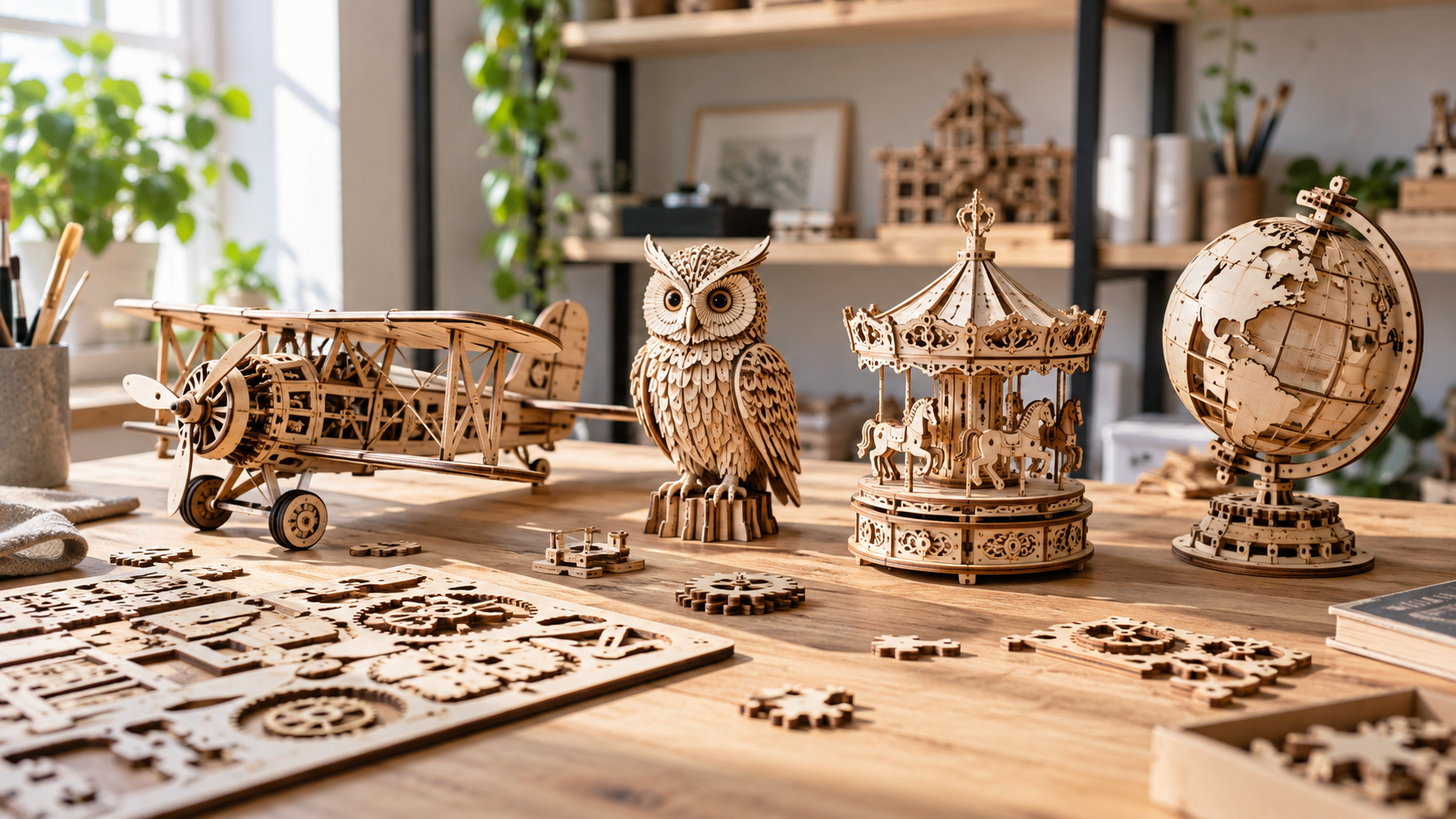
How 3D Wooden Puzzles Improve Focus Creativity and Problem-Solving Skills
3D wooden puzzles offer a hands-on way to combine creativity, problem-solving, and relaxation.
Unlike traditional flat puzzles, these models are designed to be assembled into three-dimensional structures that you can display once completed.
From miniature buildings and vehicles to animals, mechanical models, and decorative pieces, there are designs suited to different interests and skill levels.
If you enjoy crafts, model building, or activities that keep your hands and mind engaged, 3D wooden puzzles may be a rewarding choice.
They can also make thoughtful gifts for children, teens, and adults who enjoy creating something from individual pieces.
What Are 3D Wooden Puzzles?
3D wooden puzzles are construction kits made primarily from thin sheets of wood. Individual pieces are usually pre-cut and designed to fit together without requiring complicated tools.
Most kits include numbered or labeled pieces, assembly instructions, and diagrams that guide you through the building process. Depending on the design, some models may use interlocking joints, gears, wheels, or moving parts.
Unlike ordinary jigsaw puzzles, the finished result is not a flat picture. Instead, you create a standing model that may serve as decoration, a collectible, or even a functional object.
Why 3D Wooden Puzzles Are Popular
One reason 3D wooden puzzles appeal to so many people is that they combine entertainment with creativity. You are not simply completing a puzzle—you are building something piece by piece.
The activity may also provide a break from screens. Instead of scrolling through a phone or watching television, you can focus on a physical project that requires patience and attention.
Many builders also enjoy the satisfaction of seeing a complicated-looking model gradually take shape.
Benefits of Building 3D Wooden Puzzles
Encourages Problem-Solving Skills
Assembling a wooden puzzle requires you to understand how different pieces connect. You may need to follow diagrams carefully, identify patterns, and determine the correct assembly order.
This can encourage logical thinking and problem-solving skills while keeping the activity enjoyable.
Supports Focus and Patience
Some models can take several hours or even multiple sessions to complete. Working through each stage may help strengthen concentration and patience.
Instead of rushing toward the finished product, you can enjoy the building process itself.
Provides a Screen-Free Activity
If you spend much of your day using computers, phones, or tablets, 3D wooden puzzles can provide a welcome screen-free hobby.
They can be especially useful during weekends, evenings, holidays, or quiet time at home.
Creates Decorative Display Pieces
One of the biggest advantages of 3D wooden puzzles is that the finished model can become part of your home décor.
Detailed models of buildings, vehicles, instruments, animals, or machinery may look attractive on shelves, desks, bookcases, or display cabinets.
Offers a Creative Gift Option
3D wooden puzzles can also work well as gifts because they provide both an activity and a finished keepsake.
Popular Types of 3D Wooden Puzzles
Architectural Models
Architectural wooden puzzles allow you to build miniature landmarks, houses, towers, bridges, and other structures.
These models can appeal to people who enjoy architecture, travel, history, or detailed miniature displays.
Mechanical Models
Mechanical 3D wooden puzzles often include gears, wheels, springs, or other moving components.
Some may demonstrate basic mechanical concepts, making them interesting for people who enjoy engineering-style projects.
Vehicles
Cars, trains, motorcycles, ships, and airplanes are common themes for wooden puzzle kits.
Vehicle models can range from simple beginner designs to highly detailed projects with moving wheels and mechanical features.
Animal Designs
Animal-themed puzzles are often suitable for younger builders or anyone who enjoys nature-inspired décor.
Popular models may include dinosaurs, birds, insects, horses, or marine animals.
Decorative and Functional Models
Some 3D wooden puzzles are designed to create objects that serve a purpose after assembly.
Examples may include storage boxes, clocks, music boxes, desk organizers, or decorative lights. Features vary by kit, so checking the product description before buying is important.
How to Choose the Right 3D Wooden Puzzle
Consider the Difficulty Level
Puzzle difficulty can vary significantly. Beginner kits may contain fewer pieces and simpler connections, while advanced models may include hundreds of components.
If you are new to wooden puzzles, starting with a beginner or intermediate model may make the experience more enjoyable.
Check the Recommended Age
Manufacturers often provide age recommendations based on piece size, complexity, and assembly requirements.
Younger children may need adult supervision, especially when models contain small parts.
Look at the Number of Pieces
The piece count can give you a general idea of how involved the project may be.
A smaller kit may be suitable for a quick activity, while larger models can provide a longer building experience.
Choose a Theme You Enjoy
You are more likely to stay motivated if the finished model reflects your interests.
Review the Finished Size
Some models look small in photographs but become surprisingly large once assembled.
Checking the finished dimensions can help you make sure you have enough workspace during construction and enough room to display the completed model.
Tips for Building 3D Wooden Puzzles Successfully
Before starting, organize your workspace and make sure you have adequate lighting. A flat table can help prevent small pieces from getting lost.
Read the instructions before removing too many pieces from the wooden sheets. Keeping pieces organized by section can make the assembly process easier.
When removing parts, use gentle pressure. Thin wooden pieces can sometimes be delicate, so forcing them may cause damage.
It is also helpful to complete each stage carefully before moving to the next one. If a part seems difficult to fit, check its orientation rather than immediately applying more pressure.
Most importantly, avoid rushing. Wooden puzzles are designed to be enjoyed as a gradual building experience.
Are 3D Wooden Puzzles Good for Kids?
3D wooden puzzles can be suitable for children when the kit matches their age and ability level.
Simpler designs may encourage coordination, spatial awareness, patience, and problem-solving. More complicated kits may be better suited to teenagers or children working with an adult.
Parents should check the manufacturer’s age recommendation and supervise younger builders when small parts are involved.
Are 3D Wooden Puzzles Good for Adults?
Adults are a major audience for 3D wooden puzzles because many designs are created specifically for hobbyists and collectors.
Complex mechanical models can provide a satisfying challenge, while decorative models may offer a relaxing weekend project.
They can also appeal to adults looking for hobbies that involve less screen time and more hands-on creativity.
How Long Do 3D Wooden Puzzles Take to Build?
Building time depends on the model’s complexity, number of pieces, and your experience.
A small beginner puzzle might be completed relatively quickly, while a detailed mechanical or architectural model could require several hours or multiple building sessions.
Product descriptions often provide an estimated assembly time, but your actual experience may vary.
How to Care for a Finished Wooden Puzzle
Once your model is complete, display it in a dry location away from excessive moisture.
Use a soft brush or microfiber cloth to remove dust from detailed areas. For models with moving components, handle gears and mechanisms gently to avoid unnecessary wear.
You may also want to keep the original instructions in case you need to repair or reassemble part of the model later.
Making the Most of Your 3D Wooden Puzzle Experience
3D wooden puzzles can turn a simple collection of wooden pieces into an impressive model you can build, enjoy, and display.
With options ranging from beginner-friendly animals and vehicles to detailed mechanical and architectural designs, there is plenty of variety for different ages and interests.
The best puzzle is one that matches your experience level, available time, and personal interests.