
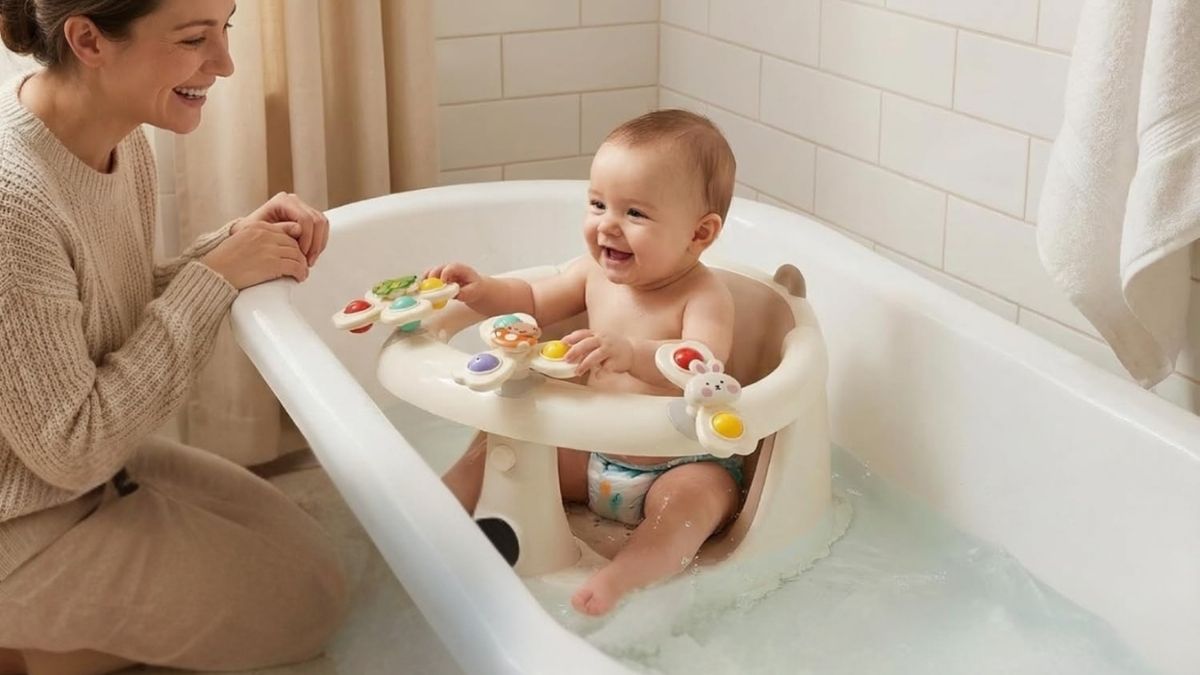
Best Baby Bath Seats With Built-In Thermometers for Safe & Comfortable Bath Time
Bath time changes quickly once your baby reaches 6 months and begins sitting independently. You’re no longer using a tiny newborn tub, but your little one isn’t steady enough to sit safely in a full-sized bathtub alone.
That in-between stage can feel stressful. You want stability, comfort, and most importantly, safety. Baby bath seats with built-in thermometers are designed to help you manage all three at once.
These seats aim to keep your baby upright while giving you real-time water temperature readings. But are they necessary? And how do you choose the right one? Let’s walk through what truly matters so you can make a confident, informed decision.
Why Built-In Thermometers Improve Bath Safety
Water temperature plays a bigger role in bath safety than many parents realize. Babies have delicate, thinner skin that burns more quickly than adult skin. Even small temperature increases can cause discomfort or injury.
With a built-in thermometer, you can:
- Monitor water temperature in real time
- Avoid relying solely on the elbow test
- Keep water within the recommended 98–100°F (37–38°C) range
- Notice when bath water cools during longer sessions
Many models feature color-coded indicators, while others use small digital displays. Either way, the benefit is consistency. Instead of guessing, you get a visual confirmation.
However, it’s important to recognize limitations. Built-in thermometers may have slight variances in accuracy. You should still test water manually occasionally and never rely on the device alone.
Essential Features to Look For
Not all bath seats offer the same level of stability or comfort. As your baby grows stronger and more mobile, quality design becomes critical.
Strong Suction Cups
A secure suction system is the foundation of safety. Look for three to four wide suction cups that grip firmly to smooth tub surfaces.
Before each bath:
- Clean and rinse the tub surface thoroughly
- Slightly moisten suction cups
- Press straight down firmly (avoid sliding)
- Test the seat by gently pushing from different angles
If your bathtub has textured surfaces, suction performance may decrease.
Ergonomic Support
At 6 months and up, your baby is still developing core balance. Choose a seat that includes:
- A high backrest
- Supportive side arms
- A non-slip interior
- Adequate legroom for movement
Comfort matters. A secure and comfortable baby is less likely to twist or attempt to climb out.
Safe Water Level Guidance
Even with a bath seat, water should remain shallow—typically 2 to 3 inches, well below your baby’s navel. Remember, bath seats are positioning aids, not drowning-prevention devices.
Addressing Common Concerns
Before you purchase any baby bath seat, it’s important to pause and consider the real safety questions many parents quietly ask. Marketing claims can sound reassuring, but understanding the risks—and how to manage them—helps you make a responsible, informed choice.
“Are bath seats actually safe?”
The American Academy of Pediatrics has cautioned that bath seats can tip or detach. That’s why supervision is non-negotiable. You should always:
- Keep one hand on your baby
- Never leave the bathroom—even for a second
- Avoid placing the seat near faucets or hard fixtures
No bath product replaces active supervision.
“Will my baby outgrow it too fast?”
Most bath seats are designed for babies between 6 and 24 months, usually supporting 15–30 pounds. However, once your baby begins trying to pull up or climb out, it’s time to discontinue use—even if they’re within the weight limit.
“Is a thermometer really necessary?”
Some parents prefer manual temperature checks and feel confident without digital assistance. Others appreciate the consistency and convenience, especially if multiple caregivers handle bath duty. The thermometer isn’t mandatory—but it can add peace of mind.
Developmental Benefits of Proper Bath Seating
When used responsibly, a bath seat can also support your baby’s development.
- Encourages upright posture practice
- Promotes water confidence in a controlled environment
- Supports sensory exploration through splashing
- Enhances fine motor skills during toy play
With your hands more free (while still maintaining contact), you can focus on singing, talking, and bonding rather than physically supporting your baby the entire time.
Cleaning & Maintenance Tips
Bath seats are exposed to moisture daily, so proper cleaning prevents mold and material breakdown.
After each use:
- Rinse off soap residue
- Wipe down all surfaces
- Allow the seat to air dry fully
Weekly, inspect seams and suction cups for hidden moisture or wear. If suction cups stiffen, crack, or lose grip strength, replace the seat. Most models maintain effectiveness for about 12–18 months of regular use.
Is It Worth the Investment
If you’re looking for:
- Extra stability during bath time
- Reduced temperature guesswork
- Greater comfort for your baby
- More confidence as a caregiver
Then a bath seat with a built-in thermometer can be a practical upgrade.
If you’re comfortable supporting your baby manually and checking water temperature traditionally, you may not need one. The key is choosing what aligns with your routine and comfort level.
Making Bath Time Safer and Simpler
As your baby grows, bath time evolves from fragile newborn care to active splashing sessions. A thoughtfully designed bath seat with a built-in thermometer can simplify this transition, offering better positioning and consistent temperature awareness.
Still, your attention is the most important safety feature. Stay within arm’s reach at all times and treat the seat as a support tool—not a substitute for supervision.
If you’re exploring baby gear or searching for thoughtful gifts for new parents, browse Amazon New Releases to discover the latest bath innovations and trending safety essentials. You may find updated designs that blend comfort, security, and smart features in one practical solution.
With the right setup and preparation, you can turn bath time into what it should be—calm, safe, and filled with giggles.