
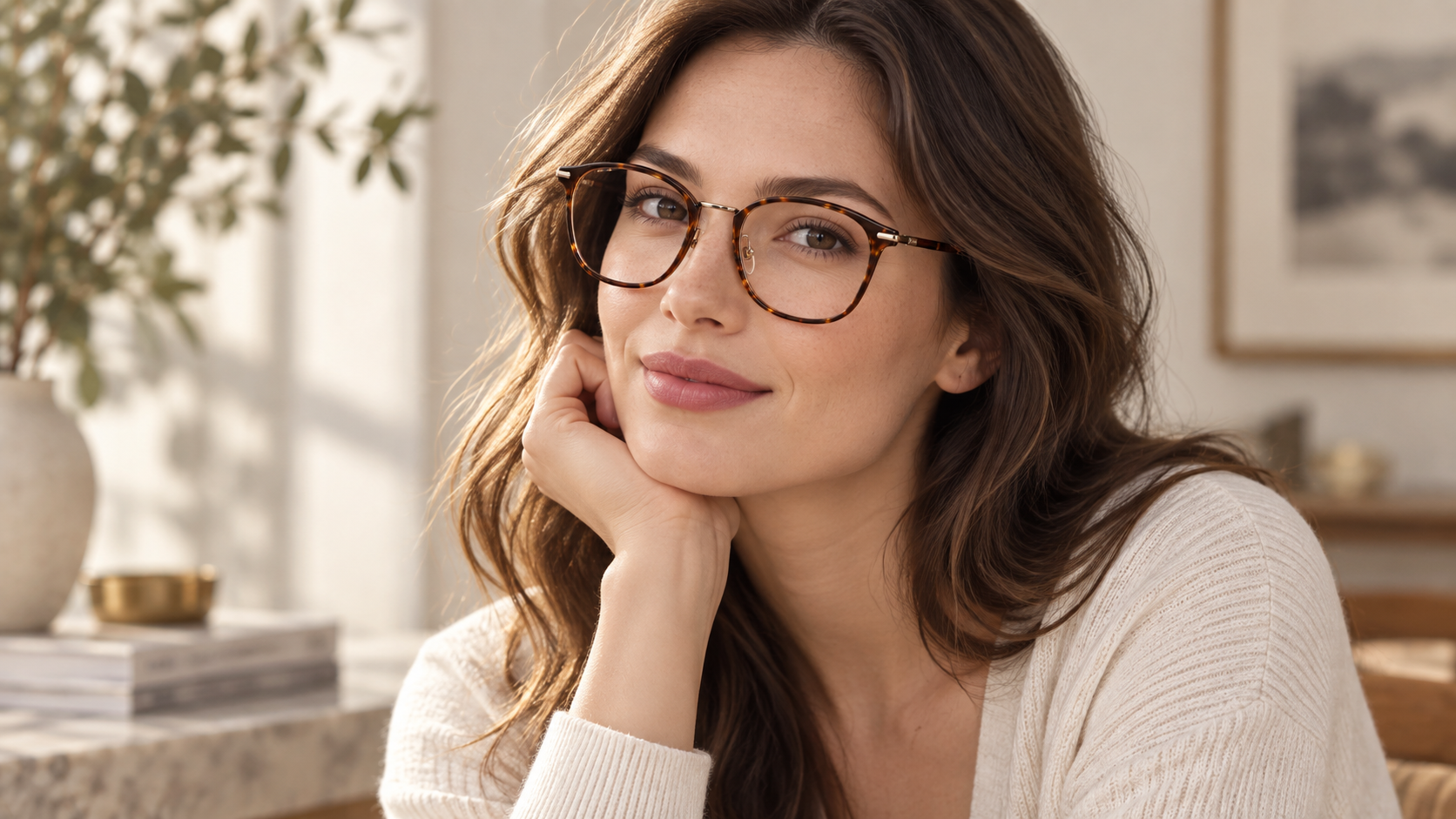
Why Eyeglass Frames Matter for Both Vision Comfort and Personal Style
Frames are more than a way to hold prescription lenses—they can complement your facial features, reflect your personal style, and help you feel comfortable throughout the day.
With so many shapes, colors, materials, and sizes available, finding the right pair may seem overwhelming.
Understanding how frame design, face shape, measurements, and materials work together can make the selection process much easier.
This guide explains what to consider when choosing eyeglass frames so you can find an option that suits both your practical needs and personal preferences.
What Are Eyeglass Frames and Why Does the Right Fit Matter?
Eyeglass frames are the structures that hold prescription or non-prescription lenses in place. They typically include the lens rims, bridge, nose pads or nose support, hinges, and temple arms.
A properly fitting frame should feel secure without creating uncomfortable pressure. Frames that are too tight may press against your temples or behind your ears, while oversized frames may slide down your nose.
The right fit can also help keep your lenses positioned correctly in front of your eyes. This is especially important when wearing prescription lenses designed for specific vision needs.
How to Choose Eyeglass Frames for Your Face Shape
Face shape can be a useful starting point when comparing different frame styles. However, these guidelines are flexible. The best frame is ultimately one that feels comfortable and matches the look you prefer.
Round Face
Round faces generally feature softer curves and similar proportions in width and length.
Angular frames may provide visual contrast. Consider:
- rectangular frames
- square frames
- geometric designs
- browline styles
These shapes may create a more structured appearance.
Square Face
Square faces often feature a defined jawline and relatively similar forehead and jaw widths.
Curved frame styles may help soften angular features. Popular choices include:
- round frames
- oval frames
- thin metal frames
- slightly curved designs
Oval Face
Oval faces tend to have balanced proportions with a slightly longer shape.
Many frame designs work well with this face shape, including:
- rectangular frames
- square frames
- round frames
- cat-eye frames
- geometric frames
Choose a frame width that remains proportional to your face.
Heart-Shaped Face
Heart-shaped faces usually have a wider forehead and narrower chin.
Frames that balance the upper and lower portions of the face may work well, such as:
- oval frames
- round frames
- rimless frames
- lightly detailed designs
Diamond Face
Diamond-shaped faces often feature prominent cheekbones with narrower forehead and jaw areas.
Styles that draw attention toward the eyes may include:
- cat-eye frames
- oval frames
- browline frames
- rimless styles
Popular Eyeglass Frame Shapes
Understanding common frame shapes can make it easier to narrow your options.
Rectangle Frames
Rectangular frames provide a clean and structured appearance. They work well with casual, professional, and minimalist styles.
Round Frames
Round eyeglass frames often create a softer or vintage-inspired appearance. They are available in both metal and acetate designs.
Square Frames
Square frames typically have stronger lines and wider lenses. They can create a bold and modern look.
Cat-Eye Frames
Cat-eye frames feature slightly raised outer corners. Depending on the design, they may appear elegant, retro, playful, or contemporary.
Aviator Frames
Originally associated with sunglasses, aviator-style eyeglass frames are also available for prescription lenses. They usually feature thin metal construction and large lenses.
Geometric Frames
Hexagonal, octagonal, and other geometric styles provide an alternative to traditional round or rectangular designs.
Common Materials Used for Eyeglass Frames
Frame material can affect weight, flexibility, durability, and appearance.
Acetate
Acetate frames are popular because they can be produced in numerous colors, patterns, and finishes. They often have a thicker appearance than traditional metal frames.
Benefits may include:
- broad color selection
- distinctive patterns
- sturdy construction
- many shape options
Metal
Metal eyeglass frames often provide a lightweight and streamlined appearance.
Common styles include:
- thin wire frames
- round frames
- aviator designs
- semi-rimless frames
Different metal alloys may vary in weight, flexibility, and resistance to corrosion.
Titanium
Titanium frames are known for being lightweight and durable. They may appeal to people who prefer thin frames without sacrificing strength.
Stainless Steel
Stainless steel is another common option. It can provide a balance between durability, weight, and affordability.
Combination Frames
Combination frames use more than one material, such as an acetate front with metal temple arms. These designs can combine contrasting textures and styles.
How Eyeglass Frame Measurements Work
Most eyeglass frames include three measurements, generally listed in millimeters.
For example:
52-18-140
These numbers commonly represent:
- 52 mm: lens width
- 18 mm: bridge width
- 140 mm: temple length
If you already own glasses that fit comfortably, checking their measurements can give you a useful reference when shopping for another pair.
Choosing the Right Frame Width
Frame width plays an important role in both appearance and comfort.
A properly sized frame generally should:
- sit comfortably around your temples
- avoid extending excessively beyond your face
- remain secure without squeezing
- stay relatively stable when you move
Frames that are too narrow may create pressure around the sides of your head. Frames that are too wide may constantly slide forward.
Why Bridge Fit Is Important
The bridge is the section of the frame that rests across your nose.
A good bridge fit helps prevent glasses from sliding while distributing weight comfortably.
Some frames use molded nose bridges, while others include adjustable nose pads. Adjustable nose pads may allow the glasses to be positioned more precisely.
Consider Your Prescription When Choosing Frames
Your prescription may influence which frame styles are most suitable.
Certain lens prescriptions may work better with specific frame sizes or shapes. For example, smaller frames can sometimes reduce lens thickness for stronger prescriptions.
Your optician or eye care professional can help determine whether a particular frame is compatible with your prescription and chosen lens type.
Full-Rim, Semi-Rimless, or Rimless Frames
Another important decision involves how much of the lens is surrounded by the frame.
Full-Rim Frames
Full-rim frames completely surround the lenses.
They are available in many materials, colors, and designs and can accommodate a wide range of styles.
Semi-Rimless Frames
Semi-rimless glasses usually have a frame along the upper portion of the lens while the lower edge remains more exposed.
They often create a lightweight, professional appearance.
Rimless Frames
Rimless glasses attach the temples and bridge directly to the lenses.
These frames have a subtle appearance and may appeal to people who prefer minimalist eyewear.
Choosing Eyeglass Frame Colors
Color can dramatically change how a frame looks on your face.
Classic colors include:
- black
- brown
- gray
- silver
- gold
- tortoiseshell
More expressive choices may include:
- blue
- green
- red
- pink
- transparent acetate
- multicolor patterns
Neutral colors can be easier to coordinate with different outfits, while brighter colors can make eyewear a stronger fashion feature.
Eyeglass Frames for Everyday Wear
If you wear glasses for most of the day, prioritize comfort alongside appearance.
Consider factors such as:
- overall frame weight
- temple pressure
- nose comfort
- durability
- hinge quality
- compatibility with your lenses
A fashionable pair may look appealing, but it should also remain comfortable during long periods of wear.
Eyeglass Frames for Work and Professional Settings
Professional eyewear does not have to be boring.
Simple rectangular, round, oval, or thin metal frames can provide a polished appearance. Neutral colors such as black, gray, brown, silver, and transparent tones are especially versatile.
If your workplace allows greater personal expression, subtle patterns or colored frames can add personality without becoming distracting.
Eyeglass Frames as a Fashion Accessory
Eyewear has increasingly become an important part of personal style.
Some people own several pairs of glasses and coordinate them with different outfits or occasions.
A minimalist metal frame may work well for professional settings, while a colorful acetate design can create a more expressive casual look.
How to Care for Eyeglass Frames
Proper maintenance can help your glasses remain comfortable and functional.
Try these simple habits:
- store glasses in a protective case
- use both hands when removing them
- avoid placing glasses lens-side down
- clean lenses with appropriate materials
- keep frames away from excessive heat
- check screws and hinges periodically
If your frames become loose or uneven, an optician may be able to adjust them.
Signs Your Eyeglass Frames May Need Adjustment
Frames sometimes require adjustment after regular use.
Common signs include:
- glasses frequently sliding down
- uneven frame positioning
- pressure behind your ears
- uncomfortable nose pressure
- loose temple arms
- crooked lenses
Professional adjustment may help restore a more secure and comfortable fit.
Should You Buy More Than One Pair of Eyeglass Frames?
Having a second pair can be useful for convenience and variety.
For example, you might choose:
- a neutral everyday pair
- a bold fashion-focused pair
- lightweight frames for work
- backup prescription glasses
- specialized frames for certain activities
A spare pair can also be helpful if your primary glasses are damaged or temporarily unavailable.
What to Check Before Choosing Eyeglass Frames
Before making your final decision, consider:
- Does the frame feel comfortable?
- Does it fit your face width?
- Is the bridge secure?
- Are the temple arms comfortable?
- Does the style suit your preferences?
- Is the frame compatible with your prescription?
- Is the material appropriate for everyday use?
- Does the color work with your wardrobe?
Taking time to compare these details can help you choose eyewear that feels as good as it looks.
Choosing Eyeglass Frames That Balance Comfort and Style
Face shape and fashion guidelines can provide helpful direction, but comfort and personal preference should remain important factors.
Pay attention to frame width, bridge fit, temple length, material, lens compatibility, and overall weight when comparing options.
With the right combination of these features, your eyeglass frames can become both a dependable everyday essential and an expression of your personal style.