
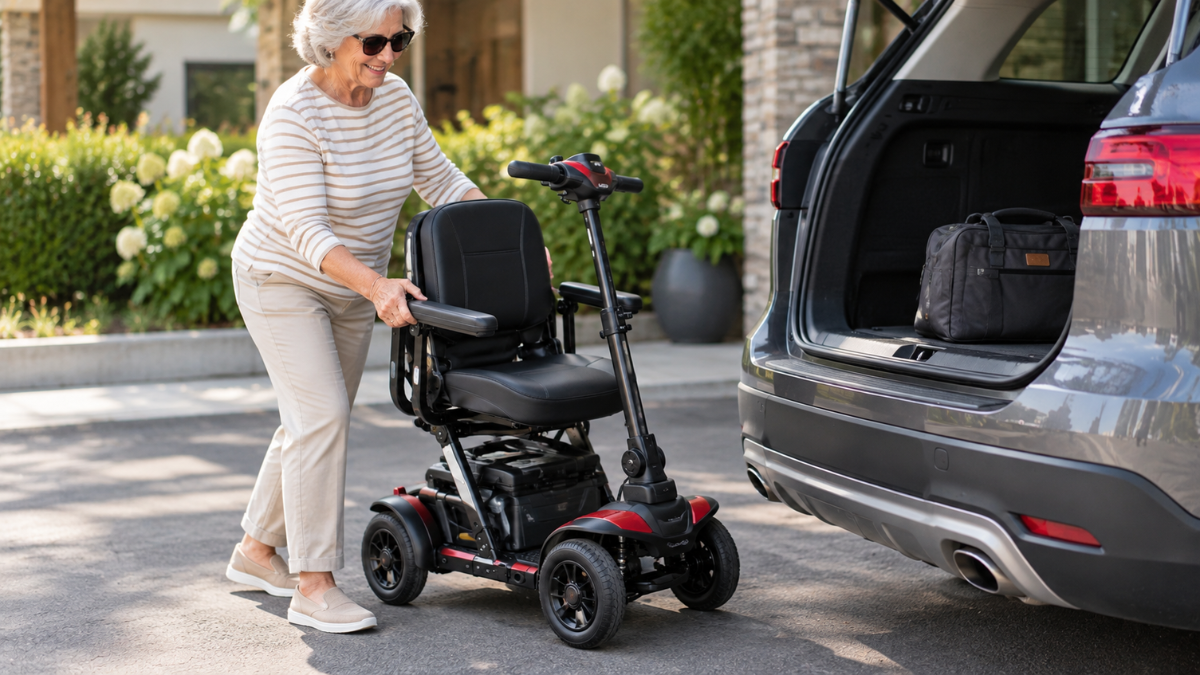
Why Foldable Mobility Scooters Support Safer and Easier Independent Daily Travel
Foldable mobility scooters can help you stay active, complete daily errands, and travel with greater independence. Unlike full-size models, these scooters collapse into a compact shape for easier transport and storage.
You can place one inside a car trunk, keep it in a small apartment, or take it on selected public transport services.
Choosing the right scooter requires careful attention to weight, battery range, folding method, comfort, and safety features. This guide explains how foldable models work, their key benefits, and the features you should check before buying one.
What Are Foldable Mobility Scooters?
Foldable mobility scooters are compact electric vehicles designed for people who have difficulty walking for extended periods. Their frames fold manually or automatically, reducing the space needed for transport and storage.
Most models include a seat, handlebars or a tiller, rechargeable battery, foot platform, and three or four wheels. Some scooters fold as one piece, while others let you remove the seat, battery, or basket before lifting.
These scooters generally suit shopping trips, paved pathways, airports, indoor spaces, and short outdoor journeys. They may not perform as well on steep hills, loose gravel, wet grass, or rough ground.
Main Benefits of a Foldable Mobility Scooter
Easy Transportation
A folding design makes it easier to carry the scooter in a car. You may not need a vehicle lift or permanent storage rack. This can make family visits, medical appointments, and shopping trips easier to manage.
Check the scooter’s total weight before buying. A compact frame can still be difficult to lift, especially when the battery remains attached.
Compact Storage
Foldable scooters are useful when storage space is limited. Depending on the model, you may keep the scooter in a cupboard, hallway, garage, or apartment corner.
Measure your available storage area and compare it with the scooter’s folded dimensions. Leave enough space for safe charging and easy access.
Greater Daily Independence
Limited mobility can make routine tasks tiring. A scooter may help you travel through shopping centers, parks, transport stations, and community spaces while reducing physical strain.
Your scooter should match your daily environment. A lightweight travel model may suit indoor use, while a sturdier option may provide better stability outdoors.
Convenient Battery Charging
Many portable scooters use removable lithium-ion batteries. You can take the battery indoors and charge it separately from the scooter.
A removable battery can be helpful when your storage area does not have a nearby power outlet. Always use the charger supplied or approved by the manufacturer.
Manual Versus Automatic Folding Scooters
Manual scooters require you to fold the frame by hand. They are often lighter and have fewer electronic parts. Some models fold through a lever, latch, or hinged frame.
Automatic scooters use a button, remote control, or powered mechanism. This design may suit you if bending or handling the frame is difficult. However, automatic folding systems can add weight and may require extra maintenance.
Your physical ability, transport needs, and budget can help determine which folding system suits you.
Three-Wheel and Four-Wheel Designs
Three-wheel scooters generally have a smaller turning radius. This can make them easier to use in narrow hallways, shops, lifts, and crowded indoor areas.
Four-wheel scooters usually provide added stability, especially across uneven paved surfaces. Their wider turning circle may make tight indoor movements slightly harder.
If you plan to use your scooter mainly indoors, a three-wheel model may be practical. For regular outdoor use, a four-wheel design may provide added confidence.
Features to Check Before Buying
Scooter Weight
Check the scooter’s total weight and the weight of its heaviest removable part. Confirm that you or the person assisting you can lift it safely.
Do not judge portability from appearance alone. Batteries, motors, and reinforced frames can make small scooters heavier than expected.
Weight Capacity
Every scooter has a maximum user weight. This limit may include your body weight, clothing, shopping bags, and personal items.
Choose a model with a capacity comfortably above your expected total load. Exceeding the stated limit may affect handling, braking, battery performance, and frame durability.
Battery Range
Manufacturers usually provide an estimated travel range for each charge. Actual performance can change based on user weight, ground conditions, temperature, speed, slopes, and battery age.
Choose a range that covers your normal trips with reserve power left. Avoid planning journeys that rely on the battery’s full advertised capacity.
Folded Dimensions
Measure your car trunk, doorway, lift, or storage space before purchasing. Compare these measurements with the folded length, width, and height of the scooter.
You should also check if the scooter can stand upright when folded. Upright storage can save floor space, though not every model supports this position.
Seat Comfort
A travel scooter often uses a smaller seat to reduce size and weight. Check the seat width, padding, back support, and armrest design.
An adjustable seat or tiller can improve your posture. If you plan to sit for extended periods, comfort should carry significant weight in your decision.
Ground Clearance
Ground clearance refers to the distance between the lowest part of the scooter and the ground. Low-clearance models work best on smooth indoor flooring and well-maintained pavements.
Higher clearance can help with small bumps and uneven surfaces. It does not automatically make a scooter suitable for off-road use.
Tires
Solid tires resist punctures and require little maintenance. Pneumatic tires can provide a softer ride, though they need regular pressure checks and may develop punctures.
Portable scooters often use smaller solid wheels to reduce weight. Test the ride if comfort on outdoor paths matters to you.
Braking and Lighting
Look for responsive electromagnetic brakes, reflectors, and clear controls. Lights can improve visibility during early morning or evening travel.
Some lightweight models have limited lighting. Battery-powered personal lights or reflective accessories may improve visibility if approved for use with your scooter.
Safety Tips for Daily Use
Read the operating manual before taking your first trip. Practice starting, stopping, reversing, and turning in a quiet open area.
Keep both feet on the platform while moving. Slow down before corners, slopes, ramps, and crowded areas. Avoid sharp turns at high speed, as compact scooters can become unstable.
Check the following items regularly:
- Battery charge and connection
- Tire condition
- Brake response
- Folding locks and frame joints
- Seat attachment
- Horn, lights, and reflectors
- Loose cables or damaged controls
Do not hang heavy bags from the handlebars. This can affect steering and balance. Use the fitted basket or an approved storage accessory.
Can You Take a Folding Scooter on a Plane?
Many airlines allow mobility scooters, though battery and handling policies vary. Lithium-ion batteries usually face capacity, removal, and packaging requirements.
Contact the airline before booking or well before departure. Provide the scooter model, total dimensions, weight, battery type, and battery rating. Ask if the battery must be removed and carried inside the cabin.
Airport approval does not mean every scooter will fit every aircraft cargo area. Written confirmation can help prevent delays on your travel date.
How to Maintain a Foldable Mobility Scooter
Regular care can support safe operation and extend the scooter’s working life. Keep the scooter dry, clean dirt from the wheels, and inspect the folding mechanism for debris.
Charge the battery according to the manufacturer’s instructions. Avoid leaving a depleted battery unused for long periods. Store the scooter and battery in a dry area away from extreme heat or cold.
Schedule professional servicing if you notice unusual noises, weak braking, reduced battery range, steering problems, or difficulty locking the frame.
Who Can Benefit From a Folding Mobility Scooter?
A folding scooter may suit you if you can sit upright, control the steering system, transfer safely onto the seat, and understand the controls. It can be helpful if walking long distances causes fatigue, pain, breathlessness, or balance concerns.
A healthcare professional or mobility specialist can help assess your posture, coordination, strength, and daily requirements. A test drive can reveal comfort or control issues that may not be clear from product specifications.
Common Buying Mistakes to Avoid
One common mistake is choosing a scooter based only on its folded size. Weight, stability, comfort, and range are equally important.
Another mistake is relying fully on the advertised battery distance. Real operating conditions can reduce the distance available per charge.
Buying without a test drive may also lead to poor seat comfort or awkward controls. When possible, test the scooter on surfaces similar to those you regularly use.
Finally, check the warranty, replacement battery cost, spare-part availability, and local repair support. A low initial price may lead to higher expenses if parts are difficult to source.
Making Daily Travel Easier With a Foldable Mobility Scooter
Foldable mobility scooters can provide convenient transportation for errands, appointments, holidays, and everyday activities. The best model should fit your body, planned routes, vehicle, storage area, and lifting ability.
Compare total weight, battery range, weight capacity, wheel design, seat comfort, and folded measurements before making a decision. Test the scooter when possible and confirm travel policies before taking it on public transport or an aircraft.