
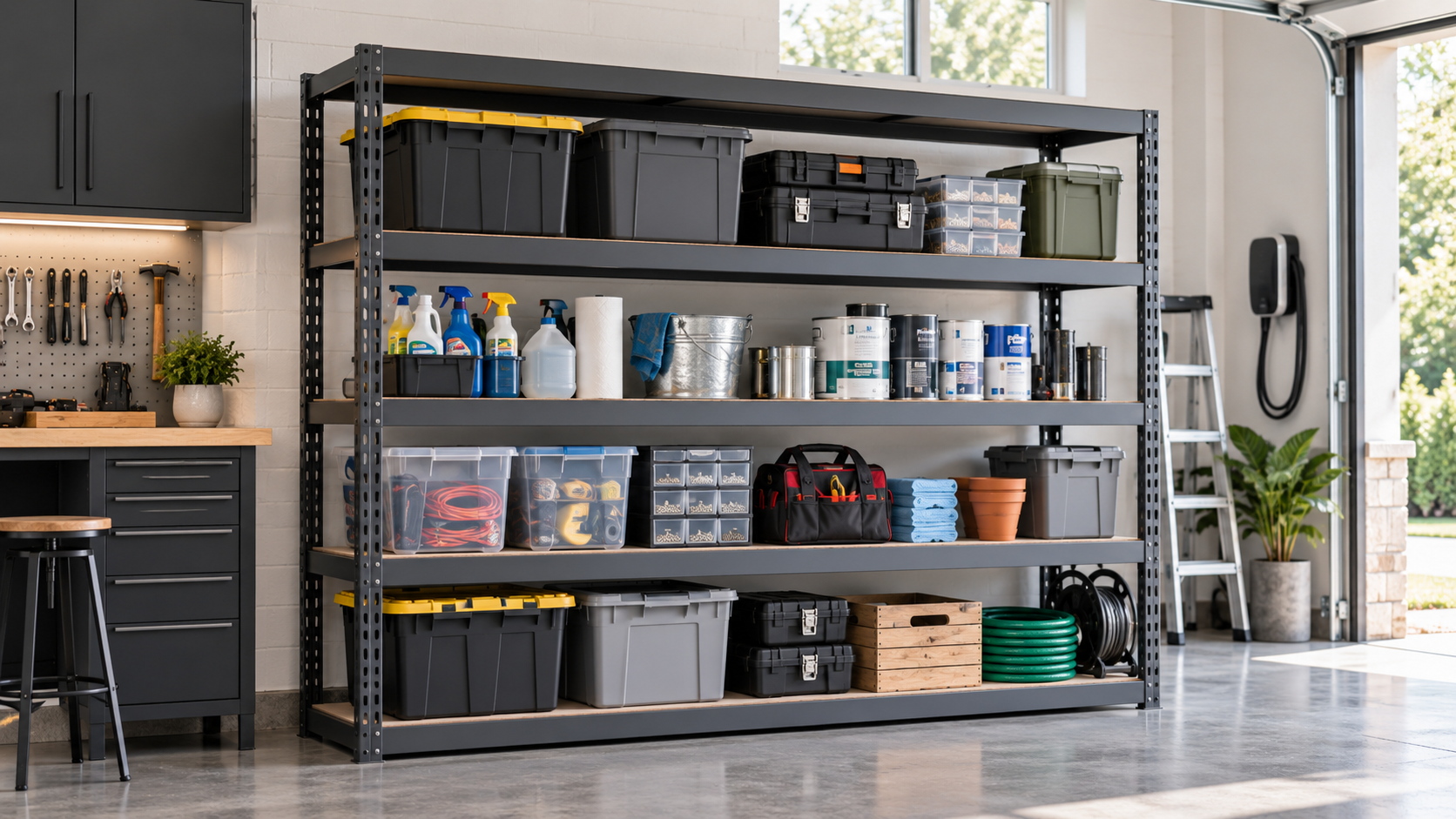
Why Garage Shelving Is Essential for Creating a Cleaner Organized Space
A cluttered garage can quickly become difficult to use, especially when tools, storage bins, sports equipment, and household supplies start piling up.
The right shelving setup can help you reduce floor clutter while making it easier to find what you need.
From freestanding metal racks to wall-mounted shelves, there are several options available depending on your garage size, storage needs, and budget.
What Is Garage Shelving and Why Is It Useful?
Garage shelving refers to storage shelves designed to hold tools, containers, equipment, automotive supplies, seasonal decorations, and other household items commonly kept in a garage.
Unlike stacking boxes directly on the floor, shelving helps organize items at different heights. This can make your garage easier to navigate while giving you a clearer view of what you already own.
Garage shelving may also help you:
- Free up valuable floor space
- Organize tools and supplies by category
- Keep storage containers easier to reach
- Reduce clutter around vehicles
- Create designated areas for different activities
- Make better use of unused wall space
Types of Garage Shelving to Consider
Different garages require different storage solutions. Understanding the main shelving styles can help you choose an option that fits your space.
Freestanding Garage Shelving
Freestanding shelving units can be placed almost anywhere without being attached to a wall. They are commonly available in metal, plastic, wood, or composite materials.
These shelves may work well if you want flexibility because they can usually be repositioned when your storage needs change.
Wall-Mounted Garage Shelving
Wall-mounted shelves are attached directly to garage walls, helping keep the floor underneath open.
This style may be useful in smaller garages where floor space is limited. You can install shelves above workbenches, storage cabinets, or other equipment.
Heavy-Duty Metal Shelving
Heavy-duty shelving is designed for storing larger or heavier belongings.
Metal shelving may be suitable for power tools, automotive equipment, bulk household supplies, paint containers, or large storage bins. Always check the manufacturer’s weight capacity before loading individual shelves.
Adjustable Shelving
Adjustable garage shelving allows you to change the distance between shelves.
Corner Shelving
Corners are often overlooked when organizing a garage. Corner shelving can help turn otherwise unused areas into practical storage spaces.
These shelves are particularly useful when you want to maximize storage without adding large shelving units across an entire wall.
How to Choose the Right Garage Shelving
Choosing garage shelving involves more than finding shelves that fit inside the room. Consider what you plan to store and how frequently you need access to those items.
Measure Your Available Space
Start by measuring the width, height, and depth of the area where you want to install shelving.
Remember to account for:
- Garage doors
- Windows
- Electrical outlets
- Vehicles
- Workbenches
- Water heaters or utility equipment
Accurate measurements can prevent shelves from blocking important areas.
Consider Weight Capacity
Think about the heaviest items you plan to store.
Lightweight plastic shelves may be suitable for household supplies or smaller containers, while heavy-duty steel shelving may be more appropriate for tools and equipment.
Avoid exceeding the recommended load limit for each shelf.
Choose the Right Shelf Depth
Shelf depth affects both storage capacity and accessibility.
Deeper shelves provide more space for large bins but may make smaller objects harder to reach. Shallower shelves can work well for tools, cleaning products, or smaller containers.
Think About Adjustability
Storage needs often change over time.
Adjustable shelves give you more flexibility if you later purchase larger storage containers or reorganize your garage.
Best Items to Store on Garage Shelving
Garage shelving can hold many household items, but grouping similar belongings together can make the system easier to maintain.
Common categories include:
Tools and Hardware
Store hand tools, drills, screws, nails, electrical supplies, and other hardware together.
Small containers or labeled bins can help keep loose parts organized.
Automotive Supplies
Motor oil, cleaning supplies, jumper cables, tire accessories, and car-care products can be placed in a dedicated shelving area.
Keep chemicals stored according to their product safety instructions.
Seasonal Decorations
Holiday decorations may only be used once a year, making higher shelves a convenient storage location.
Clear storage bins can make it easier to identify decorations without opening every container.
Gardening Equipment
Smaller gardening tools, gloves, fertilizer, watering accessories, and plant supplies can be grouped on one section of shelving.
Long-handled tools may work better with wall hooks or vertical storage systems.
Sports Equipment
Shelving can provide organized storage for helmets, shoes, balls, protective equipment, and outdoor accessories.
Baskets or open containers may help prevent smaller equipment from rolling or falling.
How to Organize Garage Shelving Effectively
Installing shelves is only the first step. A simple organization system can make them much more useful.
Group Similar Items Together
Create separate zones for categories such as tools, automotive supplies, cleaning products, sports gear, and seasonal items.
This reduces the amount of time spent searching for individual objects.
Use Clear Storage Containers
Clear containers allow you to see what is inside without removing lids.
If you prefer solid-colored containers, adding labels can provide the same benefit.
Keep Frequently Used Items Accessible
Place items you use regularly between waist and shoulder height whenever practical.
Items used only occasionally can be stored on higher or lower shelves.
Store Heavy Items on Lower Shelves
Heavy containers and equipment should generally be placed closer to the floor.
Label Storage Areas
Labels can make your garage organization system easier for everyone in the household to follow.
Examples include:
- automotive
- gardening
- power tools
- holiday decorations
- camping gear
- cleaning supplies
How Garage Shelving Can Maximize Small Spaces
Small garages can still provide considerable storage when vertical space is used efficiently.
Tall shelving units can take advantage of ceiling height while wall-mounted shelves keep the floor clear. You can also combine shelves with hooks, pegboards, cabinets, or overhead storage systems.
Using multiple storage methods may help prevent one shelving unit from becoming overcrowded.
Garage Shelving Materials Compared
Shelving materials can affect durability, appearance, maintenance, and load capacity.
Metal Shelving
Metal shelves are commonly chosen for heavy-duty garage storage because they can provide strong structural support.
They may be appropriate for tools, equipment, and heavy storage containers.
Plastic Shelving
Plastic shelves are lightweight and generally easy to move.
They may work well for lighter belongings and areas where moisture could be a concern.
Wood Shelving
Wood can provide a sturdy and customizable storage option.
Homeowners may build shelves to specific dimensions, although wood should be protected from excessive moisture.
Garage Shelving Safety Tips
Proper installation and loading are important for maintaining a safe storage area.
Consider these basic precautions:
- Follow manufacturer assembly instructions
- Secure tall shelving units when recommended
- Avoid exceeding shelf weight limits
- Keep heavy objects near the bottom
- Do not block electrical panels or emergency access points
- Keep hazardous substances away from children and pets
- Inspect shelves periodically for loose hardware or damage
Wall-mounted shelves should be attached to appropriate structural supports using hardware designed for the expected load.
How to Maintain an Organized Garage
Even the best garage shelving system can become cluttered over time.
Review your stored belongings every few months and remove items you no longer need. Return tools and supplies to their designated locations after each use.
You may also want to reorganize shelves seasonally. For example, gardening equipment can move to a more accessible location during spring and summer, while winter supplies can be moved forward during colder months.
Create a More Organized Garage With the Right Shelving
Effective garage shelving can transform an overcrowded garage into a more practical storage area. The best setup depends on your available space, the weight and size of your belongings, and how frequently you use them.
By measuring carefully, selecting suitable shelving materials, grouping similar items, and using clearly labeled containers, you can build a storage system that keeps your garage easier to navigate and maintain.
A well-planned shelving arrangement also allows your storage system to evolve as your household needs change, helping you make better use of your garage for years to come.