
How Hair Extensions Can Transform Your Look With Natural Length and Volume
Hair extensions can add noticeable length, volume, and versatility to your natural hair without waiting months or years for it to grow.
They are available in different materials, attachment methods, lengths, colors, and textures, giving you plenty of options for creating a look that matches your personal style.
Choosing the right extensions involves more than simply picking a length you like. Your natural hair condition, lifestyle, maintenance routine, budget, and preferred hairstyle can all influence which option works best.
What Are Hair Extensions?
Hair extensions are additional strands or sections of hair that are attached to natural hair to increase length, thickness, or both.
They may be made from human hair or synthetic fibers and can be installed temporarily, semi-permanently, or professionally for longer wear.
Some extensions are designed for occasional styling, while others may stay in place for several weeks or months with proper care.
Hair extensions may help you:
- Add length without waiting for natural hair growth
- Create fuller-looking hairstyles
- Experiment with different colors
- Add highlights without coloring natural hair
- Change your hairstyle for special occasions
- Add volume to thin or fine-looking hair
The best choice depends largely on how often you plan to wear them and how much maintenance you are comfortable doing.
Different Types of Hair Extensions
Several extension methods are available, and each comes with its own advantages, maintenance requirements, and installation process.
Clip-In Hair Extensions
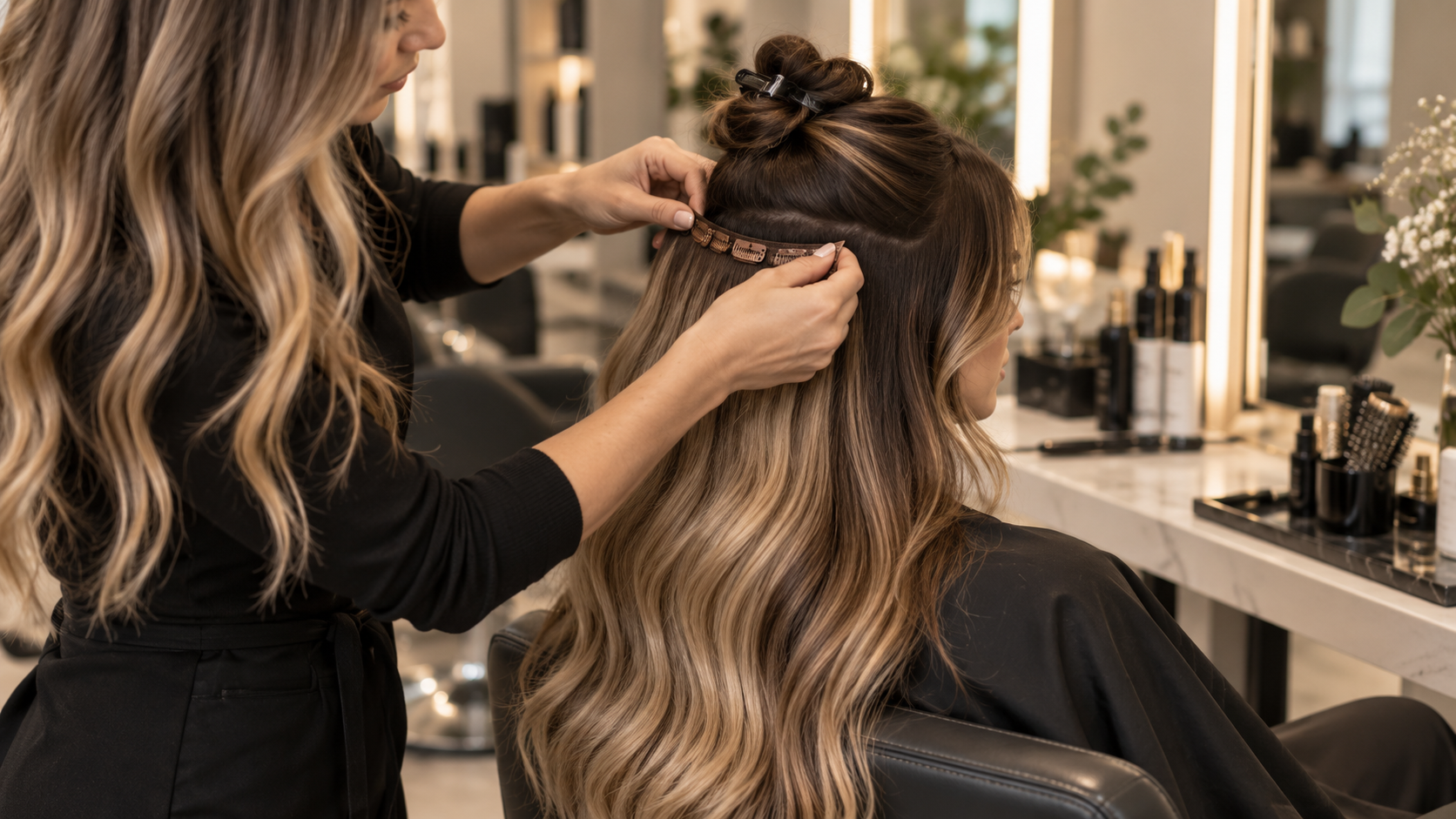
Clip-in extensions are among the easiest temporary options. Small clips are attached to hair wefts, allowing you to install and remove them yourself.
They may be suitable if you want extra volume or length for events, photographs, evenings out, or occasional styling.
Because they can be removed before sleeping or showering, clip-ins generally require less commitment than permanent extension methods.
Tape-In Hair Extensions
Tape-in extensions use thin adhesive strips that attach close to the roots of your natural hair. They usually lie relatively flat against the scalp, which can help them blend into natural hair.
Professional installation is often recommended because proper positioning affects both comfort and appearance.
Depending on hair growth and care habits, tape extensions usually need to be repositioned periodically.
Sew-In Hair Extensions
Sew-in extensions, sometimes called weaves, are attached by sewing hair wefts onto braided sections of natural hair.
This method may work especially well for people with thick or textured hair that can comfortably support the braids and added hair.
Installation and removal are typically handled by an experienced stylist to reduce unnecessary tension on the scalp.
Keratin Bond Hair Extensions
Keratin or fusion extensions use small bonds that are attached to individual sections of natural hair.
Because individual strands can be positioned throughout the head, this method may create a highly blended appearance when professionally installed.
Fusion extensions can require considerable installation time and regular maintenance as natural hair grows.
Micro-Link Hair Extensions
Micro-link extensions attach small sections of extension hair using tiny beads or rings.
They do not generally require adhesive, but installation technique is important. Incorrect placement or excessive tension may put unnecessary stress on natural hair.
Regular salon appointments can help keep the extensions positioned correctly.
Halo Hair Extensions
Halo extensions use a thin, transparent wire that rests around the head, with the extension hair sitting underneath the natural hair.
They can usually be installed and removed quickly and do not rely on glue, clips attached throughout the scalp, or permanent bonds.
This makes them another practical option for people who prefer temporary hair transformations.
Human Hair vs. Synthetic Hair Extensions
One of the biggest decisions when shopping for extensions is choosing between human and synthetic hair.
Human Hair Extensions
Human hair extensions generally provide the most natural appearance and movement. They can often be washed, curled, straightened, and styled similarly to natural hair.
Higher-quality human hair extensions may also last longer when cared for correctly.
However, they usually cost more than synthetic alternatives.
Synthetic Hair Extensions
Synthetic extensions are created from manufactured fibers designed to resemble natural hair.
They can be more affordable and may hold their original style well. However, some synthetic fibers cannot safely tolerate high temperatures from curling irons or straighteners.
Always check the manufacturer’s styling instructions before applying heat.
How to Choose the Right Hair Extensions
The right extensions should complement your natural hair rather than compete with it.
Consider several factors before choosing a style.
Match Your Hair Texture
Extensions should have a texture similar to your natural hair.
Straight extensions generally blend best with straight hair, while wavy or curly extensions may look more natural when matched with similar natural textures.
A close texture match reduces the amount of styling needed to blend the two together.
Choose the Correct Color
Color matching can make a major difference in how realistic extensions appear.
Instead of focusing only on the roots, compare extensions with the mid-lengths and ends of your natural hair. These areas are usually more visible once the extensions are installed.
Multi-tonal extensions may also blend particularly well with highlighted or dimensional hair.
Consider Hair Length
Longer is not always better.
Very long extensions can place additional weight on natural hair, especially when worn through semi-permanent attachment methods.
Selecting a realistic length can create a more balanced appearance while making maintenance easier.
Think About Your Lifestyle
Your everyday routine should influence the type of extensions you select.
Temporary extensions may work better if you:
- Exercise frequently
- Swim regularly
- Prefer low-maintenance hairstyles
- Change hairstyles often
Longer-lasting extensions may suit you if you prefer consistent volume and length and do not mind attending regular maintenance appointments.
How Much Do Hair Extensions Cost?
Hair extension prices vary significantly depending on hair quality, length, installation method, stylist experience, and location.
Temporary synthetic extensions may cost relatively little, while premium human hair extensions combined with professional installation can cost several hundred dollars or more.
You should also consider ongoing expenses such as:
- Reinstallation
- Maintenance appointments
- Replacement hair
- Specialty brushes
- Extension-safe shampoos
- Conditioning products
How to Care for Hair Extensions
Proper maintenance can improve the appearance and lifespan of your extensions.
Brush Carefully
Use a brush designed for extensions or a wide-tooth comb.
Begin near the ends and gradually move upward. Pulling aggressively from the roots can create unnecessary tension on attachment points.
Wash Gently
Wash extensions using gentle motions rather than rubbing or twisting the hair.
With permanent or semi-permanent extensions, avoid applying heavy conditioner directly onto adhesive, beads, or bonds unless your stylist recommends otherwise.
Reduce Excessive Heat
Frequent high-temperature styling may weaken both natural hair and extensions.
Using lower temperatures and a heat-protection product may help reduce damage.
Dry Extensions Properly
Avoid going to sleep with wet extensions.
Wet hair is more vulnerable to tangling and breakage. Drying your hair thoroughly before bedtime may help keep extensions smoother.
Follow Maintenance Appointments
Professional extensions often require routine adjustment as natural hair grows.
Skipping maintenance appointments may cause tangling, uneven placement, or unnecessary strain near the roots.
Can Hair Extensions Damage Natural Hair?
Hair extensions do not automatically damage natural hair, but problems may occur when extensions are too heavy, installed incorrectly, maintained poorly, or left in place longer than recommended.
Possible concerns include:
- Hair breakage
- Scalp irritation
- Tangling
- Excessive pulling
- Weakening around attachment points
Choosing an experienced stylist and following appropriate aftercare instructions can help reduce these risks.
If extensions feel painful or unusually tight after installation, contact your stylist rather than ignoring the discomfort.
How Long Do Hair Extensions Last?
The lifespan of extensions depends on their material and attachment method.
Temporary clip-in or halo extensions may last many months when worn occasionally and stored properly.
Semi-permanent extensions usually require maintenance every several weeks because natural hair continues growing beneath them.
The extension hair itself may sometimes be reused depending on its quality and condition.
Human hair extensions generally have a longer usable lifespan than lower-cost synthetic alternatives when properly maintained.
How to Make Hair Extensions Look Natural
Natural-looking extensions depend heavily on blending.
For better results:
- Select a close color match
- Match the extension texture to your natural hair
- Avoid choosing excessive length
- Blend layers with professional trimming
- Distribute extensions evenly
- Style natural hair and extensions together
- Keep the hair brushed and maintained
A stylist may lightly layer or shape extensions after installation so they blend more naturally with your existing haircut.
Are Hair Extensions Suitable for Thin Hair?
Some types of extensions can work for thin or fine hair, but weight and attachment method become especially important.
Lightweight extensions that distribute pressure evenly may be more appropriate than heavy bundles.
People experiencing significant thinning, breakage, or scalp sensitivity should consider speaking with a qualified hairstylist or healthcare professional before installing extensions.
Finding the Best Hair Extensions for Your Style
Hair extensions can offer a flexible way to experiment with length, volume, texture, and color. The best option depends on your natural hair, styling habits, budget, and willingness to maintain them.
Temporary solutions such as clip-ins and halo extensions provide flexibility, while tape-ins, sew-ins, micro-links, and bonded extensions may provide longer-lasting transformations.
With thoughtful selection and proper care, hair extensions can become a practical way to expand your styling options while keeping your natural hair in good condition.