
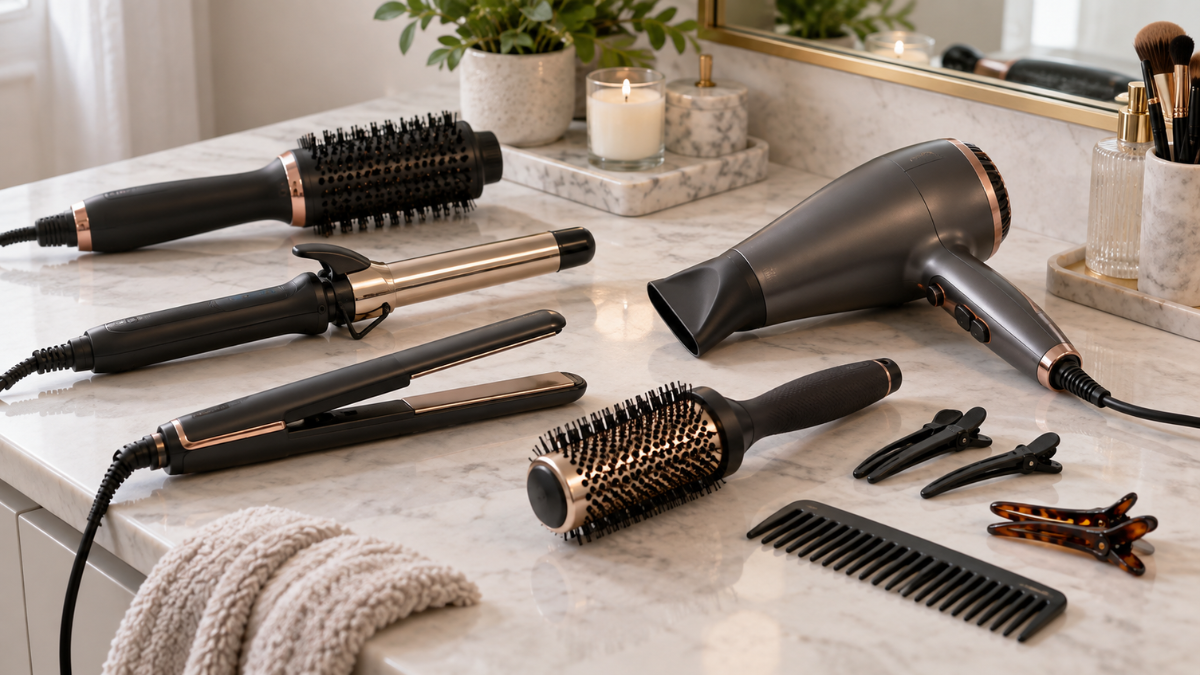
What Hair Styling Tools Work Best for Different Textures and Lengths
Hair styling tools can help you create polished looks at home without relying on frequent salon visits. From hair dryers and flat irons to curling wands and heated brushes, each device serves a specific purpose.
The best choice depends on your hair type, preferred hairstyle, and daily routine. Fine hair usually needs lower temperatures, while thick or coarse hair may require stronger heat settings.
Tool size, plate material, attachments, and safety features can also affect the final result. This guide explains the main types of tools, useful features, and practical ways to style your hair safely.
Common Types of Hair Styling Tools
Different tools produce different finishes. Understanding their functions can help you avoid purchasing equipment that does not suit your needs.
Hair Dryers
A hair dryer removes moisture while helping shape your hair. Models with adjustable heat and speed settings give you better control during drying.
A concentrator nozzle directs airflow toward a specific section, making it useful for smooth blowouts. A diffuser spreads air across a wider area and helps protect curls from disruption. A cool-shot button can help set the finished style after drying.
Flat Irons
Flat irons use heated plates to straighten hair and reduce visible frizz. They can also create soft waves or loose curls when used with the right wrist movement.
Ceramic plates distribute heat evenly and often suit fine or moderately thick hair. Titanium plates heat quickly and may work well for thick, coarse, or highly textured hair.
Plate width also matters. Narrow plates provide control around short sections, while wider plates cover long or thick hair faster.
Curling Irons and Curling Wands
Curling irons have a clamp that holds the hair against the heated barrel. This design can produce defined, consistent curls. Curling wands have no clamp, giving you flexibility when creating loose waves or varied curl patterns.
Small barrels create tighter curls. Large barrels produce wide curls and soft waves. Tapered barrels allow several curl sizes with one device.
Hot Air Brushes
A hot air brush combines warm airflow with the shape of a round or paddle brush. It can dry, smooth, and add volume during one styling session.
Round models are useful for curved ends and lifted roots. Paddle-shaped designs help straighten longer sections. These tools may suit people who find it difficult to control a separate dryer and brush at the same time.
Heated Rollers
Heated rollers create curls and volume without requiring you to hold a heated device continuously. After heating the rollers, wrap individual hair sections around them and secure each one in place.
Large rollers create body and soft movement. Smaller rollers form tighter curls. Heated rollers can be useful when you want to complete makeup or other tasks while the curls set.
Hair Crimpers and Wavers
Hair crimpers form small, repeated bends that add texture and fullness. Hair wavers use larger heated barrels to create beach-style waves.
Both devices work best when used on dry, detangled hair. Selecting small sections can produce defined patterns, while larger sections create softer texture.
How to Choose Hair Styling Tools for Your Hair Type
Your hair texture, thickness, and condition should guide your selection.
Fine or damaged hair benefits from tools with low-temperature settings. Excessive heat may weaken strands and increase breakage. Ceramic plates and controlled airflow can provide gentle, even styling.
Thick hair may need higher heat and wider plates to reduce styling time. Curly or coily hair can benefit from dryers with diffuser attachments, wide-tooth comb accessories, or smoothing devices designed for textured strands.
Short hair usually requires compact tools with narrow plates or small barrels. Long hair may be easier to manage with wide straighteners, extended barrels, or large brushes.
Features That Improve Styling Control
Useful features can make hair styling tools easier and safer to operate.
Adjustable Temperature Settings
Variable heat controls allow you to select a temperature suited to your hair. Low settings protect delicate strands, while higher settings can style resistant textures efficiently.
Automatic Shut-Off
An automatic shut-off feature turns the device off after a period of inactivity. This feature can reduce safety concerns if you accidentally leave a heated tool plugged in.
Swivel Cord
A swivel cord rotates as you move the device. It prevents tangling and gives your hands greater freedom during styling.
Fast Heating
Fast-heating tools shorten preparation time. Some devices reach the selected temperature within seconds, making them practical for busy mornings.
Interchangeable Attachments
Detachable barrels, brushes, nozzles, and combs allow one device to create several hairstyles. This setup can save storage space and limit the number of tools you need.
How to Use Heated Tools Safely
Heat can temporarily reshape hair, yet repeated exposure may cause dryness, split ends, and breakage. Safe habits can help protect your strands.
Begin with clean, detangled hair. Unless the device is designed for damp styling, make sure your hair is fully dry before applying direct heat. Water trapped inside the strand can heat quickly and contribute to damage.
Apply a heat-protectant product before styling. Distribute it evenly from the mid-lengths to the ends. Use the lowest effective temperature and avoid passing the tool over the same section repeatedly.
Keep flat irons and curling tools moving. Holding them in one place can overheat the hair. Give your strands occasional breaks from heated styling and use heat-free methods when practical.
Keeping Hair Styling Tools Clean
Product residue, natural oils, and dust can collect on plates, barrels, vents, and brush bristles. Regular cleaning helps the tools perform properly.
Unplug the device and allow it to cool completely. Wipe heated surfaces with a soft, slightly damp cloth. Remove loose hair from brushes and air vents. Avoid soaking electrical tools or applying harsh cleaning chemicals.
Check cords and plugs for damage. Stop using any device with exposed wires, cracked housing, or an unstable connection. Store tools in a dry place after they have cooled.
Building a Simple Styling Kit
You do not need every available device. A practical kit can contain a dependable dryer, a versatile heated tool, a brush, sectioning clips, and heat protectant.
Choose tools based on the styles you create regularly. If you prefer smooth hair, a dryer and flat iron may be enough. If curls are your usual choice, select a dryer with a diffuser and a barrel suited to your preferred curl size. A multipurpose hot air brush can suit quick daily styling.
Hair Styling Mistakes to Avoid
Using the highest temperature by default is a common mistake. High heat does not always create better results and can damage delicate strands.
Styling sections that are too large may lead to uneven results. Divide your hair into manageable sections so each area receives consistent heat and tension.
Skipping tool maintenance can also affect performance. Blocked dryer vents may restrict airflow, while residue on heated plates can create uneven contact with the hair.
Frequently Asked Questions About Hair Styling Tools
Which hair styling tool is best for beginners?
A hot air brush can be easy to control because it combines drying and brushing in one device. A flat iron with adjustable heat is another practical option for simple straight or softly curled styles.
Can heat styling tools be used every day?
Daily use may increase dryness and breakage, especially at high temperatures. Use heat protectant, select a suitable setting, and include heat-free styling days when possible.
Are ceramic or titanium plates better?
Ceramic plates provide steady heat and often suit fine or average hair. Titanium plates heat rapidly and may suit thick or resistant textures. Your hair condition should guide the choice.
How often should styling tools be cleaned?
Clean frequently used tools every few weeks or whenever visible residue appears. Dryer vents may need frequent checks because trapped lint and hair can restrict airflow.
Do expensive styling tools give better results?
Price alone does not determine performance. Temperature control, plate quality, comfort, safety features, and compatibility with your hair type carry greater importance.
Create Better Hairstyles With Proper Tools and Techniques
Hair styling tools can simplify your routine when they match your hair type and preferred finish. Focus on adjustable controls, suitable materials, comfortable handling, and dependable safety features.
Proper technique and regular cleaning can support consistent results while limiting unnecessary stress on your hair. By selecting only the devices that fit your routine, you can create smooth, curled, textured, or voluminous styles with greater confidence at home.