
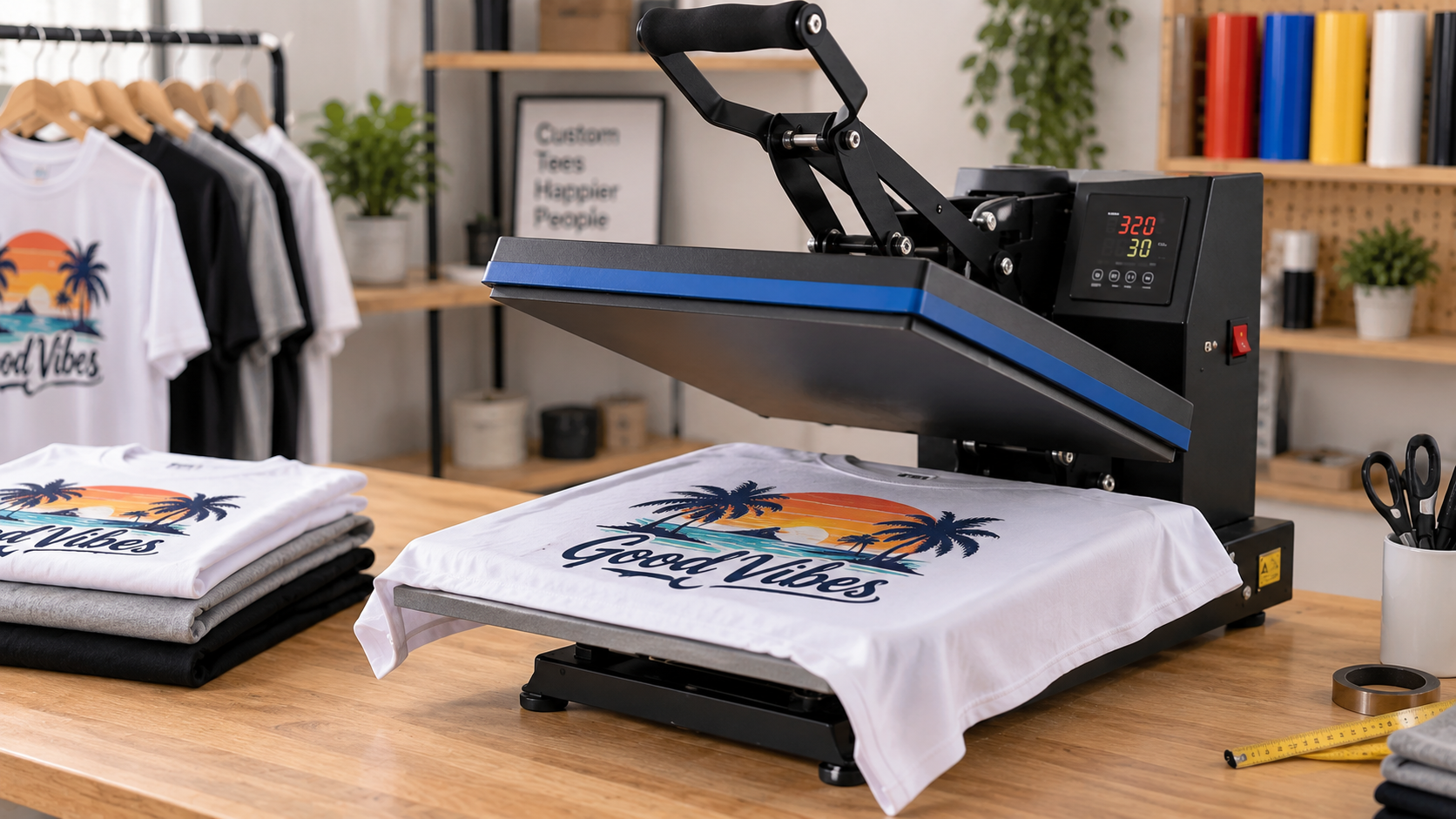
How a Heat Press Machine Helps Create Better Custom Printing Projects
A heat press machine is a practical tool for creating customized apparel, accessories, and promotional products.
By applying controlled heat and pressure, it helps transfer designs onto materials such as T-shirts, tote bags, hats, mugs, and other compatible blanks.
You may use a heat press machine for a small craft setup, a growing printing business, school projects, personalized gifts, or branded merchandise.
What Is a Heat Press Machine and How Does It Work?
A heat press machine uses a heated surface, commonly called a platen, to press a design onto a compatible material. The machine combines three important elements:
- Heat
- Pressure
- Pressing time
The correct combination depends on the transfer material and the item being decorated.
For example, heat transfer vinyl may require different settings from sublimation transfers or direct-to-film transfers.
Following the transfer manufacturer’s recommended temperature, pressure, and timing can help prevent peeling, scorching, fading, or incomplete adhesion.
What Can You Make With a Heat Press Machine?
One major advantage of a heat press is its versatility. Depending on the model and available attachments, you may customize a wide range of products.
Common projects include:
- T-shirts
- Hoodies
- Sweatshirts
- Tote bags
- Pillowcases
- Aprons
- Sports jerseys
- Hats and caps
- Mouse pads
- Ceramic mugs
- Tumblers
- Coasters
- Fabric patches
Always confirm that the blank material is suitable for the transfer method you plan to use.
Popular Types of Heat Press Machines
Choosing the right machine often starts with understanding the main designs available.
Clamshell Heat Press
A clamshell model opens and closes much like a clamshell or laptop.
It is popular because it usually:
- Takes up less workspace
- Is relatively easy to operate
- Works well for flat garments
- Offers straightforward opening and closing
It can be a practical choice for beginners and small workspaces.
Swing-Away Heat Press
A swing-away machine allows the upper heated platen to move away from the lower platen.
This design can provide easier access when positioning garments and transfers. It may also help reduce accidental contact with the heated platen while arranging materials.
However, swing-away models generally need more surrounding workspace.
Drawer-Style Heat Press
Drawer-style machines feature a lower platen that slides outward.
This design makes it easier to place and adjust garments away from the heated upper surface. It may be useful if you frequently work with detailed transfer placement.
Automatic Heat Press
Some newer heat presses use automated pressure or closing mechanisms. These machines may automatically open after the programmed pressing time.
Automatic operation can be especially useful when producing multiple items because it may simplify repetitive tasks.
Multifunction Heat Press
A multifunction machine may include attachments for several types of products.
Possible attachments include:
- Mug presses
- Hat presses
- Plate presses
- Tumbler attachments
These machines may appeal to users who want to experiment with multiple customized products without purchasing several completely separate machines.
Heat Press Machine Features Worth Considering
Not every heat press offers the same performance or convenience. Before choosing one, consider how frequently you plan to use it and what products you want to create.
Platen Size
Platen size determines how much surface area you can press at one time.
Smaller machines can work well for:
- Small logos
- Children’s clothing
- Craft projects
- Limited workspaces
Larger platens may be more convenient for full-size shirt graphics, sweatshirts, and larger fabric projects.
Temperature Control
Accurate temperature control matters because transfer materials have specific heat requirements.
Digital controls can make it easier to select and monitor temperatures throughout the pressing process.
Timer Settings
A built-in timer helps you apply heat for the recommended amount of time.
Pressing too briefly may cause poor adhesion, while excessive heating could damage the transfer or garment.
Pressure Adjustment
Pressure helps the transfer material make consistent contact with the surface below it.
Some projects require light pressure, while others need medium or firm pressure. An adjustable machine offers more flexibility across different transfer methods.
Heat Distribution
Consistent heating across the platen can contribute to more even transfers.
Uneven temperature areas may cause parts of a design to adhere differently from others, especially with larger graphics.
Common Printing Methods Used With Heat Press Machines
A heat press can support several customization methods.
Heat Transfer Vinyl
Heat transfer vinyl, often called HTV, is cut into a design before being pressed onto fabric.
It is commonly used for:
- Names
- Numbers
- Logos
- Lettering
- Simple graphics
HTV is available in many finishes, including matte, glossy, metallic, glitter, and specialty textures.
Sublimation Printing
Sublimation uses specialized ink and transfer paper.
When heated, the dye transfers into compatible materials rather than simply sitting on the surface.
Sublimation generally works best with polyester-rich fabrics and specially coated blanks.
Direct-to-Film Transfers
Direct-to-film, or DTF, transfers use printed designs that are applied to garments using heat and pressure.
They can accommodate colorful and detailed graphics and may work with different fabric types, depending on the transfer supplier’s instructions.
Printable Heat Transfers
Printable transfer paper allows designs to be printed using compatible printers and then applied with a heat press.
This approach may be useful for photos, illustrations, and multicolor designs.
How to Use a Heat Press Machine
Exact instructions vary by machine and transfer type, but a typical process includes several basic steps.
- Prepare your design. Create, print, or cut the design according to the transfer method you are using.
- Set the temperature. Use the settings recommended for your specific transfer material.
- Set the pressing time. Program the timer according to the supplier’s instructions.
- Adjust the pressure. Choose light, medium, or firm pressure as required.
- Pre-press the garment. A short pre-press may help reduce moisture and wrinkles.
- Position the design. Carefully center and align the transfer.
- Protect the project if required. Use appropriate protective sheets or coverings recommended for the transfer method.
- Press the design. Close the press and allow the programmed cycle to finish.
- Remove the carrier material correctly. Some transfers require hot peeling, while others need warm or cold peeling.
Testing settings on a spare blank can be helpful before producing a larger batch.
Heat Press Machine Safety Tips
Heat presses operate at temperatures that may cause serious burns, so careful handling is essential.
Keep these safety practices in mind:
- Place the machine on a stable, heat-resistant surface.
- Keep children and pets away from the workspace.
- Avoid touching heated platens.
- Keep power cords away from hot surfaces.
- Use the correct electrical setup recommended by the manufacturer.
- Turn the machine off when it is no longer needed.
- Allow the press to cool before cleaning or storing it.
- Keep flammable materials away from the machine.
Always follow the safety instructions supplied with your specific equipment.
How to Get Better Heat Transfer Results
Small adjustments can make a noticeable difference in finished projects.
Start With a Flat Surface
Wrinkles, seams, buttons, zippers, and thick fabric areas can interfere with pressure.
Arrange the garment so the transfer area sits as flat as possible.
Pre-Press When Appropriate
Pre-pressing can smooth wrinkles and remove some moisture from fabric before the design is applied.
Check Your Alignment
Measure the position of the graphic before pressing, particularly when creating several matching garments.
Follow Transfer Instructions
Do not assume one temperature works for every material.
Different transfer products can require significantly different settings.
Test Before Large Production Runs
Heat Press Machine vs Household Iron
A household iron may work for certain small craft transfers, but a heat press typically provides greater control.
A heat press offers:
- More consistent pressure
- Larger heated surfaces
- Adjustable temperatures
- Programmable pressing times
- More repeatable results
For occasional small projects, an iron may be sufficient. For frequent customization or larger designs, a heat press can make the process more consistent and efficient.
Who Can Benefit From Using a Heat Press Machine?
A heat press may be useful for different types of users.
DIY Crafters
You can create personalized clothing, bags, décor, and gifts from home.
Small Business Owners
Custom merchandise can provide opportunities to sell printed apparel and accessories online, at local markets, or through direct customer orders.
Schools and Organizations
Heat presses may be used for team shirts, school events, clubs, fundraisers, uniforms, and promotional products.
Sports Teams
Names, numbers, logos, and other graphics can be added to compatible sportswear.
How to Maintain a Heat Press Machine
Routine maintenance may help keep the machine operating consistently.
Consider these basic practices:
- Keep the platen clean.
- Remove adhesive residue carefully.
- Inspect power cables regularly.
- Keep moving parts clean and unobstructed.
- Avoid using sharp tools on coated platens.
- Follow manufacturer instructions for lubrication or adjustment.
- Store the machine in a dry workspace.
Cleaning the platen after accidental transfer residue appears can also prevent marks from transferring onto future projects.
What to Look for Before Buying a Heat Press Machine
Before selecting a model, think about your actual printing plans instead of focusing only on size or price.
Ask yourself:
- What products will you customize most often?
- How large will your designs usually be?
- How much workspace do you have?
- Will you press several items per day?
- Do you need mug or hat attachments?
- Do you prefer manual or automatic operation?
- Are replacement parts and support available?
A beginner may prioritize simplicity and manageable size, while a growing production setup may benefit from larger platens and faster workflows.
Build Better Custom Projects With a Reliable Heat Press Machine
It can support everything from personalized T-shirts and tote bags to promotional merchandise and small-business products.
The best machine depends on the type of transfers you plan to use, the size of your designs, your available workspace, and how frequently you expect to produce items.
With proper settings, careful placement, routine maintenance, and safe handling, a heat press can become a versatile tool for both creative projects and regular production.