
This Herbal Hair Oil Guide Helps You Choose the Right Formula
Healthy-looking hair often begins with proper scalp care. Herbal hair oil provides a simple way to nourish dry strands, support scalp comfort, and reduce the appearance of damage. Many formulas contain plant-based oils and botanical extracts traditionally used in hair-care routines.
Regular oiling may help your hair feel softer, smoother, and easier to manage. It can also protect fragile ends from dryness caused by frequent washing, heat styling, sun exposure, and harsh products.
Choosing the right formula and applying it correctly can help you build a practical routine suited to your hair type.
What Is Herbal Hair Oil?
Herbal hair oil combines carrier oils with extracts from herbs, flowers, seeds, roots, or leaves. Carrier oils help distribute the botanical ingredients across your scalp and hair.
Common carrier oils include:
- Coconut oil
- Almond oil
- Jojoba oil
- Castor oil
- Sesame oil
- Argan oil
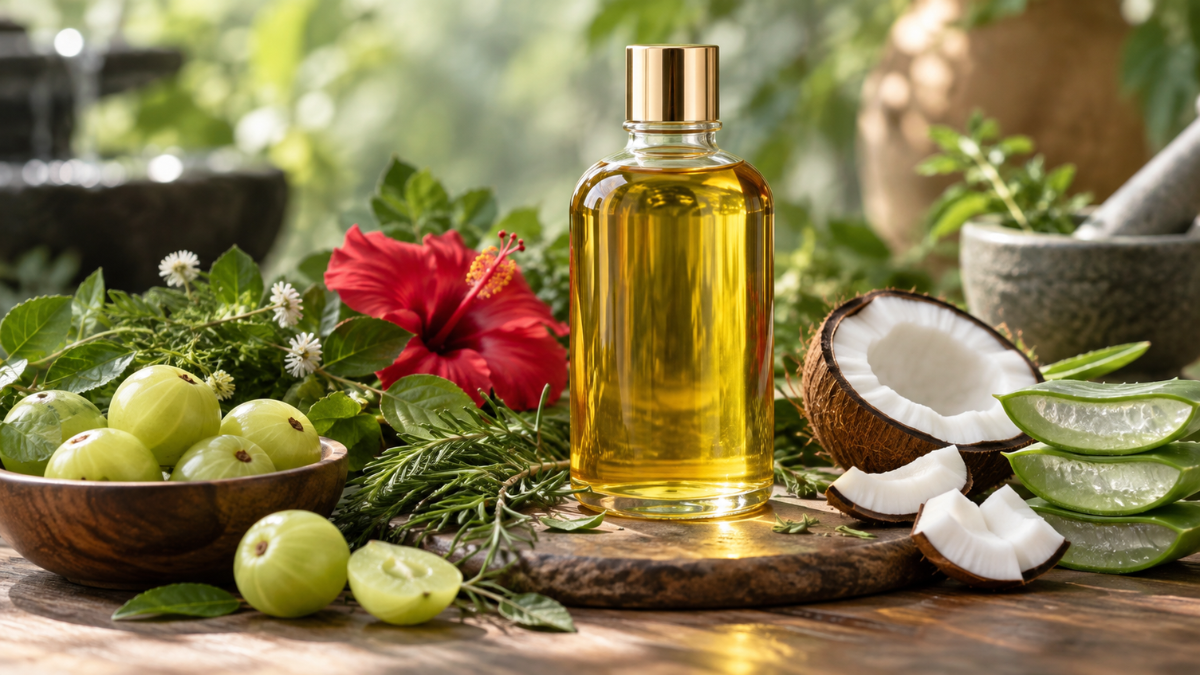
Popular botanical ingredients include amla, rosemary, hibiscus, fenugreek, bhringraj, neem, aloe vera, and curry leaves. Each ingredient has different properties, so product results can vary depending on the formula and your individual hair needs.
Benefits of Using Herbal Hair Oil
A well-formulated herbal oil may support your hair-care routine in several ways. Consistent use is often important, since visible changes rarely happen after one application.
Helps Moisturize Dry Hair
Natural oils coat the hair shaft and help reduce moisture loss. This can leave dry or coarse strands feeling softer after washing.
Oiling can be especially useful if your hair regularly feels rough, tangled, or difficult to style. Apply a small amount to the middle lengths and ends to avoid making the roots greasy.
Supports a Comfortable Scalp
A dry scalp can feel tight, itchy, or flaky. Gently applying oil may reduce dryness and support a comfortable scalp environment.
Certain botanical ingredients, such as neem, tea tree, and rosemary, are commonly added to scalp-care formulas. Essential oils should always be properly diluted to help prevent irritation.
Reduces the Appearance of Frizz
Hair oil can smooth raised cuticles and reduce the appearance of fly aways. A light coating may also help protect your strands in humid conditions.
Fine hair usually needs only a few drops. Thick, curly, or coarse hair may handle a slightly larger amount without appearing oily.
Helps Protect Fragile Ends
Split ends cannot be permanently repaired by oil, yet oiling may temporarily smooth damaged areas and limit further dryness. Paying extra attention to your ends can help them look neater between trims.
Improves Hair Manageability
Dry hair tends to knot easily during washing and brushing. Applying oil before shampooing can reduce friction and make detangling easier.
Gentle handling remains important. Use a wide-tooth comb and start detangling from the ends, working upward gradually.
Popular Herbal Ingredients and Their Uses
Understanding common ingredients can help you select an oil suited to your goals.
Amla
Amla, also called Indian gooseberry, is widely used in traditional hair-care practices. It contains antioxidants and vitamin C. Amla oil is often selected for dull, dry, or fragile-looking hair.
Rosemary
Rosemary oil is frequently used in scalp products. It has gained attention for its potential role in supporting hair growth, though results vary. Always choose a properly diluted formula or dilute rosemary essential oil with a carrier oil before use.
Bhringraj
Bhringraj is a traditional Ayurvedic herb commonly included in oils designed for scalp massage. It is often used to support stronger-looking hair and improve softness.
Hibiscus
Hibiscus contains plant compounds and natural acids that may help condition dry strands. It is commonly included in oils for brittle or dull hair.
Fenugreek
Fenugreek seeds contain proteins and plant compounds. Fenugreek-infused oil is often applied to dry scalps and weak-looking strands.
Neem
Neem is known for its cleansing properties. Neem-infused oil may suit oily or flaky scalps, though its strong scent and concentrated nature may not suit everyone.
How to Choose the Right Herbal Hair Oil
Your hair type, scalp condition, and styling habits should guide your selection.
For dry or coarse hair, look for coconut, almond, sesame, or argan oil. These oils provide heavier conditioning and may help soften rough strands.
For fine or oily hair, choose lightweight oils such as jojoba, grapeseed, or sweet almond oil. Use a small amount and focus mainly on dry areas.
For curly or textured hair, formulas containing castor, coconut, avocado, or olive oil can help improve softness and definition. Avoid applying too much at once, since heavy oil may create buildup.
If your scalp is sensitive, check the ingredient list for fragrances, essential oils, and potential allergens. A patch test can help identify possible irritation before full application.
How to Apply Herbal Hair Oil Correctly
Begin with dry or slightly damp hair. Place a small amount of oil in your palm and rub your hands together to distribute it evenly.
Apply the oil to your scalp in sections. Use your fingertips to massage gently for several minutes. Avoid scratching with your nails, since this may irritate the skin.
Spread the remaining oil through the lengths and ends. Leave it on for 30 minutes to two hours before shampooing. Some formulas can be left overnight, provided the product directions permit extended use.
Wash with a gentle shampoo. You may need two light washes if the oil is thick. Avoid using excessive shampoo, as this can leave your scalp feeling dry.
How Often Should You Oil Your Hair?
Most people can use herbal hair oil once or twice per week. Your ideal schedule depends on your hair texture, scalp oil production, and washing routine.
Dry or textured hair may benefit from twice-weekly oiling. Fine or oily hair may need treatment only once a week or every two weeks. Frequent application can cause buildup, especially when the oil contains heavy ingredients such as castor or coconut oil.
Watch how your hair responds. Reduce the amount or frequency if your roots feel greasy, flat, or difficult to clean.
Common Mistakes to Avoid
Using too much oil is a common mistake. A heavy application does not guarantee better results and can make shampooing difficult.
Avoid aggressive scalp massage. Strong rubbing may cause tangling, irritation, and breakage. Gentle circular motions are enough to distribute the product.
Do not apply undiluted essential oils directly to your skin. Concentrated rosemary, peppermint, tea tree, and similar oils may cause redness or burning.
Avoid relying on oil alone for serious hair loss, persistent itching, sores, or severe flaking. These symptoms may need assessment from a dermatologist or qualified healthcare professional.
Can Herbal Hair Oil Promote Hair Growth?
Herbal hair oil can support scalp moisture, reduce strand breakage, and improve the appearance of dry hair. These effects may help your hair look fuller and healthier over time.
However, hair growth depends on genetics, hormones, nutrition, stress, medical conditions, and daily care habits. An oil cannot treat every cause of thinning or hair loss. Seek professional advice if you notice sudden shedding, bald patches, scalp pain, or ongoing thinning.
Build a Healthier Hair-Oiling Routine
Herbal hair oil can become a useful part of your weekly routine when selected according to your hair type. Start with a small amount, massage gently, and wash thoroughly to prevent buildup.
Pay attention to ingredient quality and your scalp’s response. With consistent use, the right oil may help reduce dryness, improve softness, control frizz, and protect fragile strands. Pair oiling with gentle cleansing, limited heat styling, regular trims, and balanced nutrition to maintain healthy-looking hair