
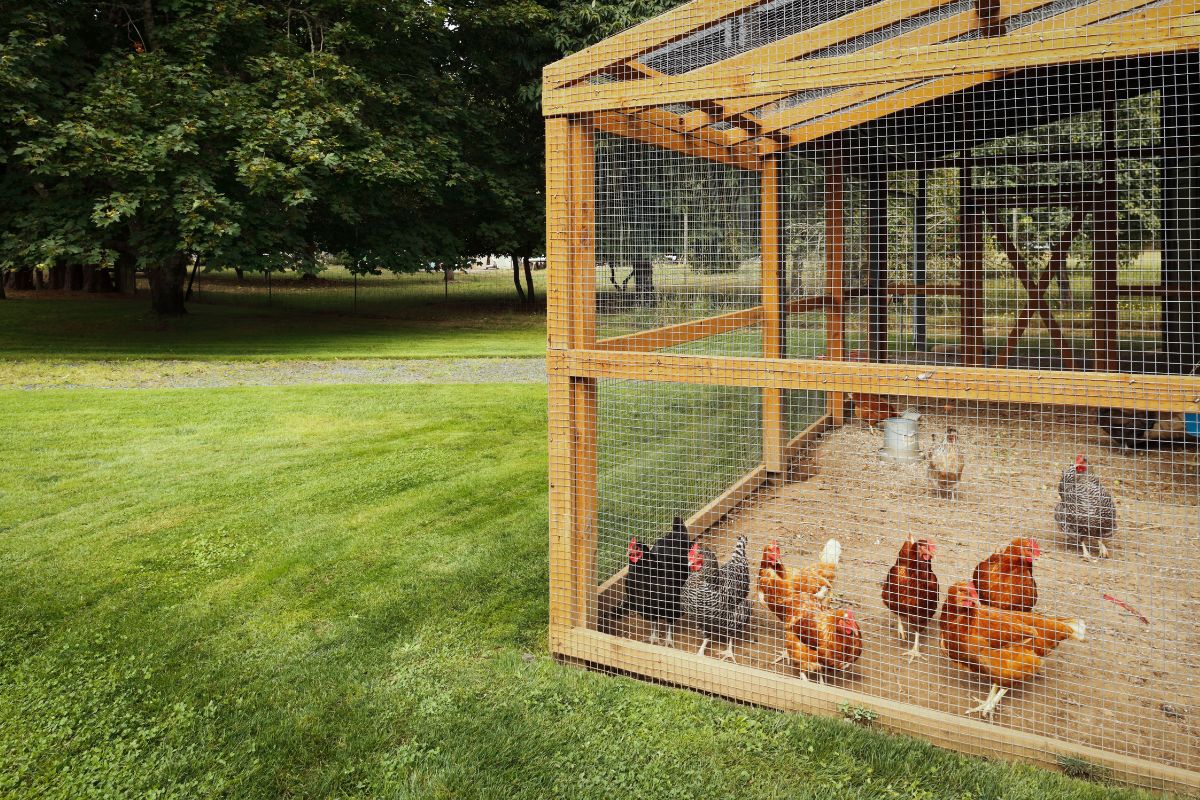
How to Build a Chicken Coop Starter Kit with Chewy’s Top Picks
Backyard chicken keeping has surged in popularity, with nearly 13% of American households now raising these feathered friends for fresh eggs and natural pest control. Whether you’re a complete novice or looking to upgrade your current setup, creating the right environment for your chickens is crucial for their health and productivity. I’ve spent years helping new chicken keepers get started, and I’ve found that the right combination of quality pre-built components and DIY elements makes for the most successful chicken keeping experience.
Assessing Your Chicken Housing Needs
Housing your backyard flock begins with understanding their specific requirements. Most backyard chicken keepers find that a flock of 3-5 birds provides sufficient eggs for a small family while remaining manageable. However, this number should be adjusted based on your available space and local regulations.
The golden rule for chicken space requirements is straightforward: allocate a minimum of 3 square feet per bird inside the coop and 10 square feet per bird in the run. Crowded conditions lead to stressed birds, reduced egg production, and potential health issues.
Your local climate significantly impacts coop design. In colder regions, insulation becomes essential, while hot climates demand superior ventilation. Predator pressure varies by location—urban areas might face raccoons and dogs, while rural settings add foxes, coyotes, and hawks to your concern list.
Budget considerations often determine whether to build or buy. Pre-made coops offer convenience but at a premium price, while DIY options allow customization at potentially lower costs but require time and skills. Most beginners spend between $200-$500 on a quality setup, whether purchased or built.
Must-have features for any coop include secure latches, proper ventilation, easy-access nesting boxes, and predator-proof construction. Additional features like automatic doors or integrated feeders might be worthwhile investments depending on your routine and budget.
Chewy’s Top-Rated Chicken Coops Reviewed
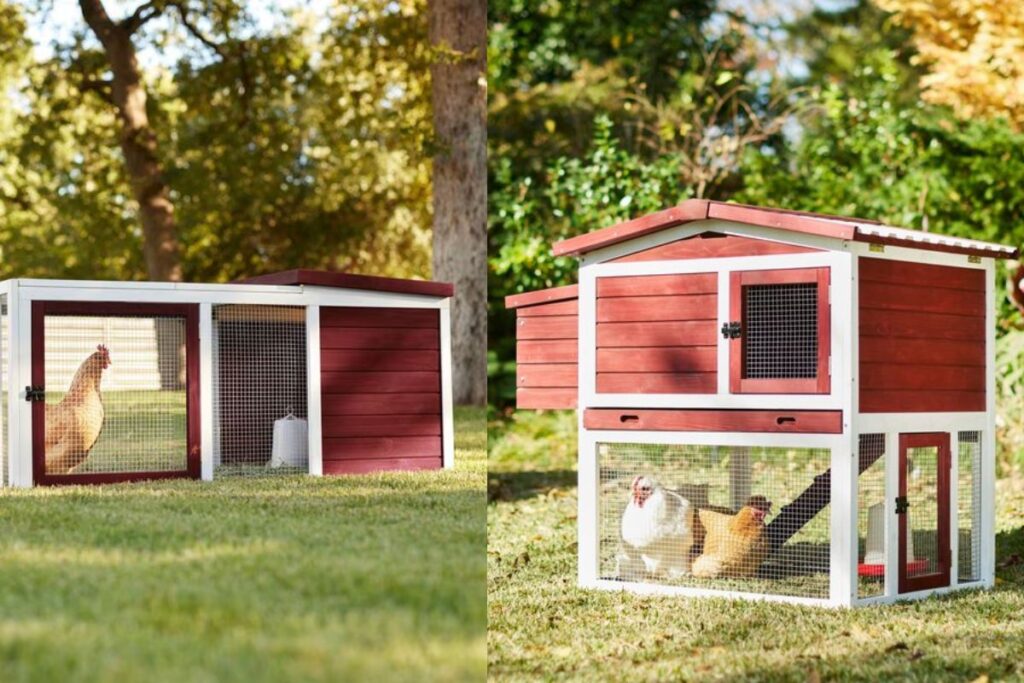
Frisco Wooden Outdoor Chicken Run
The Frisco Wooden Outdoor Chicken Run stands out with its excellent ventilation and durability at $123.92. Constructed from wood and mesh materials, this run provides the spacious environment chickens need to thrive. Its design prioritizes easy cleaning—a crucial feature for maintaining healthy birds.
With an impressive 4.7/5 customer rating, this chicken run consistently receives praise for its quality construction and functionality. While designed primarily as a run rather than a complete coop, it serves as an excellent addition to an existing setup or as a foundation for a DIY coop expansion.
Aivituvin AIR7008 Wooden Chicken Coop with Wheels
Priced at $219.99, the Aivituvin AIR7008 offers tremendous value for small flock owners. This wooden coop comfortably houses 2-4 chickens with specific dimensions that maximize space efficiency: the coop measures 23.6″x22.8″x18.3″ while the run extends to 79.1″x25.2″x43.6″.
The standout feature of this model is its mobility—wheels allow for repositioning throughout your yard, giving chickens access to fresh foraging areas while protecting your lawn from excessive pecking. Customers rate it 4.2/5, frequently mentioning its relatively straightforward assembly compared to other prefabricated coops.
Petsfit Chicken Coop in Red
The Petsfit Chicken Coop combines functionality with aesthetic appeal at $239.99. The distinctive red finish adds a traditional barn-like charm to any backyard while housing 3-5 chickens comfortably.
This wooden coop earns its 4/5 customer rating through thoughtful design elements. The easy-access features for both cleaning and egg collection significantly reduce daily maintenance time. The sturdy construction provides protection from elements and predators, making it a reliable option for both novice and experienced chicken keepers.
Essential DIY Components for Your Starter Kit
Building your own coop requires specific tools that ensure precision and durability. Critical items include a circular saw or miter saw for straight cuts, a drill with various bit sizes, a hammer, tape measure, carpenter’s square, and level. For those on a budget, consider borrowing specialized tools from neighbors or renting them for the project’s duration.
Material selection significantly impacts both cost and longevity. Pressure-treated lumber works well for the frame and base but avoid it for interior surfaces where chickens might peck. Hardware cloth (¼” or ½”) outperforms chicken wire for predator protection despite the higher cost. Metal roofing often proves more economical long-term than asphalt shingles due to its durability.
The planning process should begin with simple sketches that include measurements. Free coop plans available online can be modified to suit your needs. Factor in door locations, nest box access, and cleaning provisions before purchasing materials. Creating a scale model with cardboard can prevent costly mistakes.
Construction shortcuts for beginners include using pre-cut lumber, employing pocket hole jigs for stronger joints without complex woodworking skills, and building on a weekend with experienced friends. Pre-made doors and windows can save considerable time and frustration.
Safety considerations extend to both humans and chickens. Always wear appropriate protective gear, especially eye protection when cutting materials. Avoid treated lumber that contains arsenic compounds, and remove or sand down sharp edges and protruding nails that could injure birds. Design the coop with adequate headroom to make cleaning comfortable.
Building Your Coop Foundation and Structure
Site selection dramatically impacts coop longevity and chicken health. The ideal location sits on slightly elevated ground with natural drainage, receives morning sunlight while offering afternoon shade, and positions away from neighbors who might object to occasional chicken noise. Consider prevailing winds to minimize odors reaching your home.
For predator protection, start with a solid foundation. Options include concrete piers, pressure-treated skids, or a poured concrete pad. For economy and effectiveness, many builders recommend creating a perimeter of hardware cloth extending 12 inches outward and 6 inches deep around the coop’s base—this deters digging predators without extensive excavation.
Frame construction can be simplified with standard 2×4 lumber at 16-24 inch spacing. Novice builders should consider the “box within a box” method—building the inner coop structure first, then adding the outer run framework. This approach minimizes complex angle cuts and simplifies squaring the structure.
Roofing choices balance initial cost with longevity. Corrugated metal provides decades of service with minimal maintenance, while asphalt shingles match existing structures but require replacement sooner. Translucent panels can introduce natural light but may overheat the coop in summer without proper ventilation.
Flooring warrants careful consideration. Dirt floors suit many runs but require hardware cloth underneath to prevent predator access. Solid wood or concrete floors in the coop itself simplify cleaning but need bedding for comfort. A slight slope toward the door facilitates washout cleaning with a hose.
Crafting Essential Coop Features
Nesting boxes require specific dimensions for comfortable egg-laying: approximately 12″x12″x12″ works well for standard chickens. Install one box for every 3-4 hens, positioning them 18-24 inches off the ground with easy external access for egg collection. Adding a sloped roof prevents roosting on top and keeps droppings out of the nesting area.
Roosts should be constructed from 2×4 lumber installed with the wide side facing up, providing stable footing for sleeping birds. Position roosts 2-3 feet above the floor and higher than nesting boxes to discourage sleeping in the nests. Allow 8-10 inches of roost space per bird with multiple perches separated by 12 inches for larger flocks.
Ventilation prevents respiratory issues and extends coop life by eliminating moisture. A well-designed coop includes vents near the roof that allow rising warm air to escape without creating drafts at bird level. These openings must be covered with hardware cloth, never left unprotected. In hot climates, consider adding windows with secure screening for cross-ventilation.
Door and window security makes or breaks predator protection. All access points require predator-proof latches that cannot be manipulated by raccoons. A dual-door system—human-sized door plus a smaller chicken pop door—optimizes convenience and heat retention. Windows covered with hardware cloth rather than chicken wire prevent weasels and fisher cats from entering.
Run construction should include a roof or covering that provides protection from aerial predators and weather. Burying hardware cloth 12 inches deep around the perimeter creates an effective underground barrier. The run should connect to the coop through a secure pop door that can be closed at night for additional protection.
Integrating Store-Bought and DIY Elements
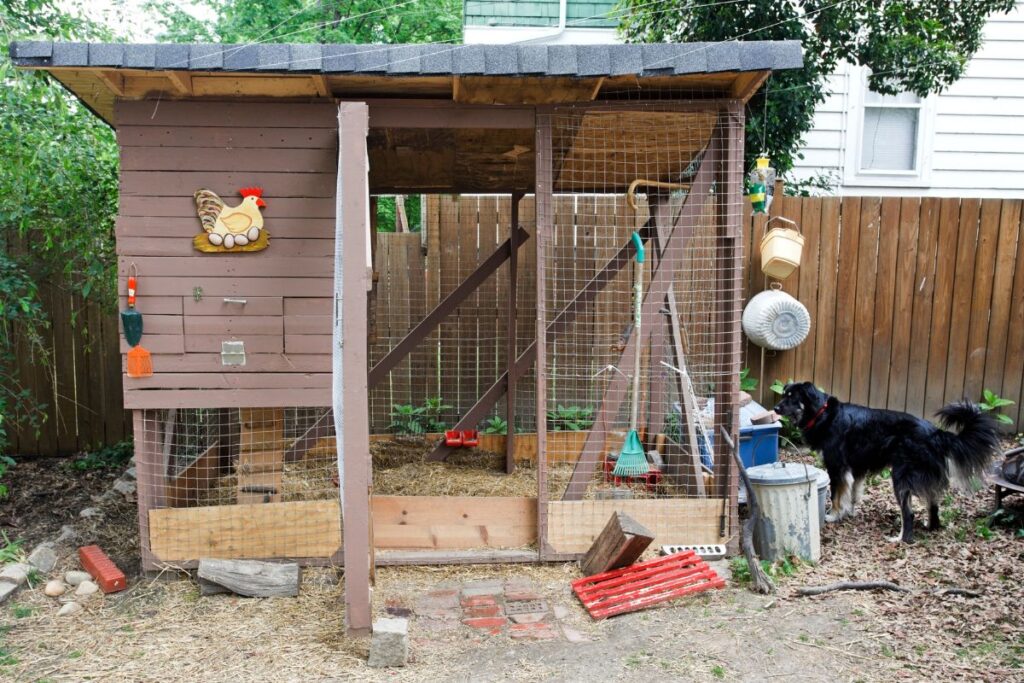
The hybrid approach—combining commercial components with custom elements—often delivers the best value. Purchasing a high-quality Chewy coop like the Aivituvin AIR7008 ($219.99) provides a secure sleeping area, while building a custom attached run reduces the overall project cost compared to equivalent all-commercial solutions.
Component cost comparison reveals where savings lie. Commercial nesting boxes cost $75-100, while DIY versions using scrap lumber run $20-30 in materials. Similarly, automatic door systems range from $150-200 purchased versus $50-75 in DIY parts. The tradeoff comes in time investment—expect to spend 3-5 hours constructing components that could be purchased in minutes.
Modifying commercial coops enhances their functionality. The Frisco Wooden Outdoor Chicken Run ($123.92) benefits from additional cross-bracing for stability and a DIY roof for weather protection. The Petsfit Red Coop ($239.99) can be elevated on a custom base for better predator protection and improved ventilation.
Creating visual cohesion between purchased and built elements involves matching paint colors and wood stains. Carrying the red color scheme from the Petsfit coop to DIY additions creates a unified appearance. Similarly, extending the roof line and matching materials when connecting a custom run to the Aivituvin coop produces a seamless transition.
Time-saving strategies include purchasing the most complex components—like the secure main coop—while building simpler elements like runs and roosting bars. This approach leverages factory precision for critical security features while allowing customization where it matters most for your specific situation.
Bedding, Feeding, and Watering Systems
Bedding material selection impacts coop maintenance frequency. Pine shavings offer excellent absorption and compost value at moderate cost. Straw provides good insulation but composts more slowly. Sand, while initially more expensive, offers superior drainage and can be cleaned with a cat litter scoop, potentially reducing long-term labor.
Elevated feeding stations prevent contamination and reduce waste. Position feeders at the height of chickens’ backs to discourage scratching food onto the ground. Hanging feeders suspended from the ceiling adjust easily as birds grow and minimize floor space usage. Ensure 2-3 inches of feeder space per bird to prevent competition.
Watering systems require careful design to maintain cleanliness. Nipple waterers mounted to PVC pipes eliminate the open water sources that quickly become contaminated. Positioning water stations over a drainage area with gravel prevents muddy conditions. For winter, consider heated base units that prevent freezing without dangerous exposed heating elements.
Automated systems save significant time for busy keepers. Treadle feeders open only when chickens stand on the platform, eliminating access for rodents and wild birds. Automatic coop doors with light sensors or timers (starting at $150) eliminate daily opening/closing chores. Gravity-fed watering systems with large reservoirs extend refill intervals to several days.
Seasonal adjustments maintain comfort year-round. Additional bedding in winter increases insulation, while summer may require more frequent cleaning to control ammonia. Water consumption doubles in hot weather, necessitating larger or multiple containers during summer months. Feeding stations may need weather protection during rainy seasons to prevent feed spoilage.
Chicken Keeper’s Path Forward
Building your chicken coop starter kit doesn’t have to be overwhelming or expensive. By strategically combining Chewy’s high-quality coop options with thoughtful DIY elements, you’ll create a perfect home for your flock that balances convenience, cost, and customization. Remember that your chicken housing can evolve over time—start with the essentials and add features as you learn what works best for your specific situation. Your chickens need protection, comfort, and access to food and water; everything beyond that is an opportunity to make your chicken keeping journey more enjoyable. Happy building!