
How to Choose a Kitchen Knife Set for Everyday Home Cooking
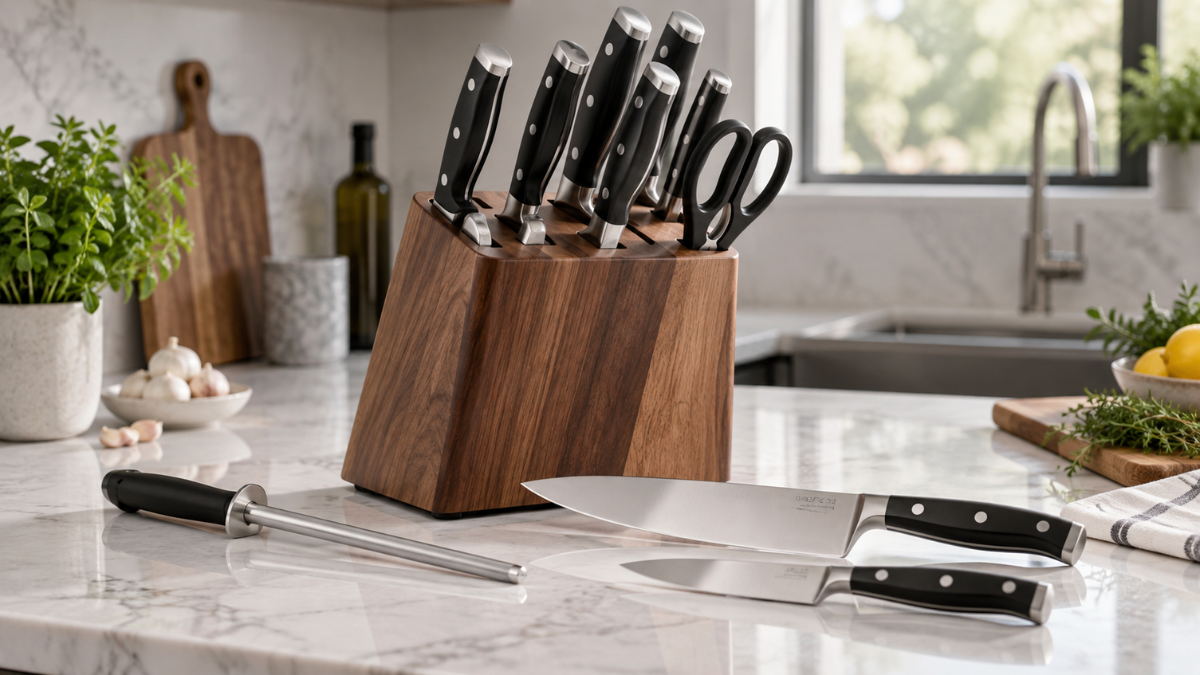
A quality kitchen knife set can make food preparation faster, safer, and easier. Sharp, well-balanced knives help you slice vegetables, trim meat, prepare fish, and handle everyday cooking tasks with better control. A complete set also keeps your essential blades organized and within easy reach.
Knife sets come in many sizes, materials, and price ranges. Some include only the basic tools, while others feature specialty knives, kitchen shears, and a sharpening tool.
Knowing which pieces you actually need can help you avoid paying for knives that rarely leave the storage block.
What Is Included in a Kitchen Knife Set?
The contents vary by manufacturer and set size. A basic set usually contains three to five knives, while larger collections may have ten pieces or higher. Some products count the knife block, shears, and honing rod as individual pieces.
Common items include:
- Chef’s knife
- Paring knife
- Utility knife
- Bread knife
- Santoku knife
- Carving knife
- Kitchen shears
- Honing rod
- Steak knives
- Storage block
Check the product description carefully before buying. A high piece count does not always mean you receive a wider selection of cooking knives. Several pieces may be steak knives or accessories.
Essential Knives for Everyday Cooking
You do not need every knife style to prepare meals at home. A few dependable blades can cover most kitchen tasks.
Chef’s Knife
A chef’s knife is usually the main tool in a kitchen knife set. Its broad blade works well for chopping vegetables, slicing meat, mincing herbs, and crushing garlic.
An eight-inch blade is a practical size for many home cooks. A shorter knife may feel easier to control, while a longer blade can handle larger ingredients.
Paring Knife
A paring knife has a small blade designed for detailed tasks. You can use it to peel fruit, remove seeds, trim vegetables, and cut small ingredients.
Bread Knife
A bread knife features a serrated edge that cuts through crusts without crushing the soft interior. It can also slice tomatoes, cakes, and delicate pastries.
Serrated blades usually stay usable for a long time. However, they can be harder to sharpen at home.
Utility Knife
A utility knife sits between a chef’s knife and a paring knife in size. It handles sandwiches, fruit, cheese, and small cuts of meat.
This knife can be helpful when a chef’s knife feels too large for the task.
Santoku Knife
A Santoku knife commonly has a shorter, flatter blade than a traditional chef’s knife. It works well for slicing, chopping, and dicing.
Some Santoku blades feature hollow indentations along the sides. These spaces can reduce food sticking to the blade during cutting.
Choosing the Right Blade Material
Blade material affects sharpness, rust resistance, durability, and maintenance. The following materials are frequently found in kitchen knives.
Stainless Steel
Stainless steel resists rust and staining. It is a practical choice for busy households because it requires fairly simple care.
The exact performance depends on the steel grade and manufacturing process. Lower-priced stainless steel may lose its edge quickly, while high-quality versions can remain sharp for extended periods.
High-Carbon Stainless Steel
High-carbon stainless steel combines strong edge retention with resistance to corrosion. It is commonly used in mid-range and premium knife sets.
These blades can provide clean, accurate cuts. They still need proper washing and drying to prevent staining or damage.
Carbon Steel
Carbon steel can become extremely sharp and is usually easy to sharpen. However, it can rust or develop a dark patina when exposed to moisture and acidic foods.
This material suits cooks who are willing to follow a careful cleaning and drying routine.
Ceramic
Ceramic blades are lightweight and resistant to rust. They hold a sharp edge well, especially when used for fruit and vegetables.
However, ceramic can chip if dropped or used on bones, frozen food, or hard surfaces. Professional sharpening may also be needed.
Forged Versus Stamped Knives
Forged knives are formed from a heated piece of steel. They often have thicker blades, added weight, and a bolster between the blade and handle. Many cooks appreciate their stable feel and durability.
Stamped knives are cut from a large sheet of steel. They tend to be lighter and less expensive. A well-made stamped knife can still deliver excellent cutting performance.
Your preferred weight should guide your choice. A heavier knife may help with firm ingredients, while a lighter model can reduce hand fatigue during long preparation sessions.
How to Check Handle Comfort and Safety
A knife should feel secure without forcing you to grip it tightly. Poor handle design can cause discomfort and reduce control.
Look for these features:
- A shape that fits your hand comfortably
- A slip-resistant surface
- Smooth edges without rough seams
- Secure attachment between the blade and handle
- Balanced weight from the tip to the handle
- Enough space to keep your knuckles above the cutting board
If possible, hold the knife before buying it. Hand size and grip style can affect which design feels best.
Full Tang and Partial Tang Construction
The tang is the section of metal that extends from the blade into the handle. A full-tang knife has metal running through the entire handle. This construction often provides added strength and stable weight distribution.
A partial tang extends only partway into the handle. These knives may be lighter and cheaper, though durability can vary.
Full tang construction is a useful feature for frequently used knives, especially chef’s and carving knives.
Selecting a Suitable Knife Block
A knife block protects blade edges and keeps your tools organized. Traditional wooden blocks are common, though magnetic stands and in-drawer organizers are also available.
Choose storage that allows the knives to dry fully. Slots that trap water can encourage rust or bacteria growth. The block should also sit firmly on the counter without sliding.
A universal block can accommodate different blade sizes. This can be helpful if you plan to replace or add individual knives later.
How Many Knives Do You Need?
A compact kitchen knife set may be enough for daily cooking. A chef’s knife, paring knife, and bread knife can handle a wide range of preparation jobs.
A larger set may suit you if you regularly prepare meat, fish, bread, or formal meals. Steak knives can also be useful for family dining.
Proper Care for Your Kitchen Knife Set
Good maintenance can protect the blades and extend the life of your set.
Follow these care practices:
- Wash knives by hand with mild soap and warm water.
- Dry each knife immediately after washing.
- Avoid leaving knives in a wet sink.
- Use a wood, rubber, or quality plastic cutting board.
- Keep blades away from glass, stone, and ceramic surfaces.
- Store each knife in a block, sheath, or drawer organizer.
- Hone straight-edged knives regularly.
- Sharpen blades when honing no longer restores the edge.
Even if a knife is labeled dishwasher-safe, handwashing is usually the safer choice. Dishwasher heat, moisture, and movement can damage the blade and handle.
Honing and Sharpening Are Different
Honing realigns the fine edge of a blade. It helps maintain cutting performance between sharpening sessions. A honing rod does not remove much metal.
Sharpening removes a small amount of metal to create a new edge. You can use a whetstone, manual sharpener, electric sharpener, or professional service.
The sharpening schedule depends on usage. If a knife slides across a tomato skin or requires pressure to cut, the blade may need attention.
Signs of a Good Kitchen Knife Set
A dependable set should provide:
- Sharp blades with even edges
- Comfortable and secure handles
- Strong blade-to-handle construction
- Useful knife sizes
- Safe storage
- Clear maintenance instructions
- Warranty coverage from the manufacturer
Customer reviews can reveal issues involving rust, loose handles, damaged blocks, or poor edge retention. Give greater weight to reviews describing long-term use instead of first impressions.
Common Buying Mistakes to Avoid
One common mistake is selecting a set based only on appearance. Attractive handles and stylish blocks cannot compensate for dull blades or uncomfortable weight.
Another mistake is buying the largest available collection. Extra knives take up counter space and may never be used.
Avoid choosing knives without checking their care requirements. Certain materials need immediate drying, regular sharpening, or special storage. Your set should match the amount of maintenance you can realistically provide.
Finding the Best Kitchen Knife Set for Your Needs
The right kitchen knife set should match your cooking habits, hand size, available storage, and budget.
Start with the knives you use regularly. Pay close attention to blade quality, handle comfort, construction, and maintenance needs.
A smaller collection of sharp, comfortable knives can serve you better than an oversized set filled with unnecessary pieces. With proper cleaning, storage, honing, and sharpening, a dependable knife set can support safe and efficient food preparation for years.