
What to Look for When Buying Miniature Painting Brushes for Models
Because miniature painting often involves tiny surfaces, narrow edges, fine lines, and controlled highlights, the right brush can help you apply paint more accurately and comfortably.
You do not need dozens of brushes to get started. A small collection with different shapes and sizes can cover most basic painting techniques.
Understanding brush materials, tip shapes, sizes, and maintenance can also help you choose tools that match your painting style and budget.
What Are Miniature Painting Brushes?
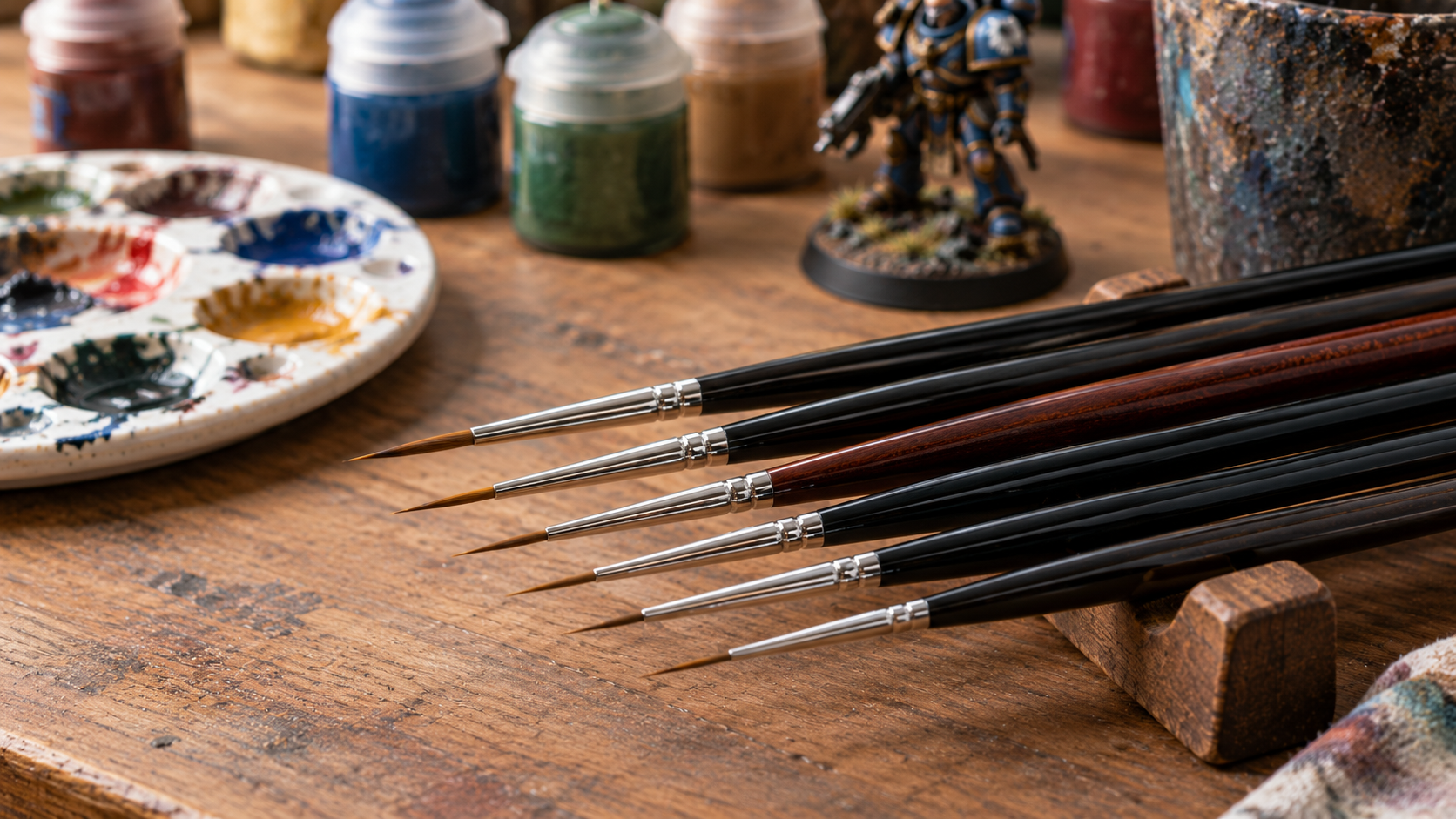
Miniature painting brushes are small art brushes designed for precise painting on detailed surfaces.
They are commonly used for tabletop miniatures, model figures, gaming characters, scale models, dioramas, and decorative crafts.
These brushes usually feature pointed or finely shaped tips that help you reach small areas without spreading paint onto nearby details.
Some are designed for general base coating, while others work better for layering, highlighting, glazing, dry brushing, or painting tiny features such as eyes and accessories.
Why Miniature Painting Brushes Matter for Detailed Work
A good miniature brush gives you more control over how paint moves from the bristles to the model. This is especially useful when applying thin coats, painting narrow sections, or creating smooth transitions between colors.
Using a brush that is too large may make precision difficult, while an extremely small brush may not hold enough paint. Choosing the right balance between tip size and paint capacity can make your painting process more efficient.
Quality brushes may also maintain their shape longer when properly cleaned and stored.
Common Types of Miniature Painting Brushes
Different brush shapes are useful for different techniques. You may find that a few versatile brush types are enough for most projects.
Round Brushes
Round brushes are among the most common options for miniature painting. Their pointed tips allow you to handle both broader strokes and fine details depending on the amount of pressure you apply.
Medium-sized round brushes are often useful for base coats, layering, and general painting.
Detail Brushes
Detail brushes have smaller tips designed for precise areas such as eyes, facial features, jewelry, buttons, weapons, and decorative patterns.
They can be helpful for finishing touches, although very small brushes may dry quickly because they hold less paint.
Fine Liner Brushes
Fine liner brushes feature long, narrow bristles that can create thin lines. They may be useful for painting outlines, hair strands, cracks, cables, or decorative markings.
Their longer bristles can also hold more paint than extremely short detail brushes.
Flat Brushes
Flat brushes have squared or slightly rounded edges. They can work well for larger surfaces, scenery pieces, vehicles, armor panels, and terrain.
They may also help create controlled edge highlights on certain miniature shapes.
Dry Brushes
Dry brushes are designed for the dry brushing technique, where most of the paint is removed before the brush lightly passes over raised surfaces.
This technique can highlight textures such as fur, stone, metal, fabric, and terrain details.
Synthetic Versus Natural Miniature Painting Brushes
One of the main decisions you may face when choosing miniature painting brushes is whether to buy synthetic or natural bristles.
Synthetic Brushes
Synthetic brushes are usually made from nylon or other manufactured fibers. They are often affordable, durable, and easy to maintain.
They can be especially useful for:
- base coating
- metallic paints
- washes
- contrast-style paints
- rough surfaces
- beginners learning basic techniques
Synthetic brushes may eventually develop bent or hooked tips, particularly when used heavily.
Natural Hair Brushes
Natural brushes are often chosen by experienced miniature painters because high-quality natural fibers can hold a fine point while carrying a useful amount of paint.
They may work particularly well for layering, glazing, blending, and controlled detail work.
However, natural brushes usually require more careful cleaning and may cost more than synthetic alternatives.
What Brush Sizes Are Best for Miniature Painting?
Brush sizing is not completely standardized between manufacturers, so a size 1 from one brand may look different from a size 1 from another.
Instead of focusing only on the number printed on the handle, look closely at the tip shape, belly size, and overall brush length.
For many miniature projects, you might use:
- size 2 or 3 for base coating and larger surfaces
- size 1 or 2 for general layering and most details
- size 0 or smaller for fine details
- small flat or dry brushes for textures and highlighting
A larger brush with an excellent pointed tip can sometimes provide better control than a tiny brush because it holds more paint and stays workable longer.
How to Choose Miniature Painting Brushes
When comparing brushes, consider how you normally paint and what types of miniatures you work on.
Look for a Sharp Point
A well-shaped point is one of the most important features for detail painting. The bristles should come together cleanly instead of spreading in multiple directions.
Consider Paint Capacity
The fuller section of the brush, often called the belly, holds paint. A brush with enough capacity can help prevent the paint from drying too quickly during longer strokes.
Choose Comfortable Handles
Brush handles vary in thickness and length. A comfortable handle may reduce hand fatigue during longer painting sessions.
Some painters prefer short handles because they bring their fingers closer to the miniature, while others prefer longer handles for a lighter grip.
Match the Brush to the Technique
You do not need to use your finest brush for every painting step. Reserve your best detail brushes for controlled techniques and use less expensive brushes for rougher jobs.
Essential Miniature Painting Brushes for Beginners
If you are building your first brush collection, keeping it simple can help you learn what you actually use.
A practical starter set may include:
- one medium round brush for base coating
- one pointed round brush for layering
- one small detail brush
- one dry brush
- one inexpensive synthetic brush for washes or metallic paint
As your skills develop, you can add specialty brushes based on the techniques you use most often.
How to Care for Miniature Painting Brushes
Proper brush care can extend the life of your tools and help them maintain their shape.
Rinse Brushes Frequently
Do not allow acrylic paint to dry inside the bristles. Rinse the brush regularly while painting, especially when switching colors.
Avoid Paint Near the Ferrule
The ferrule is the metal section connecting the bristles to the handle. Paint that dries inside this area can force the bristles apart and cause the brush to lose its point.
Try to load paint mainly onto the lower portion of the bristles.
Use Brush Cleaner
A dedicated brush cleaner or mild soap can remove leftover pigment after a painting session. Gently work the cleaner through the bristles without bending them aggressively.
Reshape the Tip
After cleaning, gently reshape the point with your fingers before allowing the brush to dry.
Store Brushes Properly
Avoid leaving brushes resting on their bristles. Store them horizontally or upright with the bristles facing upward once they are completely dry.
Mistakes to Avoid When Using Miniature Painting Brushes
Even good brushes can wear quickly when used incorrectly.
Common mistakes include:
- allowing paint to dry on the bristles
- pushing the brush aggressively against the model
- using premium detail brushes for dry brushing
- dipping the brush deeply into paint
- leaving brushes standing in water
- using damaged brushes for precise work
Older brushes do not necessarily need to be thrown away. They can still be useful for applying glue, painting terrain, stippling textures, mixing paint, or dry brushing.
Can One Brush Handle Every Miniature Painting Technique?
Technically, one versatile round brush can complete many painting steps, but using several brushes usually makes the process easier.
A pointed medium brush might handle base coating, layering, and highlights, while dedicated dry brushes and detail brushes can improve control for specific tasks.
Building a small collection gradually is often more practical than buying a large set immediately.
How Often Should Miniature Painting Brushes Be Replaced?
There is no fixed replacement schedule. Brush lifespan depends on the bristle material, painting frequency, cleaning habits, and techniques used.
You may need to replace or repurpose a brush when:
- the tip no longer forms a point
- bristles repeatedly separate
- the brush develops a permanent hook
- paint has hardened near the ferrule
- loose bristles interfere with painting
Proper cleaning can help your brushes remain useful for much longer.
Make Miniature Painting Easier With Better Brush Choices
The best miniature painting brushes are the ones that match your techniques, comfort preferences, and level of detail. You can begin with just a few versatile round, detail, and dry brushes before expanding your collection.
Pay attention to tip quality, paint capacity, bristle material, and maintenance rather than relying only on brush size.
With the right tools and regular care, you can achieve cleaner lines, smoother layers, and more controlled details across your miniature painting projects.