
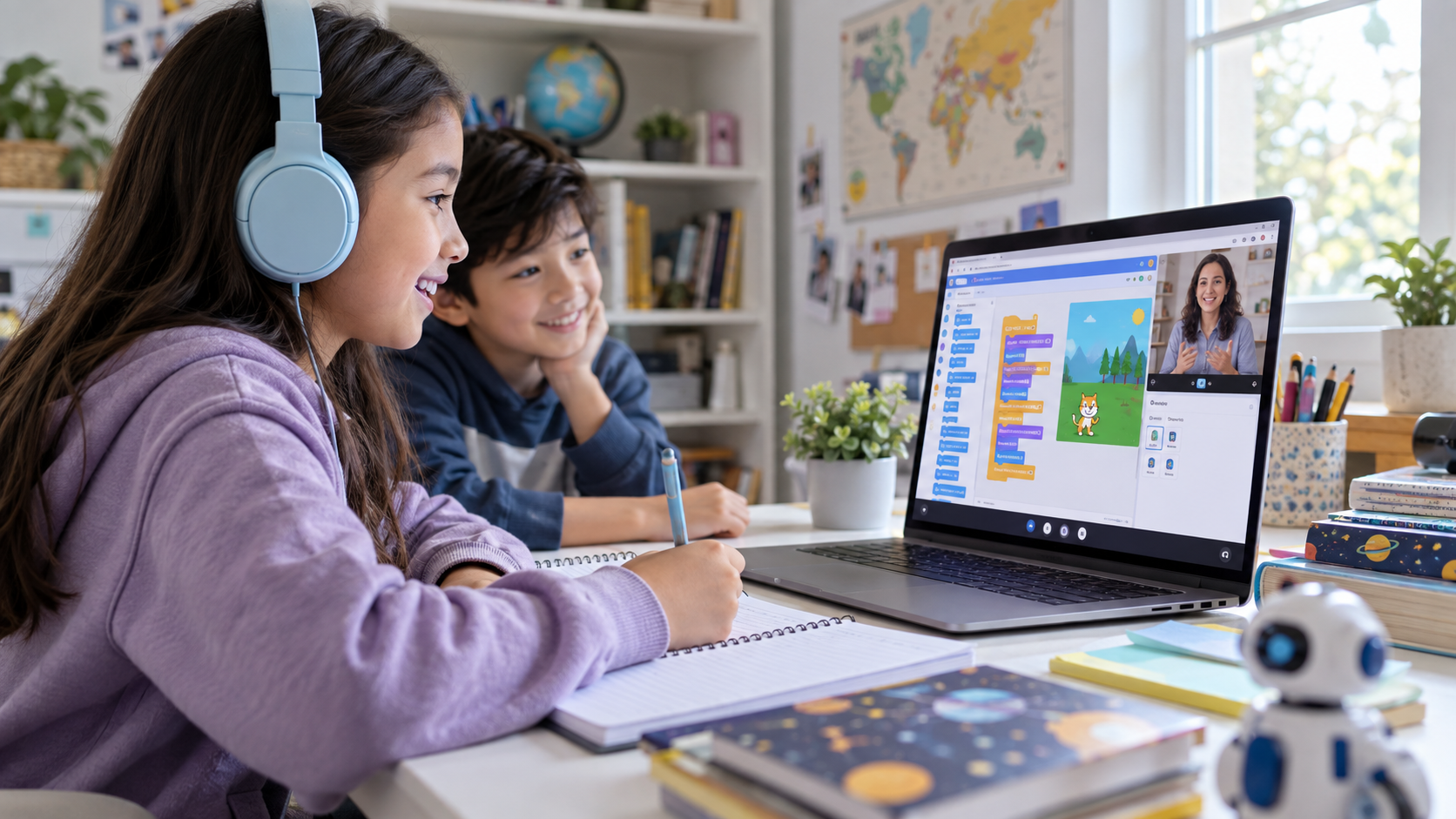
How Coding Classes for Kids Support Learning Through Interactive Digital Activities
Technology plays a major role in education, communication, entertainment, and future careers.
Because of this, many parents are exploring online coding classes for kids as a practical way to introduce children to programming, problem-solving, and digital creativity.
Coding lessons designed for children usually focus on making programming easier to understand through games, animations, interactive projects, and guided challenges.
Instead of simply memorizing commands, kids can learn how technology works by building something they can actually see and use.
Online learning also gives families more flexibility. Children may learn from home, progress at a comfortable pace, and explore programming without needing advanced technical experience.
Online Coding Classes for Kids Help Develop More Than Programming Skills
Learning to code is not only about becoming a programmer. Coding can help children practice several skills that may support their academic and personal development.
During coding activities, children often need to break a large problem into smaller steps. They may test an idea, discover an error, adjust their approach, and try again.
These activities can strengthen skills such as:
- Logical thinking
- Problem-solving
- Creativity
- Attention to detail
- Persistence
- Pattern recognition
- Digital literacy
- Independent learning
Coding projects can also encourage kids to become creators rather than simply consumers of technology.
Why Parents Consider Coding Classes for Children
Many parents want their children to feel comfortable using technology beyond basic apps, games, and websites. Coding education can provide a deeper understanding of how digital tools are created.
Children who learn basic programming concepts may begin understanding ideas such as commands, sequences, variables, loops, conditions, and functions.
These concepts may sound technical, but beginner-friendly courses often explain them through visual activities and simple projects.
For example, a child might program a character to move across the screen, build a basic game, create an animated story, or design a simple website.
These projects can make abstract programming concepts easier to understand.
What Do Kids Learn in Online Coding Courses?
The subjects covered in online coding courses depend on the child’s age, experience level, and chosen program.
Beginner courses may introduce visual programming before moving into traditional text-based coding.
Common topics include:
Visual Programming
Visual coding platforms allow children to arrange colorful blocks instead of typing complex code.
This approach can help beginners understand programming logic without worrying about spelling mistakes or complicated syntax.
Game Development
Game development is a popular way to introduce coding because it combines creativity with technical skills.
Kids may learn how to:
- Control characters
- Create scoring systems
- Design levels
- Add sound effects
- Program movement
- Build simple challenges
Creating a playable project can give children a clear sense of accomplishment.
Website Development
Older children may learn basic website-building skills using technologies such as HTML, CSS, and JavaScript.
They might create personal webpages, simple portfolios, interactive quizzes, or small web applications.
Python Programming
Python is commonly introduced to beginners because its syntax is relatively easy to read.
Children learning Python may work with variables, loops, functions, lists, and basic programs.
App Development
Some coding classes introduce children to simple mobile or web application development.
Students may learn how buttons, screens, user input, and basic program logic work together.
Robotics and Artificial Intelligence Concepts
Certain programs may also introduce robotics, machine learning, or artificial intelligence through age-appropriate lessons.
These courses generally focus on basic concepts rather than advanced technical development.
What Age Can Children Start Learning Coding?
Children can begin exploring programming concepts at relatively young ages, although the learning approach should match their developmental level.
Younger children may benefit from visual coding, puzzles, storytelling, and interactive games.
Older students may gradually move toward text-based programming languages and more complex projects.
A general progression might look like this:
Ages 5–7: Coding games, puzzles, sequencing, and basic visual programming.
Ages 8–10: Interactive stories, beginner games, visual programming, and simple logic.
Ages 11–13: Game development, websites, Python basics, and more structured projects.
Ages 14 and older: Python, JavaScript, web development, app development, data science basics, and more advanced programming concepts.
Age guidelines can vary, so parents should also consider the child’s interests and previous experience.
Live Coding Classes vs Self-Paced Courses
Parents can usually choose between live instructor-led lessons and self-paced coding programs.
Live Online Coding Classes
Live classes allow students to interact with an instructor in real time.
Potential advantages include:
- Immediate feedback
- Structured schedules
- Instructor support
- Opportunities to ask questions
- Group interaction
- Guided projects
Live learning may work well for children who benefit from regular instruction and accountability.
Self-Paced Coding Courses
Self-paced programs allow students to work through lessons independently.
Benefits may include:
- Flexible schedules
- Learning at an individual pace
- Ability to repeat lessons
- More freedom to explore topics
- Convenient access from home
Self-paced learning may suit children who enjoy independent exploration.
Some programs combine both formats.
How to Choose the Best Coding Classes for Kids
Not every coding program will suit every child. Parents should compare several factors before choosing a course.
Consider Your Child’s Interests
A child interested in video games might enjoy game development, while another child may prefer animation, website design, robotics, or apps.
Starting with a topic the child already enjoys can make learning more engaging.
Check the Difficulty Level
Look for classes designed specifically for the child’s age and experience.
A course that is too difficult may become frustrating, while a course that is too easy may not provide enough challenge.
Review Class Size
Smaller classes may give students more opportunities to interact with the instructor and receive personalized help.
One-on-one coding lessons can provide even more individual attention but may cost more.
Look at Instructor Experience
Parents may want to review instructor qualifications, teaching experience, and experience working with children.
Strong technical knowledge is helpful, but the ability to explain concepts clearly to younger students is equally important.
Evaluate the Curriculum
A good coding curriculum should progress gradually from basic concepts to more advanced projects.
Check Student Projects
Programs that allow children to create games, websites, animations, or applications can make learning more meaningful.
Projects also give children something tangible to demonstrate what they have learned.
How Much Do Online Coding Classes for Kids Cost?
Prices vary widely depending on the format, instructor, course length, class size, and subject.
Some introductory coding resources are free, while structured programs may charge per class, month, semester, or course package.
Typical options may include:
- Free coding websites and tutorials
- Low-cost self-paced courses
- Monthly subscription programs
- Small-group virtual classes
- Private one-on-one tutoring
- Multi-week coding camps
Parents should compare the total program cost instead of focusing only on the price of a single lesson.
It may also help to check whether trial classes, introductory lessons, or refund policies are available.
Can Coding Classes Help With Future Careers?
Technology skills are used across many industries, including finance, healthcare, engineering, marketing, entertainment, science, manufacturing, and education.
A child who learns coding does not necessarily need to pursue a technology career. However, programming education can provide useful digital skills that may support future academic or professional opportunities.
Possible technology-related careers include:
- Software developer
- Web developer
- Game developer
- Data analyst
- Cybersecurity specialist
- Mobile app developer
- Artificial intelligence engineer
- Robotics engineer
- Computer scientist
The technology industry continues evolving, so building foundational digital skills early may help children adapt to future learning opportunities.
How Parents Can Support Kids Learning Coding at Home
Parents do not need programming experience to support a child learning coding.
Simple encouragement can make a major difference.
You can help by:
- Giving your child regular time for coding practice
- Asking them to explain their projects
- Encouraging experimentation
- Celebrating completed projects
- Allowing mistakes to become learning opportunities
- Helping create a quiet learning space
- Encouraging breaks during long computer sessions
Parents can also ask children to demonstrate the games, animations, or websites they create.
Explaining a project often helps students reinforce what they have learned.
Frequently Asked Questions About Online Coding Classes for Kids
Are coding classes difficult for beginners?
Beginner coding courses are usually designed to introduce programming gradually. Visual coding platforms and interactive projects can make early lessons easier to understand.
Does a child need a powerful computer for coding classes?
Many beginner programs only require a standard laptop or desktop computer with internet access. More advanced development tools may require stronger hardware.
How often should kids practice coding?
Short, consistent practice sessions may be more effective than occasional long sessions. Even one or two structured lessons each week can help children build familiarity.
Is coding useful for children who do not want technology careers?
Yes. Coding can help develop logical thinking, creativity, problem-solving, persistence, and digital literacy that may be useful across many subjects and careers.
Should children start with Python?
Python can be a good option for older beginners because the language is relatively readable. Younger children may find block-based visual programming easier when starting.
Helping Kids Build Confidence Through Coding
The most suitable program depends on your child’s age, interests, learning style, and experience level.
Starting with simple projects and gradually introducing more advanced concepts can make coding feel approachable instead of overwhelming.
By choosing age-appropriate lessons and encouraging regular practice, you can help your child develop technology skills while exploring how games, websites, apps, and other digital tools are created.