
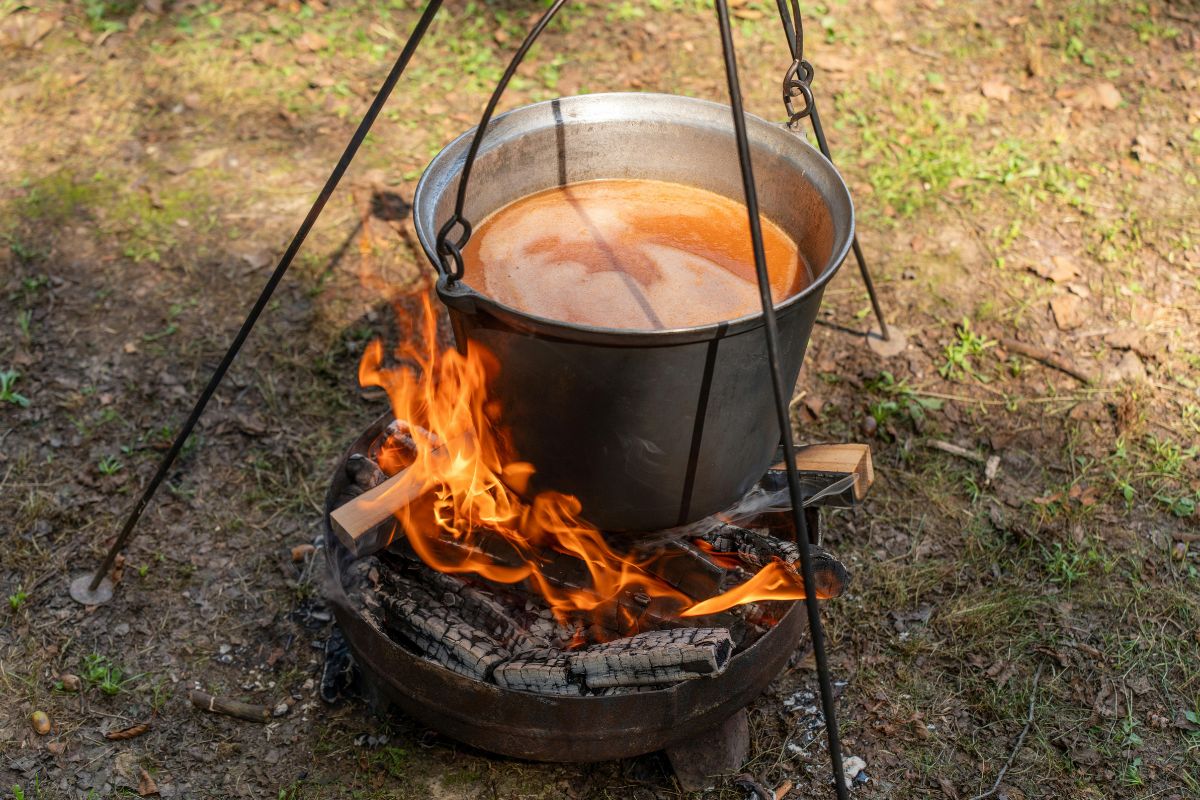
Pathfinder 64oz Bush Pot: Stainless Steel Powerhouse for Campfire Cooking
There’s something profoundly satisfying about cooking in the wild—especially when your gear rises to meet the moment. The Pathfinder 64oz Stainless Steel Bush Pot isn’t just a vessel; it’s a backcountry workhorse engineered for serious outdoor cooking. Crafted from rugged 304 stainless steel and loaded with thoughtful features like a locking bail handle, integrated pour spout, and ample 8-cup capacity, this pot balances reliability, durability, and practicality. Whether you’re melting snow in subzero temperatures, boiling water for freeze-dried meals, or slow-cooking stew over open flames, the Pathfinder Bush Pot proves itself as an indispensable piece of kit for bushcraft, backpacking, and everything in between.
Key Features That Set the Pathfinder Bush Pot Apart
The Pathfinder 64oz Bush Pot employs high-grade 304 stainless steel that stands apart from comparable camping cookware. This material resists warping even when placed directly in flames, a critical advantage for bushcraft cooking where temperature control can be challenging. Despite its robust construction, the pot maintains a remarkably light profile at just 14 ounces (396g), striking an optimal balance between durability and portability.
Unlike aluminum alternatives that may corrode or impart metallic flavors, this stainless steel construction offers superior resistance to environmental elements. Field maintenance proves straightforward—a quick rinse with hot water typically removes most residue, with minimal scrubbing required even after cooking sticky foods.
Thoughtful Design Elements
The locking bail handle represents careful engineering consideration, allowing users to securely suspend the pot above flames at various heights to control cooking temperature. This feature locks into position, preventing the dangerous pot tipping that can occur with lesser designs.
Heavy-gauge bat wing side handles complement the bail design, offering secure grip points even when wearing thick gloves—a substantial benefit during cold-weather expeditions. The integrated pour spout might seem a minor detail but makes a significant difference in practical use, enabling controlled liquid transfer without the common spills that waste precious water resources in remote settings.
With its 5.5-inch height (including the peaked lid) and 5.31-inch base diameter, the pot provides an 8-cup capacity while maintaining a form factor that distributes heat effectively and fits comfortably in standard packs.
Versatile Cooking Capabilities
The 64-ounce (1.9L) capacity hits a sweet spot for outdoor cooking, providing sufficient volume for solo travelers with leftovers or adequately serving pairs on extended journeys. This versatility extends to heat source compatibility, with the pot performing equally well over open campfires, portable stoves, or even improvised cooking arrangements.
From rapidly boiling water for dehydrated meals to simmering more elaborate dishes, and even melting snow for water procurement in winter conditions, the Bush Pot handles diverse cooking requirements with equal proficiency. The relatively flat bottom creates stability on most surfaces, while the overall dimensions allow for nested storage with complementary gear, maximizing pack efficiency.
Performance in the Field
Field testing reveals exceptional heat distribution patterns, with the stainless steel conducting heat evenly across the cooking surface without developing problematic hot spots. Boil times run approximately 15-20% longer than comparable titanium options but deliver more consistent results with less risk of scorching food.
The pot demonstrates remarkable stability on uneven surfaces thanks to its flat bottom design and balanced weight distribution. Even when perched on improvised stone arrangements or uneven grates, the risk of tipping remains minimal. Food sticking occurs at rates consistent with other stainless products, though building a proper patina through use gradually improves non-stick properties.
Durability Under Stress
Resistance to physical damage stands out as a primary strength. The pot endures rough handling in field conditions without denting or deforming, maintaining structural integrity even when packed with less care than might be ideal. After numerous exposures to direct flame, no warping or discoloration affecting function has been observed.
The stainless construction exhibits exceptional corrosion resistance across diverse environments, from humid coastal conditions to acidic soils when set directly on ground. Both the lid’s D-ring and the bail handle maintain their function without loosening or degradation through repeated thermal cycling and mechanical stress.
Weight and Packability Considerations
Comparing weight-to-capacity ratios positions the Bush Pot favorably within the stainless category, though obviously heavier than titanium or aluminum alternatives. At 14 ounces for 64 ounces of capacity, it delivers approximately 4.6 ounces of capacity per ounce of carried weight—an acceptable ratio for all but the most weight-sensitive ultralight hikers.
The pot’s cylindrical shape facilitates various packing strategies, either housing smaller items inside it or fitting within larger containers. Its compatibility with other Pathfinder products creates efficient nesting opportunities, particularly with their canteen cup systems and smaller containers.
Value Analysis and Pricing Breakdown
Current retail pricing ranges from $27.99 to $31.99, representing the lower-middle segment of the premium stainless steel pot market. Compared to similar-capacity stainless options from brands like Snow Peak or MSR, the Pathfinder typically costs 15-30% less while maintaining comparable quality and features.
For outdoor enthusiasts who venture out 20+ days annually, the cost-per-use calculation becomes particularly favorable, often dropping below $1.50 per use within the first year. Customer service reputation remains strong, with most retailers honoring returns for manufacturing defects, though formal warranty information appears limited.
Investment Return for Different User Types
Weekend campers benefit from the pot’s resilience to occasional use and storage, eliminating concerns about degradation between outings. For through-hikers, the weight penalty versus titanium requires consideration, but the durability advantage often compensates when cooking over uncontrolled heat sources.
Bushcraft practitioners derive perhaps the greatest value, as the pot’s flame resistance and sturdy construction withstand primitive cooking methods. The capacity suits emergency preparedness applications, providing sufficient volume to purify water or prepare meals for small groups during crisis scenarios.
Complementary Gear Considerations
The pot pairs effectively with folding stainless steel cups that can double as auxiliary cooking vessels. A canvas storage bag helps prevent pack abrasion and protects the pot’s exterior finish. For cleaning, a small chainmail scrubber offers significant value, removing residue without damaging the cooking surface.
A dedicated cooking tripod or pot hook system extends functionality when using natural fire pits, while silicone-tipped utensils help preserve the interior surface during stirring and serving.
Potential Drawbacks to Consider
The lid fit presents the most commonly reported issue, with some users noting it doesn’t seat as tightly as desired. While adequate for basic cooking, this limitation may affect performance in baking applications or when transporting prepared foods. The absence of internal measurement markings necessitates carrying separate measuring devices for recipes requiring precision.
Heat transfer along the metal handles demands attention during extended cooking sessions, potentially requiring gloves or protective wrapping. Though reasonable for its construction, the 14-ounce weight represents approximately triple that of ultralight titanium alternatives of similar capacity.
Usage Scenarios Where Alternatives Might Be Better
For ultralight backpacking where every ounce matters, titanium or aluminum alternatives offering 40-50% weight savings may justify their higher cost and reduced durability. The 8-cup capacity limits applications for groups larger than three people, potentially necessitating multiple cooking cycles or a larger pot for family camping scenarios.
Specialized cooking techniques requiring precise temperature control benefit from pots with thicker bases that retain heat more effectively. In extremely cold environments, aluminum’s superior thermal conductivity might provide faster boil times, though at the cost of reduced durability and potential freeze-bonding to exposed skin.
The Verdict: Is This Bush Pot Worth Your Pack Space?
In the crowded field of outdoor cookware, the Pathfinder 64oz Bush Pot stands tall as a durable, field-tested essential for adventurers who value function over frills. With its solid stainless steel build, versatile cooking capabilities, and cleverly designed features, it meets the demands of real-world backcountry cooking with quiet confidence. While it’s not the lightest option on the market, the trade-off is justified by its resilience and performance. For anyone looking to upgrade from generic camp pots or expand their bushcraft toolkit, this pot offers serious value for a modest investment. Trust it with your meals, your fire, and your pack—it won’t let you down.