
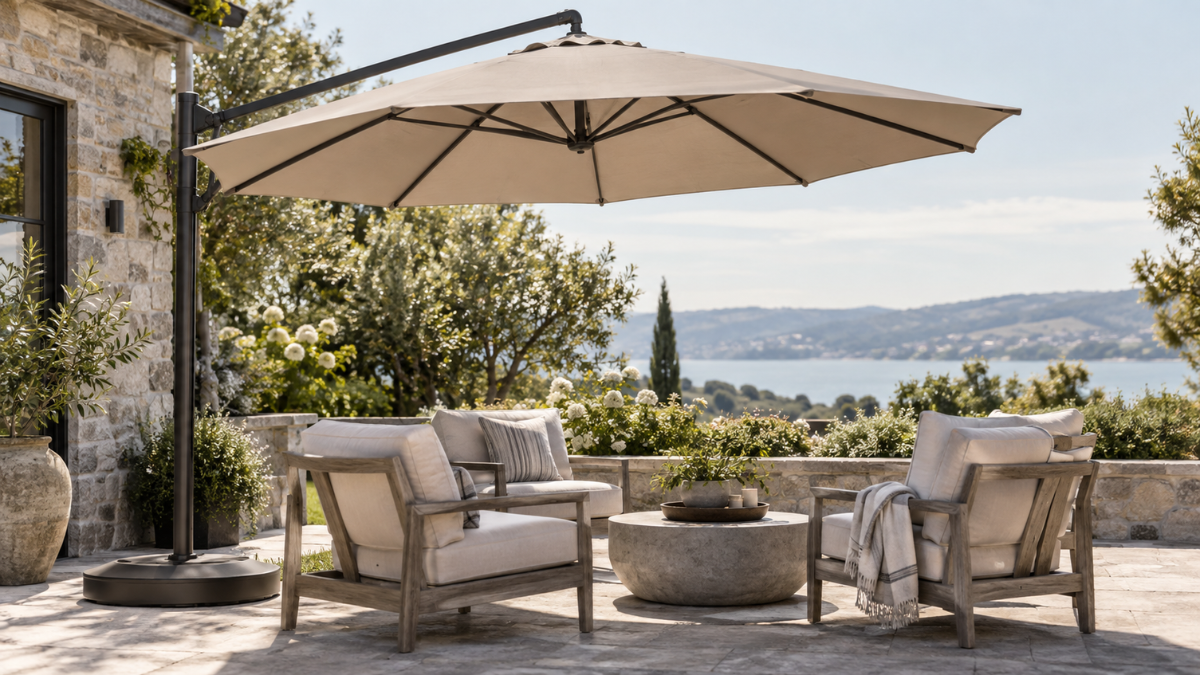
How Patio Umbrella Features Create Safer Shade for Daily Outdoor Gatherings
A patio umbrella gives you dependable shade while making your outdoor area comfortable during sunny days. It can help protect your seating, dining table, and guests from direct sunlight.
Yet choosing one involves several factors, including size, fabric, frame material, base weight, and opening mechanism.
The right model should fit your space without blocking walkways or overwhelming nearby furniture. It should also handle local weather conditions and suit how you plan to use the area.
This guide explains the main umbrella types, materials, measurements, and maintenance tips to help you make a practical purchase.
What Is a Patio Umbrella?
A patio umbrella is a large outdoor shade structure designed for decks, gardens, balconies, pool areas, and open-air dining spaces. It usually features a fabric canopy supported by a metal, wood, or fiberglass frame.
Some umbrellas fit through the center hole of an outdoor table. Others use an offset frame that positions the supporting pole away from the shaded area. Available designs range from compact balcony models to large canopies suited to spacious seating arrangements.
Common Types of Patio Umbrellas
Understanding each design can help you select a model that works with your furniture and available space.
Market Umbrella
A market umbrella has a straight center pole and a round, square, or octagonal canopy. It commonly fits through the opening of a patio dining table.
This design works well for outdoor meals, small seating areas, and everyday residential use. Its simple structure also makes it easy to open, close, and store.
Cantilever Umbrella
A cantilever umbrella has an offset pole that supports the canopy from the side. Since there is no center pole beneath the canopy, you can place chairs, sofas, or tables directly under the shaded section.
Many cantilever models can rotate or tilt, allowing you to adjust the shade as the sun changes position. These umbrellas often require a heavy base because their weight is distributed to one side.
Tilt Umbrella
A tilt umbrella lets you angle the canopy toward the sun. Common tilt systems include push-button, collar, and automatic mechanisms.
This feature is useful during the early morning or late afternoon when sunlight enters from a lower angle. It can reduce glare without requiring you to relocate the umbrella.
Half Umbrella
A half umbrella has a flat side that sits close to a wall. Its compact shape suits balconies, narrow patios, and small decks where a full canopy may take up too much room.
Beach-Style Umbrella
Beach-style umbrellas are lightweight and portable. Some models have pointed poles for placement in sand or soft ground. They can work for temporary backyard use, though they may lack the stability needed for regular patio placement.
How to Select the Correct Patio Umbrella Size
Your umbrella should extend beyond the edges of the area you want to shade. For a dining table, aim for approximately two feet of canopy coverage on every side.
Here is a simple size guide:
| Table or Seating Size | Suggested Canopy Diameter |
|---|---|
| Up to 30 inches | 6–7 feet |
| 31–38 inches | 7–8 feet |
| 39–48 inches | 8–9 feet |
| 49–60 inches | 9–10 feet |
| Over 60 inches | 10–13 feet |
Measure the entire furniture arrangement instead of measuring only the table. Account for chairs when they are pulled out, nearby doors, railings, tree branches, roof edges, and walking paths.
Choosing a Suitable Canopy Fabric
Outdoor fabric affects sun protection, appearance, cleaning requirements, and product lifespan. Look for material designed to resist fading, moisture, mildew, and repeated outdoor exposure.
Solution-Dyed Acrylic
Solution-dyed acrylic is known for strong color retention and resistance to sunlight. The color is added while the fibers are being produced, helping the fabric maintain its appearance after extended exposure.
This material generally costs extra, though it may provide better long-term performance in sunny locations.
Polyester
Polyester is a common and affordable canopy material. It comes in many colors and patterns and usually provides adequate shade for occasional use.
Its fade resistance depends on the fabric quality and protective coating. Check the manufacturer’s specifications before purchasing.
Olefin
Olefin fabric resists moisture, mildew, stains, and fading. It dries quickly and works well in areas that receive frequent rain or strong sunlight.
Vinyl-Coated Fabric
Vinyl-coated fabric provides strong water resistance and is relatively easy to clean. However, it may retain heat and feel less breathable than woven outdoor textiles.
Frame Materials to Compare
The frame supports the canopy and affects the umbrella’s weight, durability, and maintenance needs.
Aluminum Frames
Aluminum is lightweight, rust-resistant, and easy to maintain. Powder-coated aluminum provides added protection against scratches and corrosion. It is a practical choice for humid or rainy locations.
Wood Frames
Wooden frames create a warm, traditional appearance. Teak and other weather-resistant woods can perform well outdoors when maintained correctly.
Wood may require regular sealing or oiling. It is also usually heavier than aluminum and may not include a crank or tilt mechanism.
Fiberglass Frames
Fiberglass ribs can bend under wind pressure instead of snapping easily. This flexibility makes them suitable for breezy areas. Many models combine fiberglass ribs with an aluminum center pole.
Steel Frames
Steel is strong and often less expensive than aluminum. It can rust if its coating becomes scratched or damaged, so regular inspections are helpful.
Why the Umbrella Base Matters
A canopy needs a properly weighted base to remain stable. An undersized stand may allow the umbrella to lean, tip over, or become dangerous during sudden wind.
Base requirements depend on canopy size, pole design, table support, and wind exposure. A small table umbrella may work with a lighter stand when secured through the table. A freestanding or cantilever model usually needs considerable weight.
Follow the manufacturer’s minimum base recommendation. For added security, choose a base with locking wheels, adjustable feet, or fillable sections designed for sand or water.
Never leave an open umbrella unattended during strong wind, even when it has a heavy base.
Helpful Features for Daily Use
Several features can make your umbrella easier and safer to operate:
- A crank lift opens and closes the canopy with less effort.
- A pulley system provides a traditional opening method.
- A tilt mechanism helps block angled sunlight.
- A rotating canopy lets you adjust coverage without moving the base.
- A vented canopy allows warm air and light wind to pass through.
- Built-in LED lights provide evening illumination.
- A protective cover shields the canopy during storage.
- Replaceable fabric extends the usable life of the frame.
Choose features based on your normal routine. A lightweight manual model may suit occasional use, while an adjustable cantilever umbrella may serve a large seating area better.
Matching an Umbrella With Outdoor Furniture
Your umbrella should complement the scale and color of your furniture. Neutral shades such as beige, gray, taupe, and navy tend to coordinate with many outdoor settings. Brighter colors can create a clear focal point, though they may show fading sooner in intense sunlight.
Match the canopy shape with the furniture layout whenever possible. Round umbrellas suit circular tables, while square or rectangular canopies provide efficient coverage for matching tables and sectional seating.
Check the pole diameter if you plan to place the umbrella through a table opening. A pole that is too wide will not fit, while a very narrow pole may shift without a stabilizing ring.
Patio Umbrella Safety Tips
Safe placement protects your guests, furniture, and umbrella.
Keep the canopy away from grills, fire pits, heaters, and open flames. Make sure the frame does not touch electrical wires or low lighting fixtures. Close the umbrella during storms, heavy rain, and strong wind.
Inspect the ribs, pole, crank, cord, and base regularly. Stop using the umbrella if you notice bent parts, loose hardware, torn fabric, or a damaged opening mechanism.
Children should not climb on the stand or pull on the operating cord. Secure hanging cords to prevent tripping or entanglement.
How to Clean and Maintain Your Patio Umbrella
Regular care can prevent stains, mildew, and mechanical problems.
Remove loose dust with a soft brush or handheld vacuum. Clean the canopy using mild soap, warm water, and a soft cloth. Avoid harsh bleach unless the care label specifically permits it.
Allow the canopy to dry fully before closing or storing it. Trapped moisture may encourage mildew and unpleasant odors.
Wipe metal frames with a damp cloth and check for damaged coating. Treat wooden frames according to the manufacturer’s care instructions. Lubricate moving parts only with a product approved for the umbrella mechanism.
During long periods of nonuse, close the canopy, secure the ties, and add a weather-resistant cover. Indoor storage can provide stronger protection during severe seasonal weather.
Where Should You Place a Patio Umbrella?
Position the umbrella where sunlight affects your outdoor routine most. Common locations include dining tables, poolside loungers, conversation sets, children’s play areas, and small balcony seating.
Watch how sunlight moves across the area during the day. A fixed center-pole model may provide enough midday shade, while an adjustable design can handle changing sun angles.
Leave adequate clearance around the canopy so it can open freely. Check overhead branches, rooflines, walls, and nearby doors before securing the base.
Mistakes to Avoid When Buying a Patio Umbrella
A frequent mistake is choosing a canopy based only on appearance. Size, stability, fabric quality, and frame construction have a direct effect on performance.
Other common purchasing errors include:
- Buying a base that is too light
- Ignoring pole diameter and table compatibility
- Selecting indoor fabric for outdoor use
- Forgetting to measure the full seating area
- Leaving insufficient space for canopy movement
- Assuming every model can tolerate strong wind
- Skipping replacement-part availability
- Storing the umbrella while the fabric is damp
Checking these details before buying can prevent unnecessary replacement costs.
Create Comfortable Shade With the Right Patio Umbrella
A carefully selected patio umbrella can make your deck, balcony, or garden seating area easier to enjoy during sunny weather. Focus on accurate measurements, dependable canopy fabric, a durable frame, and a properly weighted base.
Add tilt, rotation, lighting, or easy-lift features when they suit your daily needs. With correct placement and routine maintenance, your umbrella can provide reliable shade across many outdoor seasons