
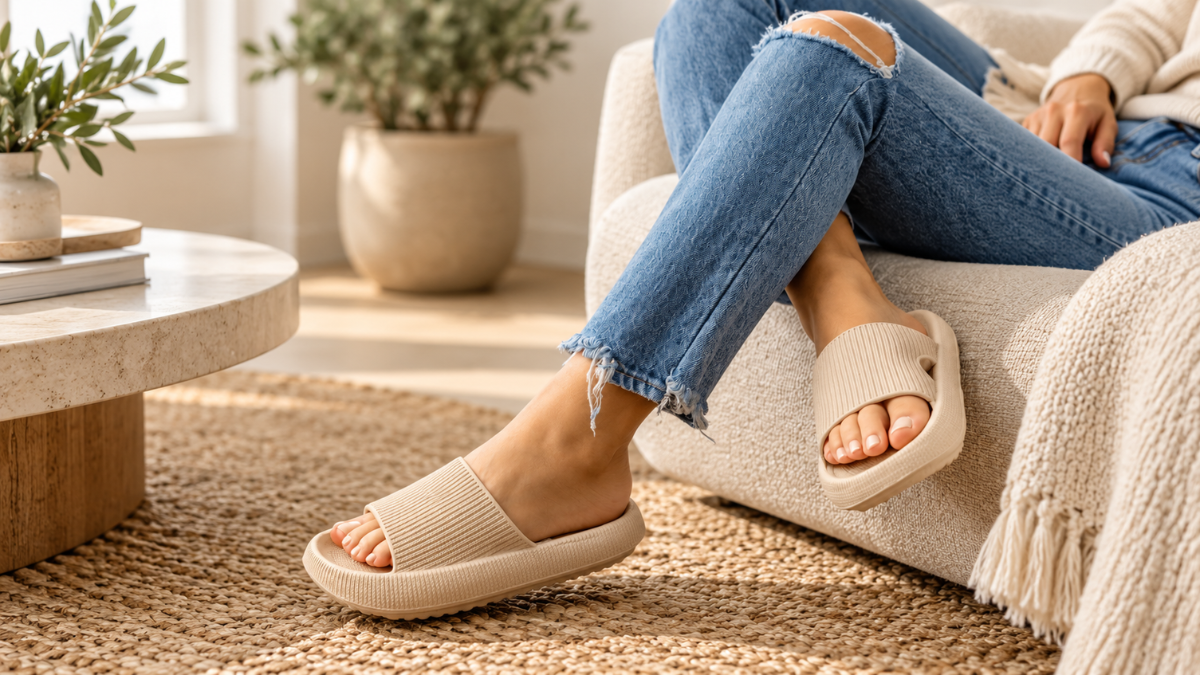
What Makes Recovery Slides Different From Regular Slides and Casual Sandals
After a tough workout, long run, sports practice, or busy day on your feet, comfortable footwear can help reduce pressure while you rest.
Recovery slides are designed with cushioned footbeds, supportive contours, and easy slip-on construction. Many athletes wear them after training, yet they can suit anyone who spends long hours standing or walking.
The right pair may help tired feet feel comfortable while moving around the house, locker room, gym, or pool area. However, cushioning, arch support, traction, and fit can differ greatly between brands.
What Are Recovery Slides?
Recovery slides are slip-on sandals created for post-exercise comfort. They typically have thick soles, contoured footbeds, and supportive arches. Unlike thin flip-flops, these slides are designed to distribute pressure across the feet and provide cushioning during short periods of walking.
They are commonly worn after:
- Running or jogging
- Weight training
- Basketball or team sports
- Hiking
- Cycling
- Long work shifts
- Extended periods of standing
Recovery footwear cannot treat an injury or replace professional medical care. Still, a properly fitted pair may provide comfort when your feet feel tired after physical activity.
How Do Recovery Slides Work?
During exercise, your feet repeatedly absorb force from the ground. This can leave your heels, arches, and forefeet feeling tired. Cushioned slides create a softer surface between your feet and the floor.
Contoured footbeds may also help hold your feet in a stable position. Some designs use a rocker-shaped sole that encourages smoother walking. Others focus on thick foam cushioning or firm arch support.
The effect depends on the design. Soft slides may feel comfortable immediately, while firmer models may provide better structure for certain foot types.
Benefits of Wearing Recovery Slides
Comfortable Post-Workout Footwear
After wearing tight running shoes or training footwear, slides allow your feet to relax. Their open design provides airflow and makes them easy to put on after exercise.
Cushioned Support for Tired Feet
Thick foam may reduce the hard feeling of walking on tile, concrete, or locker-room floors. This can make routine movement feel easier after demanding activity.
Convenient Slip-On Design
You can put on slides without dealing with laces, straps, or socks. This makes them practical for the gym, pool, shower area, campsite, or home.
Supportive Footbed Shape
Some recovery sandals include raised arches, deep heel cups, and curved soles. These features may help distribute pressure instead of concentrating it under one area of the foot.
Easy Maintenance
Many foam and rubber slides can be cleaned using mild soap and water. Always check the manufacturer’s care instructions because certain materials can shrink or become damaged by heat.
Recovery Slides Versus Regular Slides
| Feature | Recovery slides | Regular slides |
|---|---|---|
| Footbed | Contoured and cushioned | Often flat |
| Arch support | Usually moderate or firm | Often limited |
| Sole thickness | Commonly thick | Thin to moderate |
| Main purpose | Post-exercise and daily comfort | Casual wear |
| Heel structure | May include a deep heel cup | Usually basic |
| Price | Often higher | Available at many price points |
Regular slides may work well for quick errands or pool use. Recovery slides are usually better suited to people seeking added cushioning and structured support.
Features to Check Before Buying Recovery Slides
Cushioning Level
Extra-soft foam can feel comfortable, but excessive softness may allow your feet to sink or shift. Firmer cushioning can provide stability, especially when walking on hard surfaces.
Look for a balance that feels comfortable without making your feet unstable.
Arch Support
The arch should match the natural shape of your foot. Support that feels too high may create pressure, while a flat footbed may lack the structure you need.
People with ongoing arch or heel pain should speak with a podiatrist before relying on recovery footwear.
Proper Fit
Your heel and toes should remain inside the footbed. Slides that are too short can leave your toes hanging over the front. Oversized slides may move around and increase the chance of slipping.
The upper strap should feel secure without rubbing or squeezing your foot.
Traction
Check the outsole pattern if you plan to wear the slides near pools, showers, or wet pavement. Textured rubber outsoles generally provide better grip than smooth foam soles, though no footwear can prevent every slip.
Materials
Common materials include EVA foam, rubber, synthetic fabric, and molded compounds. Water-resistant models are convenient near pools and showers. Fabric-lined designs may feel softer but can take longer to dry.
Weight
Lightweight slides are easy to pack in a gym or travel bag. Heavier models may feel stable, though they can be less convenient to carry.
Durability
Look for dense foam, secure strap construction, and a durable outsole. Very soft materials may compress after repeated use. Customer reviews can help identify concerns involving sizing, strap failure, or early sole wear.
Who May Benefit From Recovery Footwear?
Recovery slides may suit runners, gym members, athletes, healthcare workers, retail employees, travelers, and anyone who stays on their feet for long periods.
They can also serve as comfortable house shoes when indoor floors feel hard. However, slides lack the heel security of closed shoes. They may not be appropriate for long walks, uneven trails, driving, or activities requiring secure footwear.
When Should You Wear Recovery Slides?
You can wear them after exercise, during rest periods, around the house, or while completing short errands. They may also be useful between games during tournaments.
Avoid using slides as a replacement for running shoes, walking shoes, or protective work footwear. Their open construction leaves your toes exposed and may provide limited side-to-side stability.
How to Find the Right Size
Start with the manufacturer’s size chart, since sizing can vary between brands. Measure both feet and use the larger measurement when selecting a size.
When trying on recovery sandals, check that:
- Your heel sits within the rear edge
- Your toes do not extend beyond the front
- The arch contour aligns with your foot
- The strap holds your foot securely
- The slides do not create rubbing or pressure
- You can walk without gripping the footbed with your toes
Try them later in the day when your feet may be slightly swollen. This can help you judge how they feel after training or extended standing.
How to Care for Recovery Slides
Clean your slides regularly to remove sweat, dirt, and odor. Use cool or lukewarm water, mild soap, and a soft cloth. Allow them to air-dry away from direct heat.
Avoid leaving foam slides inside a hot vehicle. High temperatures may cause certain materials to shrink, warp, or lose their original shape.
Replace your slides when the tread becomes smooth, the cushioning remains compressed, or the footbed no longer supports your feet properly.
Frequently Asked Questions
Are recovery slides good for your feet?
A properly fitted pair may provide cushioning and temporary comfort after activity. Results depend on your foot shape, the slide design, and any existing condition.
Can you wear recovery slides every day?
You can wear them for casual activities if they remain comfortable and stable. Closed, supportive shoes may be safer for long walks, physical work, or uneven ground.
Can recovery slides help with plantar fasciitis?
Some people prefer slides with firm arch support and heel cushioning. However, plantar fasciitis can require a specific treatment plan. Consult a qualified healthcare professional if heel pain continues or worsens.
Should recovery sandals feel soft or firm?
The best firmness depends on personal comfort and stability. Soft foam provides immediate cushioning, while firmer materials may maintain their shape longer.
Can you wear recovery slides in the shower?
Only use slides identified as water-resistant or suitable for wet areas. Confirm that the outsole provides reliable traction and allow the footwear to dry after use.
Choosing Recovery Slides for Lasting Comfort
Recovery slides can give your feet a cushioned place to rest after training, sports, work, or extended standing. Focus on fit, arch placement, sole stability, traction, and material quality rather than choosing based on softness alone.
A well-fitted pair should feel secure and comfortable without causing rubbing, pressure, or unstable movement. If you experience persistent foot pain, swelling, numbness, or difficulty walking, seek advice from a qualified healthcare professional.