
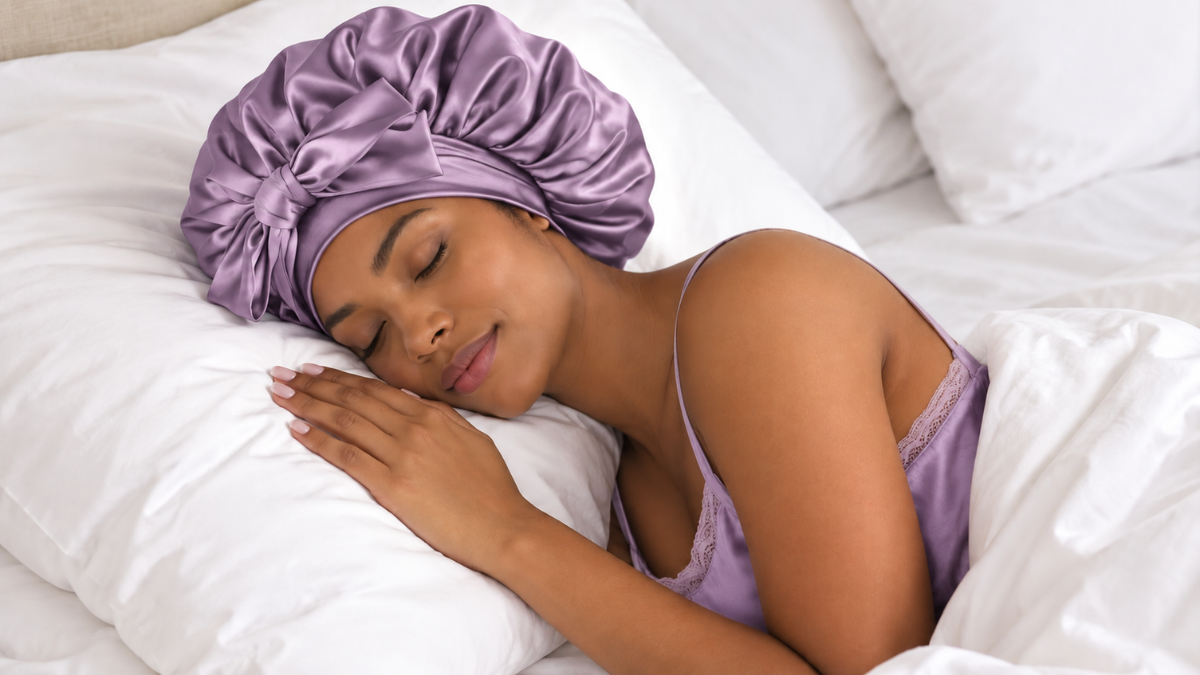
What Satin Bonnet Benefits Can Support Healthier Hair During Your Sleep
Hair can develop tangles, frizz, dryness, and breakage while you sleep. Cotton pillowcases may absorb natural oils and create friction as your head moves during the night. Wearing a satin bonnet provides a simple way to protect your hair and maintain your hairstyle until morning.
The main satin bonnet benefits include reduced friction, improved moisture retention, fewer tangles, and longer-lasting hairstyles. A bonnet can support many hair types, including curly, coily, wavy, relaxed, braided, and straight hair.
What Is a Satin Bonnet?
A satin bonnet is a lightweight hair covering designed for sleeping or resting. Its smooth inner surface allows hair strands to move without constant rubbing.
Satin refers to the fabric’s smooth construction rather than a specific material. Manufacturers may produce satin from polyester, nylon, rayon, or silk fibers. Polyester satin bonnets are commonly available because they are affordable, smooth, and easy to maintain.
1. Helps Reduce Hair Breakage
Friction can weaken the hair shaft, especially when hair is dry, chemically treated, or naturally fragile. Tossing and turning against a rough pillowcase may cause strands to snag, stretch, or snap.
A satin sleep bonnet creates a smoother surface around your hair. This may reduce pulling and protect fragile ends throughout the night. Consistent use can help retain hair length by limiting preventable breakage.
2. Supports Moisture Retention
Cotton bedding can absorb oil and moisture from your hair. This may leave your strands feeling dry when you wake up.
Satin absorbs less moisture than many common cotton fabrics. Wearing a bonnet may help keep natural oils and leave-in products on your hair.
This benefit can be helpful for curly, coily, bleached, relaxed, or color-treated hair, which may be prone to dryness.
A bonnet does not add moisture by itself. Apply a suitable moisturizer or leave-in conditioner before bed if your hair needs hydration.
3. Controls Frizz
Frizz often develops when raised hair cuticles encounter friction or humidity. A smooth satin surface helps limit overnight rubbing, which may keep the cuticle flatter.
You may notice fewer flyaways and smoother hair in the morning. Results depend on your hair type, condition, bedtime routine, and the fit of the bonnet.
4. Prevents Knots and Tangles
Loose hair can become twisted and tangled as you move in bed. Knots may lead to painful detangling and accidental breakage the following day.
A bonnet keeps your hair contained and reduces contact with bedding. Long hair can be placed in a loose braid, pineapple, or low bun before the bonnet is applied. Avoid tight styles that pull on the scalp or hairline.
5. Preserves Curls and Waves
One of the best-known satin bonnet benefits is curl protection. Curly and wavy hair can lose definition after hours of contact with a pillowcase.
A satin bonnet helps keep curls gathered while reducing friction. Your curl pattern may appear less flattened or frizzy the next morning. Light refreshing with water or curl spray may be enough to restore the style.
6. Extends the Life of Hairstyles
Protective styles and salon treatments require time and money. A satin bonnet may help preserve braids, twists, locs, blowouts, silk presses, roller sets, and heat-styled curls.
Keeping the hair covered can limit rubbing, loose strands, and flattened sections. This may reduce the need for frequent restyling or repeated heat use.
7. May Reduce Frequent Heat Styling
Hair that stays smoother overnight often requires less correction in the morning. You may be able to skip another pass with a flat iron, curling iron, or blow-dryer.
Reducing unnecessary heat exposure may lower the risk of dryness, split ends, and heat damage. Always apply a heat-protectant product when using heated styling tools.
8. Protects Hair Products and Bedding
Oils, conditioners, and overnight treatments can transfer onto pillowcases. A bonnet helps keep these products close to your hair and limits residue on your bedding.
Choose a clean bonnet when using scalp or hair treatments. Heavy product buildup inside the fabric may irritate the scalp or leave hair feeling greasy.
9. Works With Many Hair Types
Satin bonnets are commonly associated with curly and coily textures, yet people with straight, wavy, relaxed, braided, or extension-treated hair may use them as well.
The right bonnet depends on hair length, volume, and style. A compact design may suit short hair, while a long or oversized bonnet can hold braids, locs, thick curls, or extensions without compression.
How to Choose the Right Satin Bonnet
Use these features to select a comfortable and practical bonnet:
- Smooth inner lining: Check that seams and labels will not rub against your hair.
- Secure band: The bonnet should stay in place without causing headaches or leaving deep marks.
- Suitable size: Your hair should fit inside without being crushed.
- Adjustable design: An adjustable band can improve fit and reduce slipping.
- Breathable material: Lightweight fabric may feel cooler during sleep.
- Quality stitching: Strong seams can help the bonnet last through regular washing.
Avoid bands that place constant tension around your edges. If the bonnet slips off, try an adjustable model or pair it with a satin pillowcase.
How to Wear a Satin Bonnet Correctly
Start with dry or slightly damp hair. Sleeping with soaking-wet hair inside a bonnet may keep the scalp damp for an extended period and make the bonnet uncomfortable.
Gather your hair loosely, then place it fully inside the bonnet. Tuck in the ends carefully because they are often the oldest and most fragile part of the hair. Position the band along your hairline without pulling it too tightly.
Keep the smoothest side of the bonnet against your hair. Some products have satin on both sides, while others have a smooth lining only on the inside.
How Often Should You Wash a Satin Bonnet?
Wash your bonnet regularly to remove oil, sweat, dead skin, and styling-product residue. Weekly washing is a practical schedule for many users, though frequent product use may require cleaning it sooner.
Follow the care label. Hand washing with cool water and gentle detergent may help preserve the fabric and elastic. Allow the bonnet to air-dry fully before wearing it again.
Having two bonnets makes it easier to use a clean one while the other is being washed.
Satin Bonnet vs. Silk Bonnet
Satin describes a smooth fabric construction, while silk is a natural fiber. A silk bonnet can feel soft and lightweight, though it usually costs considerably extra and may require delicate care.
Polyester satin is generally less expensive and easier to wash. Both options can reduce friction when the inner surface is smooth and the bonnet fits correctly. Your budget, comfort, care preferences, and sensitivity to fabric can guide your choice.
Frequently Asked Questions About Satin Bonnets
Can a satin bonnet help hair grow?
A satin bonnet does not directly stimulate hair growth. It may reduce tangles and breakage, which can help you retain existing length. Hair growth is influenced by genetics, nutrition, hormones, scalp health, age, and medical factors.
Should straight hair use a satin bonnet?
Yes. Straight hair may benefit from reduced friction, fewer tangles, moisture retention, and protection for heat-styled looks. Choose a loose style that does not create unwanted bends.
Can you wear a satin bonnet every night?
You can wear one nightly if it feels comfortable and remains clean. Stop using it if the band causes irritation, scalp discomfort, or tension around the hairline.
Should hair be wet or dry before wearing a bonnet?
Dry or slightly damp hair is generally preferable. Fully wet hair may remain damp during sleep. If you follow a wet-setting routine, use breathable fabric and confirm that your scalp stays comfortable.
Why does a satin bonnet fall off during sleep?
The bonnet may be too large, too small, or fitted with weak elastic. An adjustable band can provide a secure fit. A satin pillowcase can serve as backup protection if the bonnet slips off.
Start Protecting Your Hair With a Satin Bonnet
The key satin bonnet benefits include less friction, improved moisture retention, reduced tangling, and stronger hairstyle preservation. A well-fitting bonnet may help your hair feel smoother and easier to manage each morning.
Choose a size that holds your hair comfortably, wash it regularly, and avoid tight bands around your edges. Pairing the bonnet with gentle hair care, suitable products, and limited heat exposure can support healthier-looking hair over time.