
How to Choose a Sports Bra for Better Workout Comfort and Support
A sports bra can make a noticeable difference in how comfortable and supported you feel during exercise.
From walking and yoga to running, cycling, and high-intensity workouts, the right design may help reduce unwanted movement while allowing you to focus on your activity.
Sports bras come in different support levels, materials, strap styles, and fits, so choosing one involves more than simply finding your usual bra size.
What Is a Sports Bra and Why Is It Important?
A sports bra is designed specifically to provide breast support during physical activity.
Unlike many everyday bras, sports bras typically use supportive fabrics, wider bands, structured cups, compression, or a combination of these features to help control movement.
During exercise, repetitive movement may cause discomfort, especially during running, jumping, or other high-impact activities. A properly fitted sports bra can help provide stability while improving overall workout comfort.
The amount of support you need often depends on your activity level, body shape, breast size, and personal comfort preferences.
Understanding Sports Bra Support Levels
Sports bras are commonly grouped into three general support categories: low, medium, and high impact.
Low-Impact Sports Bras
Low-impact options are designed for activities involving slower or gentler movements.
They may work well for:
- Yoga
- Pilates
- Stretching
- Walking
- Strength training
- Casual everyday wear
These bras are often lightweight and flexible, providing comfort without excessive compression.
Medium-Impact Sports Bras
Medium-support bras provide additional stability for workouts involving more frequent movement.
They may be suitable for:
- Cycling
- Hiking
- Dance workouts
- Gym training
- Moderate cardio
- Elliptical workouts
These styles often combine comfortable stretch with reinforced bands or structured straps.
High-Impact Sports Bras
High-impact sports bras are designed to limit movement during activities involving running, jumping, or sudden changes in direction.
Common activities include:
- Running
- Sprinting
- HIIT workouts
- Basketball
- Tennis
- Cross-training
High-support designs may feature adjustable straps, reinforced bands, molded cups, or multiple layers of supportive fabric.
How Should a Sports Bra Fit?
Fit plays a major role in both comfort and support. A sports bra should feel secure without causing painful pressure or restricting normal breathing.
Several areas deserve attention when checking the fit.
Check the Underband
The band around your rib cage provides much of the bra’s support.
It should sit firmly against your body without sliding upward. You should generally be able to place one or two fingers underneath the band comfortably.
If the band moves significantly during exercise, the size may be too large.
Examine the Cups
Your breast tissue should fit fully inside the cups or supportive fabric.
Signs that the cup area may be too small include:
- Spillage around the sides
- Overflow at the neckline
- Excessive compression
- Uncomfortable pressure
If there are large gaps or wrinkles in the fabric, the cup size may be too large.
Check the Straps
Straps should remain secure without digging deeply into your shoulders.
Adjustable straps can make it easier to customize the fit, particularly if you have a longer or shorter torso.
Test the Bra With Movement
Before choosing a sports bra, move around while wearing it.
Try:
- Raising your arms
- Twisting your torso
- Jogging in place
- Bending forward
- Performing several small jumps
The bra should remain secure without riding up, shifting, or causing irritation.
Compression vs. Encapsulation Sports Bras
Sports bras generally use compression, encapsulation, or a combination of both support methods.
Compression Sports Bras
Compression bras hold the breasts close to the chest to help reduce movement.
They often have a simple pullover design and may be particularly comfortable for low- to medium-impact exercise.
Encapsulation Sports Bras
Encapsulation styles support each breast separately using structured cups.
They can provide more defined shaping and may offer additional support for medium- or high-impact workouts.
Combination Sports Bras
Combination designs use both compression and separate cups.
These bras may provide greater stability during demanding exercise while maintaining a more structured shape.
Choosing the Right Fabric
Fabric can influence comfort just as much as support.
Sports bras are commonly made with blends containing materials such as:
- Polyester
- Nylon
- Spandex
- Elastane
Stretch fibers help the bra move with your body, while moisture-managing materials may help move perspiration away from your skin.
Breathable mesh panels can also improve airflow during warm-weather workouts or intense exercise.
Cotton may feel comfortable for casual use, but it tends to absorb moisture and may remain damp longer during strenuous activities.
Why Moisture-Wicking Materials Matter
Sweat can create friction between your skin and clothing. Over time, this friction may contribute to irritation or chafing.
Moisture-wicking sports bras are designed to draw moisture away from the skin so it can evaporate more easily.
When shopping, you may want to look for features such as:
- Quick-drying fabric
- Breathable mesh
- Moisture-wicking technology
- Flat seams
- Smooth interior construction
These details can be particularly helpful during longer workouts.
Sports Bra Strap Styles
Strap design can affect both comfort and support.
Racerback
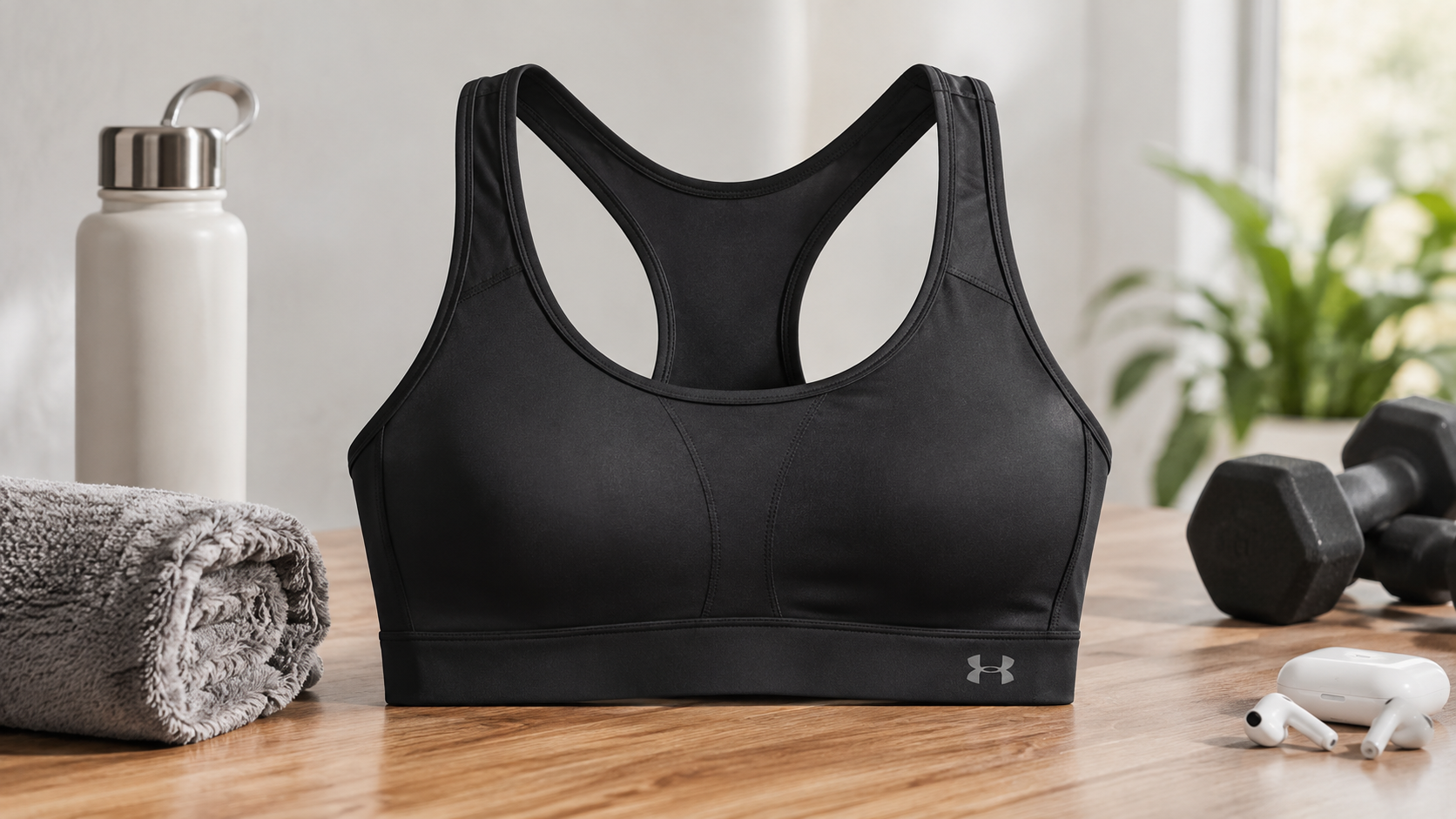
Racerback straps meet between the shoulder blades, helping distribute tension and keep the straps from slipping.
This style is common in running and training bras.
Traditional Straps
Traditional shoulder straps resemble those found on everyday bras.
Adjustable versions can provide greater flexibility when customizing the fit.
Cross-Back Straps
Cross-back straps create an X-shaped design behind your shoulders.
They may provide additional stability while creating a sporty appearance.
Convertible Straps
Some sports bras allow you to change the strap configuration.
This can be useful if you want one bra that works with different workout tops.
Front-Zip and Pullover Sports Bras
The way a sports bra opens can also affect convenience.
Pullover bras are simple and often feature minimal hardware. However, removing a tight pullover bra after a sweaty workout can sometimes be difficult.
Front-zip sports bras may be easier to put on and remove. Some designs also include internal hooks or fabric guards to help keep the zipper secure.
Back-clasp sports bras offer another option and may allow you to adjust the band as the material stretches over time.
Sports Bras for Running
Running creates repetitive vertical and horizontal movement, making strong support especially important.
A running sports bra may include:
- High-impact support
- Adjustable straps
- Structured cups
- Wide underbands
- Breathable materials
- Reinforced seams
Testing the bra by jogging or jumping before purchasing can help you evaluate whether the support feels adequate.
Sports Bras for Yoga and Pilates
Yoga and Pilates typically involve lower-impact movement, but flexibility remains important.
You may prefer a sports bra with:
- Soft stretch fabric
- Minimal hardware
- Flexible straps
- Seamless construction
- Light or medium support
Because these workouts involve bending and twisting, check that the neckline and band remain secure through different positions.
Sports Bras for Gym Training
Strength training often includes a combination of lifting, stretching, and cardio.
A medium-support sports bra may work well for many gym routines. If your workout includes treadmill running, jumping exercises, or intense circuits, a higher-support option may be more comfortable.
Common Sports Bra Fit Problems
Even a well-designed bra may feel uncomfortable if the size or style does not match your body.
The Band Rides Up
This can indicate that the band is too loose.
Trying a smaller band size may improve stability.
The Straps Dig In
Straps that create painful pressure may be too tight or carrying too much of the bra’s support.
A wider band or wider straps may help distribute pressure.
The Cups Create Spillage
Breast tissue spilling over the neckline or sides usually indicates that the cup area is too small.
Consider trying a larger cup size or a different style.
The Bra Causes Chafing
Chafing may occur when the fabric repeatedly rubs against your skin.
Check for:
- Rough seams
- Loose bands
- Excess moisture
- Poorly positioned straps
A smoother, moisture-wicking design may improve comfort.
When Should You Replace a Sports Bra?
Like other athletic clothing, sports bras gradually lose elasticity.
You may need a replacement when:
- The band becomes loose
- Straps stretch significantly
- Fabric loses elasticity
- Support feels noticeably reduced
- Cups no longer hold their shape
- Seams become damaged
How quickly this happens depends on how frequently the bra is worn, how it is washed, and the quality of its materials.
Rotating between several sports bras can help reduce repeated wear on one garment.
How to Wash and Care for a Sports Bra
Proper care may help preserve elasticity and shape.
Always follow the garment’s care label, but common recommendations include:
- Washing in cool or cold water
- Using mild detergent
- Fastening hooks before washing
- Placing bras in a mesh laundry bag
- Avoiding excessive fabric softener
- Air drying when possible
High dryer temperatures may gradually weaken elastic fibers.
How Many Sports Bras Do You Need?
The ideal number depends on how frequently you exercise.
If you work out several times each week, having multiple bras makes it easier to rotate them between washes.
You might keep different styles for different activities, such as:
- One or two high-impact bras for running
- Medium-support bras for gym workouts
- Low-impact bras for yoga or walking
This approach allows you to match your support level with your workout.
What Should You Look for When Buying a Sports Bra?
Before purchasing, consider your activity, comfort preferences, and fit requirements.
Useful features may include:
- Appropriate impact support
- Moisture-wicking materials
- Breathable construction
- Adjustable straps
- Secure underband
- Comfortable seams
- Proper cup coverage
- Easy closure system
The most expensive option is not automatically the best choice. Fit and appropriate support matter more than price alone.
Choose the Right Sports Bra for Better Workout Comfort
Finding the right sports bra comes down to matching the design with your body and activity level. Low-impact workouts may only require lightweight support, while running and high-intensity exercise generally call for greater stability.
Pay close attention to the band, cups, straps, fabric, and overall fit rather than relying only on the size printed on the label.
Trying different styles can also help you determine whether compression, encapsulation, racerback straps, or adjustable designs feel best.
Once you find a sports bra that remains secure and comfortable during movement, it can become an essential part of a more comfortable workout routine.