
Travel First Aid Kit Checklist for Safe and Stress-Free Family Vacations
A travel first aid kit gives you quick access to basic supplies when minor injuries or common health problems occur away from home. A scraped knee, painful blister, headache, insect bite, or upset stomach can disrupt your plans if you do not have suitable items nearby.
Packing a kit also reduces the need to search for a pharmacy in an unfamiliar location. This can be especially helpful during road trips, outdoor activities, international vacations, and visits to remote areas.
Your kit should match your health needs, destination, planned activities, and trip length. This guide explains what to pack, how to organize each item, and how to keep medicines safe during travel.
Why You Should Carry a Travel First Aid Kit
Minor injuries can happen at airports, hotels, beaches, hiking trails, or busy tourist sites. A compact kit lets you respond quickly before a small issue becomes harder to manage.
A properly prepared kit can help you:
- Clean and cover minor cuts
- Manage small scrapes and blisters
- Relieve common headaches or mild pain
- Address minor allergies and insect bites
- Handle motion sickness or digestive discomfort
- Keep regular medicines accessible
- Stay prepared when local supplies are unavailable
A travel kit supports basic care only. Serious wounds, breathing problems, chest pain, severe allergic reactions, heavy bleeding, or symptoms that rapidly worsen require professional medical attention.
Essential Wound-Care Supplies
Cuts and scrapes are among the most common problems experienced during trips. Pack basic wound-care items in several sizes so you can handle different minor injuries.
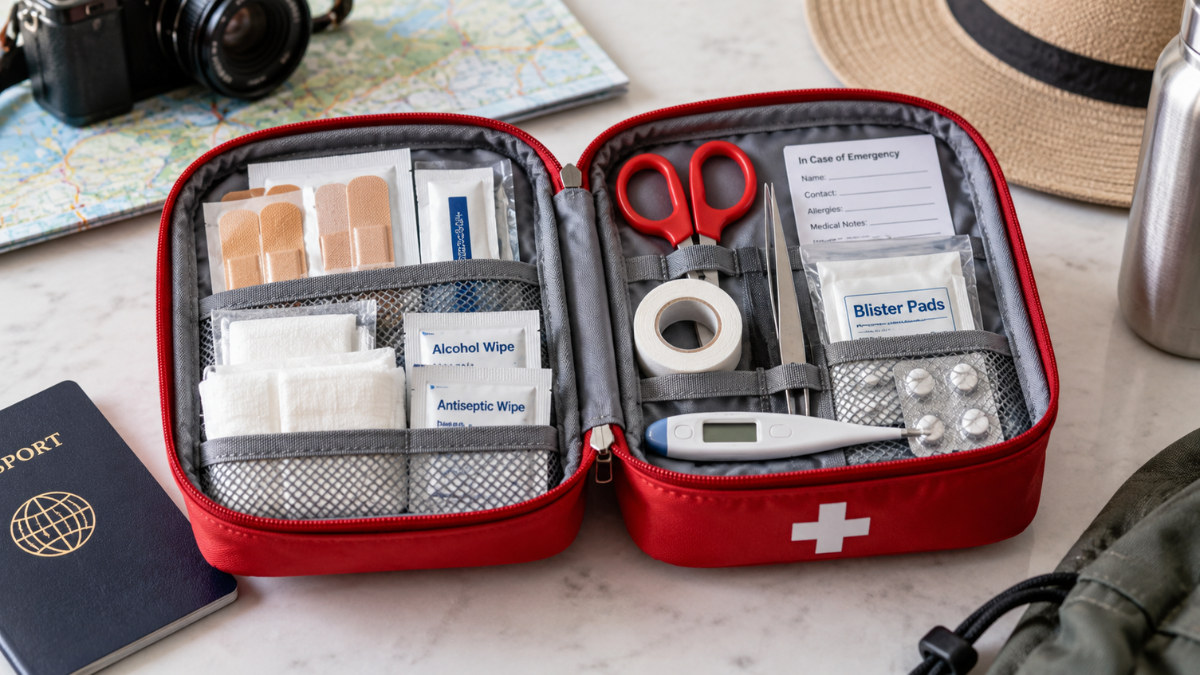
Useful supplies include:
- Adhesive bandages in assorted sizes
- Sterile gauze pads
- Non-stick wound dressings
- Medical adhesive tape
- Antiseptic wipes
- Elastic bandage
- Self-adhesive wrap
- Blister pads or moleskin
- Disposable medical gloves
- Small bandage scissors
- Tweezers
Waterproof bandages are useful during beach trips, water activities, or visits to humid destinations. Gauze and medical tape can cover areas that standard adhesive bandages cannot protect properly.
The CDC travel health kit guidance recommends storing first aid supplies in a durable, water-resistant container that remains easy to reach.
Common Medicines to Pack
Medicines should reflect your age, medical history, destination, and personal needs. Speak with a doctor or pharmacist before adding unfamiliar medication to your kit.
Common options may include:
- Your preferred pain and fever medicine
- Antihistamine for mild allergy symptoms
- Anti-itch or hydrocortisone cream
- Antacid for occasional indigestion
- Motion-sickness medicine
- Oral rehydration salts
- Medicine for diarrhea, used according to medical advice
- Mild laxative if you commonly experience constipation
- Throat lozenges
- Any prescribed emergency medicine
Check the instructions, age restrictions, warnings, and possible drug interactions before using any medicine.
Avoid giving adult products to children unless a qualified healthcare professional confirms that the product and dose are suitable.
Keep Prescription Medicines Accessible
Pack enough prescription medicine for your entire trip, plus a small extra supply in case your return is delayed. Place essential medicine in your carry-on bag instead of checked luggage. This protects access if your checked bag is delayed or lost.
Keep prescription products in their original labeled containers. Carry a copy of your prescription and a short medical summary listing:
- Your medical conditions
- Current medicines and generic names
- Known allergies
- Emergency contact information
- Your doctor’s contact details
- Health or travel insurance information
Some destinations restrict certain pain medicines, stimulants, sedatives, and other controlled drugs. Check the rules of your destination and any transit country before departure.
Add Items Based on Your Destination
A standard travel first aid kit may not cover every location or activity. Adjust the contents according to the health risks you may face.
For Beach and Tropical Trips
Pack sunscreen with SPF 30 or higher, insect repellent, aloe vera gel, anti-itch cream, and oral rehydration salts. A waterproof pouch can protect your supplies from sand, moisture, and sudden rain.
For Hiking and Camping
Add blister pads, an elastic bandage, an emergency blanket, a flashlight or headlamp, water-treatment supplies, and extra wound dressings. Pack only emergency equipment that you know how to use safely.
For Road Trips
Motion-sickness medicine, cold packs, bandages, hand sanitizer, and drinking water can be helpful. Store the kit away from direct sunlight and hot areas inside the vehicle.
For International Travel
Bring copies of prescriptions, vaccination records when required, insurance information, and contact details for local emergency services. Ask a healthcare professional about destination-specific vaccines and preventive medication well before departure.
For Trips With Children
Pack child-appropriate medicines, a dosing syringe or medicine cup, a thermometer, child-sized bandages, and any prescribed emergency treatment. Confirm every dose based on the child’s age and weight.
How to Choose the Right Container
Your container should be lightweight, durable, easy to identify, and resistant to water. A zippered pouch with internal compartments works well for most vacations.
Separate supplies into labeled sections, such as:
- Wound care
- Regular medicines
- Digestive care
- Allergy care
- Personal medical documents
Place liquids inside sealed plastic pouches to prevent leaks. Avoid transferring tablets into unmarked containers because identification can become difficult during an emergency or security inspection.
Carry-On Packing and Security Checks
Airline and airport security rules vary by country. Review current baggage restrictions before packing scissors, liquids, syringes, cold packs, or medical devices.
Keep essential medicine, inhalers, allergy treatment, and medical documents in your personal bag. If you use injectable medication, carry the prescription or a supporting letter from your healthcare provider.
Place sharp tools in checked luggage if local security rules do not permit them in the cabin. Never assume that rules at your departure airport will be identical to those at your destination.
How to Maintain Your Travel First Aid Kit
Inspect your kit before every trip. Replace expired medicines, opened sterile products, damaged packaging, and supplies used during your previous vacation.
Use this quick checklist:
- Check every expiration date
- Replace missing bandages and dressings
- Confirm prescription quantities
- Test batteries in medical devices
- Review destination entry rules
- Update emergency contacts
- Add supplies suited to planned activities
- Confirm that labels remain readable
Store the kit in a cool, dry place between trips. Heat and moisture can damage medicines and adhesive products.
Common Packing Mistakes to Avoid
One frequent mistake is packing a large kit filled with supplies you do not know how to use. Focus on practical items suited to basic care and your personal health requirements.
Other mistakes include:
- Packing expired medication
- Leaving prescriptions in checked baggage
- Carrying tablets without labels
- Forgetting child-safe doses
- Ignoring destination drug restrictions
- Storing supplies in direct sunlight
- Packing too few regular medicines
- Failing to replace used items
Avoid sharing prescription medicine with another traveler. A drug that is safe for you may cause an allergic reaction, dangerous interaction, or harmful side effect in someone else.
When to Seek Medical Help
A travel first aid kit cannot replace qualified medical care. Contact local emergency services or visit a medical facility for:
- Heavy or uncontrolled bleeding
- Trouble breathing
- Chest pain
- Loss of consciousness
- Suspected broken bones
- Deep wounds or animal bites
- Severe burns
- Signs of a serious allergic reaction
- Persistent vomiting or dehydration
- High fever or rapidly worsening symptoms
Save the emergency number for your destination before leaving home. Keep travel insurance details and identification close to your medical supplies.
Stay Prepared With the Right Travel First Aid Kit
A well-organized travel first aid kit can help you manage minor injuries, common discomfort, and personal medical needs while away from home.
Pack only suitable supplies, keep prescription medicine labeled, and review the contents before every departure.
Tailor the kit to your destination, activities, trip duration, and health history. Careful preparation can reduce delays and help you respond calmly when a minor health problem occurs.