
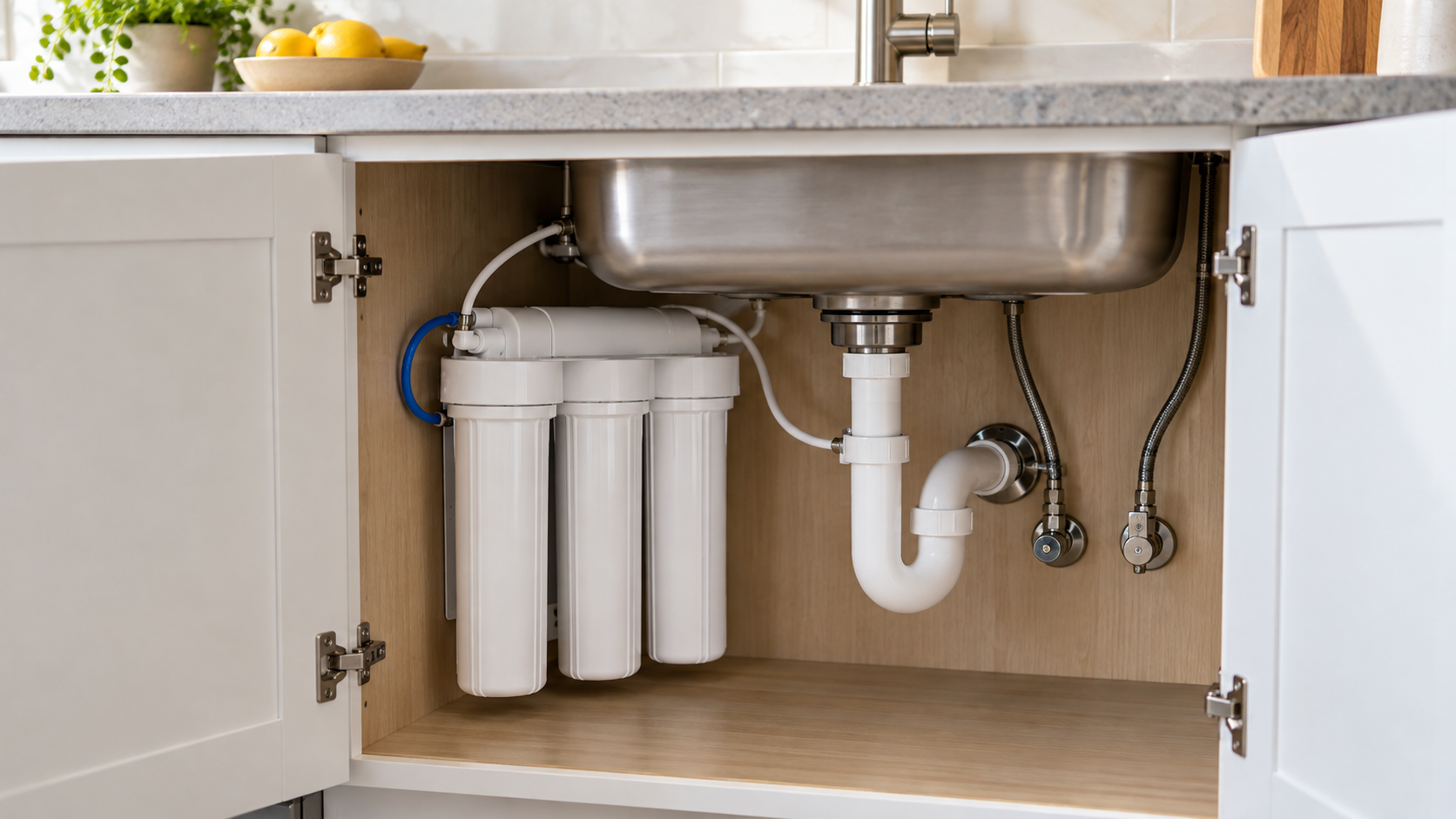
Why Under Sink Water Filter Systems Are Popular for Modern Kitchens
Installed beneath your kitchen sink, this type of filtration system connects directly to the water line and treats water before it reaches a dedicated faucet or, in some systems, your existing kitchen faucet.
Unlike countertop filters or pitchers, an under sink system stays hidden inside the cabinet, helping you save counter space while maintaining convenient access to filtered water.
Different models target different contaminants, so understanding filtration technology, installation needs, maintenance, and water quality can help you choose a system that fits your household.
What Is an Under Sink Water Filter and How Does It Work?
An under sink water filter is installed inside the cabinet below a sink and connected to the cold-water supply line.
As water moves through the system, one or more filtration stages help reduce specific substances before the water reaches the faucet.
Depending on the system, filtration may involve activated carbon, sediment filters, membrane technology, or several filtration methods working together.
Common components can include:
- Sediment filters for larger particles
- Activated carbon filters for taste and odor
- Carbon block filters for additional contaminant reduction
- Reverse osmosis membranes in more advanced systems
- Post-filters that provide a final filtration stage
Not every under sink filter removes the same substances, so reviewing certified performance claims is important before choosing one.
Why Choose an Under Sink Water Filter?
Under sink filtration systems are popular because they combine convenience with a discreet design. Once installed, you usually do not need to refill containers or keep a filtration pitcher in the refrigerator.
Saves Counter Space
The filtration equipment remains inside the cabinet, leaving your countertops free for appliances, food preparation, and other kitchen essentials.
Provides Filtered Water on Demand
Filtered water is available directly from the faucet whenever you need it. This can be especially convenient for drinking, cooking, making coffee, or filling reusable bottles.
May Improve Taste and Odor
Activated carbon filtration may reduce chlorine and other substances that can affect how tap water tastes or smells.
Offers Multiple Filtration Options
You can find simple carbon systems as well as multi-stage and reverse osmosis systems designed for broader contaminant reduction.
Types of Under Sink Water Filter Systems
Understanding the major system types can make it easier to identify the filtration approach that matches your needs.
Single-Stage Filters
Single-stage systems use one filter cartridge. Many rely on activated carbon to reduce chlorine, unpleasant tastes, odors, and selected contaminants.
These systems are often simple to maintain and may work well when your main concern is improving everyday drinking-water quality.
Multi-Stage Filtration Systems
Multi-stage systems move water through two or more different filters. One stage might capture sediment, while another uses activated carbon to address chlorine or other substances.
Using multiple stages allows each filter to perform a specific function.
Reverse Osmosis Systems
Reverse osmosis systems typically use several filtration stages, including a semipermeable membrane. They can reduce a wider range of dissolved substances than basic carbon filtration.
Traditional reverse osmosis systems may also include a storage tank, while some newer tankless designs produce filtered water as needed.
What Can an Under Sink Water Filter Reduce?
The answer depends entirely on the filter’s design and certification.
Depending on the model, a system may be designed to reduce substances such as:
- Chlorine
- Sediment
- Certain volatile organic compounds
- Lead
- Mercury
- Some pesticides
- Certain chemicals
- Unpleasant tastes
- Unpleasant odors
Reverse osmosis systems may also reduce certain dissolved minerals, salts, and other contaminants.
Do not assume that every filtration system removes every contaminant. Check the manufacturer’s performance data and look for recognized third-party certifications that apply to the substances you want to reduce.
How to Choose the Right Under Sink Water Filter
The best filtration system for your kitchen depends on your water quality, cabinet space, household needs, and maintenance preferences.
Understand Your Water Quality
Start by identifying what may be present in your water. Municipal water quality reports can provide useful information, while private well users may want to consider professional water testing.
Knowing what you actually need to reduce can help you avoid choosing a system based only on the number of filtration stages.
Check Independent Certifications
Certification can help verify that a filtration system has been tested against specific standards.
Look for information about applicable NSF/ANSI standards or certifications from recognized testing organizations. Certification claims should clearly identify what the system has been tested to reduce.
Consider Water Flow
Some filters can slightly reduce water pressure or flow rate. If your household frequently fills large pots, bottles, or pitchers, compare rated flow rates before choosing a system.
Measure Your Cabinet
Under sink systems vary significantly in size. Measure the available height, width, and depth before purchasing, especially if your cabinet already contains plumbing, cleaning supplies, or a garbage disposal.
Review Filter Replacement Costs
Replacement filters are an ongoing expense. Compare cartridge prices and recommended replacement schedules instead of focusing only on the initial system cost.
Under Sink Water Filter vs Water Filter Pitcher
Both options can improve drinking water, but they serve different needs.
A pitcher is portable, inexpensive, and requires almost no installation. However, you must refill it regularly, and its capacity is limited.
An under sink filter provides filtered water directly from the faucet and typically handles larger volumes. It also keeps filtration equipment hidden, although installation and maintenance may require more effort.
For households that use filtered water frequently, an under sink system may offer greater convenience.
Under Sink Water Filter vs Reverse Osmosis System
Not all under sink filters use reverse osmosis.
Standard carbon-based under sink systems typically focus on reducing substances such as chlorine, taste, odor, and certain contaminants while retaining most naturally occurring dissolved minerals.
Reverse osmosis systems use a membrane designed to reduce a broader range of dissolved substances. However, they are usually more complex and may require additional space, maintenance, and wastewater management.
Your water quality and filtration goals should determine which option is more suitable.
Is an Under Sink Water Filter Difficult to Install?
Installation difficulty depends on the design.
Some direct-connect filters can be installed by connecting them to the existing cold-water line. More complex systems may require installing a dedicated faucet or drilling an additional opening in the sink or countertop.
A typical installation may involve:
- Shutting off the cold-water supply.
- Connecting the filter inlet to the water line.
- Mounting the filtration unit inside the cabinet.
- Connecting the outlet tubing.
- Installing a dedicated faucet if required.
- Turning the water supply back on.
- Checking all connections for leaks.
- Flushing the filters according to the manufacturer’s instructions.
If plumbing modifications are required or you are unsure about installation, professional installation may be the safer option.
How Often Should You Replace Under Sink Water Filters?
Replacement schedules vary by filter type, water quality, and household usage.
Some cartridges may require replacement every several months, while others are rated for a specific number of gallons or a longer service period.
Signs that a replacement might be needed include:
- Reduced water flow
- Changes in taste
- Changes in odor
- Reaching the manufacturer’s recommended service interval
- A filter-life indicator showing that replacement is due
Replacing cartridges on schedule helps maintain system performance.
How to Maintain an Under Sink Water Filter
Routine maintenance is generally straightforward.
You should:
- Replace cartridges according to instructions.
- Inspect tubing and fittings periodically.
- Check for moisture or leaks.
- Clean reusable components when recommended.
- Flush new cartridges before drinking the water.
- Replace worn seals or O-rings when necessary.
Does an Under Sink Water Filter Need Electricity?
Many standard carbon filtration systems do not require electricity. They operate using the pressure already present in your household plumbing.
Some advanced systems, including certain tankless reverse osmosis units, may use electricity for pumps, displays, monitoring features, or automatic flushing.
Check installation requirements before purchasing if there is no electrical outlet inside or near your sink cabinet.
What Should You Look for Before Buying?
Before choosing an under sink system, compare more than just the number of filtration stages.
Pay attention to:
- Certified contaminant reduction
- Filter lifespan
- Replacement cartridge cost
- Flow rate
- System dimensions
- Installation requirements
- Dedicated faucet requirements
- Water pressure requirements
- Warranty coverage
- Availability of replacement filters
A system that matches your actual water conditions is usually more useful than one with extra features you do not need.
Common Mistakes to Avoid
One common mistake is assuming that all water filters provide the same protection. Filtration performance varies widely.
You should also avoid:
- Ignoring certification details
- Buying before measuring cabinet space
- Forgetting ongoing replacement costs
- Delaying cartridge replacement
- Choosing a system without checking water pressure requirements
- Assuming clearer-looking water means all unwanted contaminants are gone
Filtration decisions should be based on tested performance rather than appearance alone.
Is an Under Sink Water Filter Worth Considering?
An under sink water filter may be a useful option when you want convenient access to filtered drinking water without taking up countertop or refrigerator space.
Systems range from simple carbon filters to advanced multi-stage and reverse osmosis designs, giving you flexibility based on your water quality and household needs.
The most important step is identifying what you want to reduce and selecting a system that has credible performance testing for those substances.
You should also consider installation space, flow rate, replacement frequency, and long-term maintenance costs.
Improving Everyday Water Quality With the Right Filter
Instead of focusing only on the number of filters or marketing claims, compare certified performance, maintenance requirements, and the characteristics of your home’s water supply.
With the right under sink water filter, you can create a practical filtration setup that fits neatly into your kitchen and supports consistent access to filtered water.