
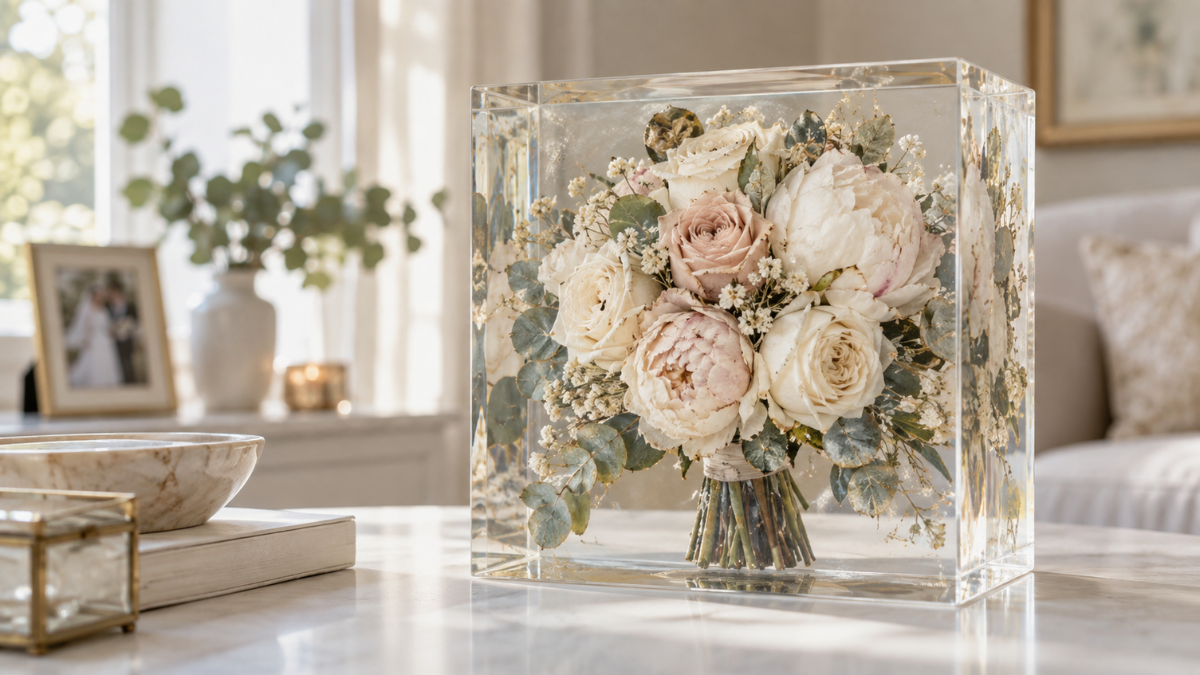
How to Choose the Right Wedding Bouquet Preservation Method for Lasting Results
Your wedding flowers may last only a few days, yet the memories attached to them can stay with you for years. Wedding bouquet preservation protects selected blooms and turns them into framed artwork, resin décor, ornaments, or other personal keepsakes.
Planning early gives your flowers a better chance of retaining their shape and color. Your chosen method, flower varieties, budget, and preferred display will help determine the ideal preservation option.
What Is Wedding Bouquet Preservation?
Wedding bouquet preservation involves treating, drying, or sealing bridal flowers to slow natural decay. The process removes moisture from petals and stems before the flowers are placed in a protective display.
Preserved bouquets will not look exactly as they did on the wedding day. Some petals may darken, lighten, shrink, or change texture. Careful preparation can still protect much of their original character.
Why Should You Preserve Your Bridal Bouquet?
Your bouquet may include flowers connected to your relationship, family traditions, or wedding theme. Preserving these blooms gives you a physical reminder of the ceremony.
You can use preserved flowers to create:
- Framed floral artwork
- Decorative resin blocks
- Ring holders
- Jewelry pieces
- Christmas ornaments
- Pressed-flower albums
- Bookmarks or greeting cards
- Anniversary gifts
- Memorial keepsakes
You can preserve the full bouquet or select several flowers for a smaller display.
Best Wedding Bouquet Preservation Methods
Preservation methods produce different shapes, textures, and display styles. Review each technique before deciding how you want the finished flowers to look.
Air-Drying the Bouquet
Air-drying is a simple and affordable option. Remove damaged petals, secure the stems, and hang the bouquet upside down in a dark, dry room with steady airflow.
The flowers normally need two to four weeks to dry. Large blooms and thick stems may take longer.
Air-drying works well with:
- Roses
- Lavender
- Eucalyptus
- Baby’s breath
- Statice
- Carnations
Dried flowers usually develop softer, darker colors. They can also become brittle, so avoid frequent handling.
Pressing Individual Flowers
Flower pressing creates flat blooms suitable for framed art, albums, cards, and bookmarks. Place individual flowers between sheets of absorbent paper, then put them inside a flower press or heavy book.
Replace damp paper when needed to prevent mold. Drying can take several weeks, depending on the thickness of each bloom.
Pressing works best for:
- Daisies
- Pansies
- Ferns
- Small wildflowers
- Individual rose petals
- Thin leaves
Bulky flowers may need to be separated into petals before pressing.
Drying Flowers With Silica Gel
Silica gel removes moisture while helping flowers retain their natural form. Place fresh blooms inside an airtight container, then gently surround them with silica crystals.
This method is suitable for roses, dahlias, peonies, and other full flowers. Drying times vary, so follow the directions printed on the silica gel packaging. Removing flowers too late can leave the petals extremely fragile.
Wear gloves and work in a ventilated area when handling fine silica particles.
Preserving Flowers in Resin
Resin preservation places fully dried flowers inside clear decorative pieces. Popular resin designs include coasters, trays, paperweights, bookends, jewelry, and ring holders.
Flowers must be completely dry before casting. Any remaining moisture can cause bubbles, browning, or cloudy resin. Large projects require accurate measurements and careful curing, so professional service may provide a cleaner finish.
Professional Freeze-Drying
Freeze-drying removes moisture at a controlled low temperature. It can help maintain the bouquet’s three-dimensional shape and natural color.
After treatment, the flowers are usually rearranged and placed inside a shadow box or glass case. This service often costs significantly higher than home preservation, though it can suit full-bouquet displays.
DIY or Professional Bouquet Preservation?
A DIY project can work well when you have enough time, proper materials, and a simple design in mind. Air-drying and pressing are generally easier for beginners.
Professional preservation may be suitable when:
- Your bouquet contains delicate or expensive flowers
- You want a full three-dimensional display
- You prefer a custom resin design
- You lack time after the wedding
- You want professional framing
- Your flowers require specialized treatment
Review the artist’s previous work before booking. Ask about expected color changes, processing time, pricing, shipping, and display care.
When Should You Book a Preservation Service?
Contact preservation artists several months before your wedding. Availability may be limited during popular wedding periods, and some studios accept only a set number of bouquets.
Confirm how soon the flowers must arrive after the ceremony. Many artists prefer to receive them within 24 to 72 hours.
If you plan to complete the project at home, purchase all necessary supplies before your wedding date. This prevents delays once the flowers begin to wilt.
How to Protect Your Bouquet After the Ceremony
The condition of your flowers affects the final result. Start caring for them as soon as the celebration ends.
Follow these helpful practices:
- Keep the bouquet in clean, cool water
- Store it in a cool room
- Avoid direct sunlight and heat
- Remove damaged petals carefully
- Prevent petals from getting crushed
- Follow all delivery instructions from your preservation artist
- Ask a trusted person to handle the bouquet after the reception
Do not place the flowers in a household freezer. Uncontrolled freezing can damage petals and cause discoloration after thawing.
Which Wedding Flowers Preserve Well?
Flowers with firm petals and lower moisture levels often dry successfully. Roses, carnations, orchids, lavender, baby’s breath, and statice are common preservation choices.
Hydrangeas and peonies can also be preserved, though their delicate petals require careful handling. Succulents and high-moisture flowers may need specialized preparation.
Preserve the healthiest blooms first. Wilted, bruised, or moldy flowers may produce poor results.
Wedding Bouquet Preservation Cost
Costs vary according to the chosen technique, bouquet size, frame material, design, and service provider. Simple pressed-flower frames may be cheaper than large resin blocks or freeze-dried arrangements.
Your final quote may include charges for:
- Custom framing
- Resin casting
- Engraving
- Shipping
- Rush service
- Added decorative pieces
- Bouquet reconstruction
- Protective packaging
Request a written quote and confirm what is included before sending your flowers.
Creative Ways to Display Preserved Wedding Flowers
Your display should match your interior style and available space. A shadow box can hold flowers, ribbon, wedding invitations, photographs, and other small items from the ceremony.
Resin pieces work well as functional décor, while pressed flowers can create elegant wall art. Small petals can also be added to lockets, pendants, or ornaments.
Keep the finished piece away from direct sunlight, moisture, and strong heat. These conditions can cause fading, warping, or discoloration.
Common Preservation Mistakes to Avoid
Starting too late is one of the main reasons flowers become difficult to preserve. Begin the process while the bouquet still looks fresh.
Other common mistakes include:
- Sealing flowers before they are fully dry
- Drying flowers in direct sunlight
- Using damp storage containers
- Applying excessive pressure to delicate petals
- Handling dried blooms frequently
- Selecting damaged flowers
- Ignoring resin curing instructions
- Expecting every petal to keep its exact wedding-day shade
Natural materials change over time, even with careful treatment.
Caring for Preserved Wedding Flowers
Place your display in a dry indoor location away from windows, heaters, and humid rooms. Clean glass or resin surfaces with a soft cloth. Avoid spraying household cleaners directly onto exposed flowers.
Inspect the display occasionally for moisture, loose petals, or fading. Proper placement and gentle cleaning can extend its display life.
Keep Your Wedding Memories Blooming Through Preserved Flowers
Wedding bouquet preservation turns short-lived flowers into a personal reminder of your celebration. Air-drying, pressing, silica gel, resin casting, and freeze-drying each create a different result.
Choose your method early, protect the bouquet after the reception, and store the completed display carefully. With timely preparation, your wedding flowers can remain part of your home long after the ceremony ends.