
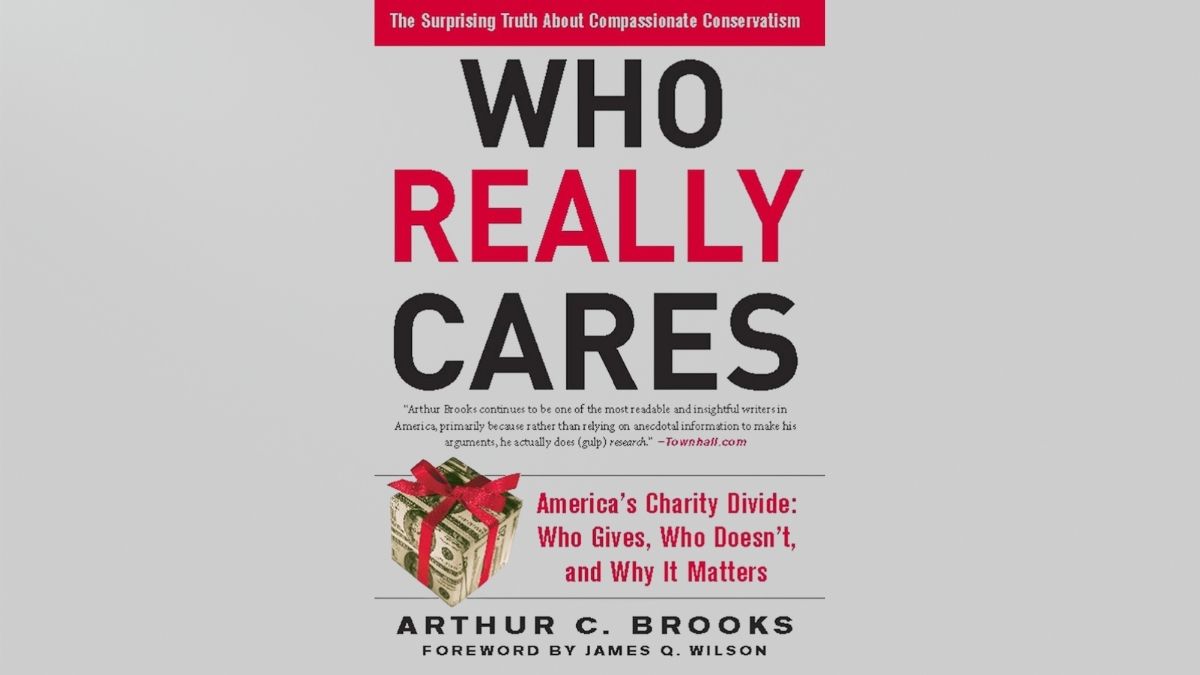
What Drives Generosity and Compassion in Society According to Arthur C. Brooks’s Who Really Cares
Exploring generosity isn’t as simple as labeling one group more compassionate than another—it requires looking closely at data, values, and real-world behavior.
In Who Really Cares, you’re introduced to a perspective that challenges common assumptions and pushes you to reconsider how compassion actually shows up in everyday life. Instead of relying on opinions or political narratives, the book encourages you to examine measurable patterns, question your own beliefs, and think more critically about what it truly means to give.
As you read, you’re not just learning about generosity—you’re also reflecting on your role in shaping it through your actions and choices.
A Closer Look at the Core Argument
Before diving deeper, it helps to understand the book’s foundation. Brooks builds his case using large-scale data rather than assumptions or political rhetoric, making the discussion more grounded and evidence-based.
What the Data Suggests
You’ll find that Brooks presents evidence showing conservatives tend to donate more money and volunteer more time than liberals—even when income levels are similar. This finding challenges a widely accepted narrative and pushes you to question how generosity is defined and measured in society.
At the same time, it’s important to recognize a key counterpoint: generosity isn’t limited to private donations. Some individuals express compassion through support for public welfare programs, which may not be reflected in charitable giving statistics but still represents a meaningful contribution to society.
The Influence of Religion on Giving
This section highlights one of the strongest patterns in the book. Brooks emphasizes that religious participation plays a major role in shaping charitable behavior, regardless of political identity.
Why Religious Engagement Matters
If you’re actively involved in religious communities, you’re statistically more likely to:
- Donate consistently
- Volunteer your time
- Support both religious and secular causes
Interestingly, even when religious donations are separated from other forms of giving, those with strong religious engagement still tend to give more overall. However, critics argue that including church-related contributions can complicate direct comparisons, so it’s worth keeping that limitation in mind.
Family Structure and Personal Responsibility
Brooks also connects generosity to how you view responsibility in your own life, particularly in relation to family and independence.
Key Behavioral Patterns
You may be more inclined to give when you:
- Come from a stable family background
- Value personal accountability
- Rely less on government assistance
On the other hand, individuals who depend more heavily on welfare systems tend to give less privately. Still, this doesn’t necessarily indicate a lack of compassion—it may reflect a different belief system where responsibility for helping others is shared collectively through institutions rather than individuals.
Government vs. Private Charity: A Central Debate
This is where the book becomes especially thought-provoking. You’re encouraged to reflect on whether helping others should primarily be a personal responsibility or a societal one managed through government systems.
Two Perspectives to Consider
If you lean toward individual responsibility, you might prioritize direct action—donating money, volunteering, and engaging personally with your community. This approach often leads to visible, immediate forms of generosity.
If you lean toward government solutions, you may support policies designed to address inequality and provide large-scale assistance. While this may result in lower personal donations, it reflects a broader vision of systemic change.
Brooks suggests that increased reliance on government programs may reduce private charitable behavior. However, others argue that complex social challenges often require structured, large-scale solutions that individual efforts alone cannot fully address.
The Personal Benefits of Giving
Beyond political perspectives, the book also explores how generosity impacts your own well-being, offering a more personal reason to care about giving.
What You Gain from Giving
When you actively help others, you may experience:
- Greater life satisfaction
- A stronger sense of purpose
- Improved emotional and mental well-being
Additionally, communities benefit from stronger social bonds and increased trust. When people give and support one another, it creates a ripple effect that strengthens overall community resilience.
Rethinking Compassion Across Ideologies
One of the most valuable insights you can take away is that compassion isn’t owned by any single political group. Instead, it manifests in different ways depending on your beliefs and priorities.
Different Ways You Show Compassion
You might express compassion through direct action, such as donating or volunteering your time. Others may express it through advocacy, supporting policies that aim to help larger populations.
Both approaches reflect genuine concern for others, but they operate differently. Recognizing this helps you develop a more balanced and informed perspective rather than relying on stereotypes.
Strengths of the Book’s Methodology
Brooks supports his arguments using multiple reliable data sources, including:
- IRS tax records
- National surveys
- Behavioral research studies
This layered approach gives you a more comprehensive understanding of charitable behavior. It strengthens the book’s credibility and encourages you to engage with evidence rather than assumptions.
Limitations and Critical Perspectives
To fully evaluate the book, you should also consider its limitations and the debates surrounding its conclusions.
Common Criticisms
- The focus on U.S.-based data may limit global relevance
- Religious giving can influence overall comparisons
- Interpretations may reflect underlying ideological viewpoints
These critiques don’t necessarily disprove the findings, but they highlight the importance of reading critically and considering multiple perspectives before forming conclusions.
Who Should Read This Book
You’ll likely find this book valuable if you’re interested in:
- Political philosophy
- Social behavior and economics
- The psychology of generosity
- Data-driven discussions on societal issues
It’s especially useful if you enjoy exploring complex topics and questioning widely held assumptions.
A Thought-Provoking Look at Generosity
Before forming your final opinion, take a moment to reflect on how you personally define generosity. Is it measured by direct action, support for systems, or a combination of both?
Who Really Cares doesn’t give you a simple answer—but it does challenge you to think more deeply about compassion, responsibility, and your role in contributing to society. It opens the door to meaningful conversations rather than closing the debate.
You can find this book on Amazon in various formats. If you’re searching for insightful reads or thoughtful gift ideas, it’s a great place to browse and discover more books that encourage deeper thinking and meaningful discussions.