
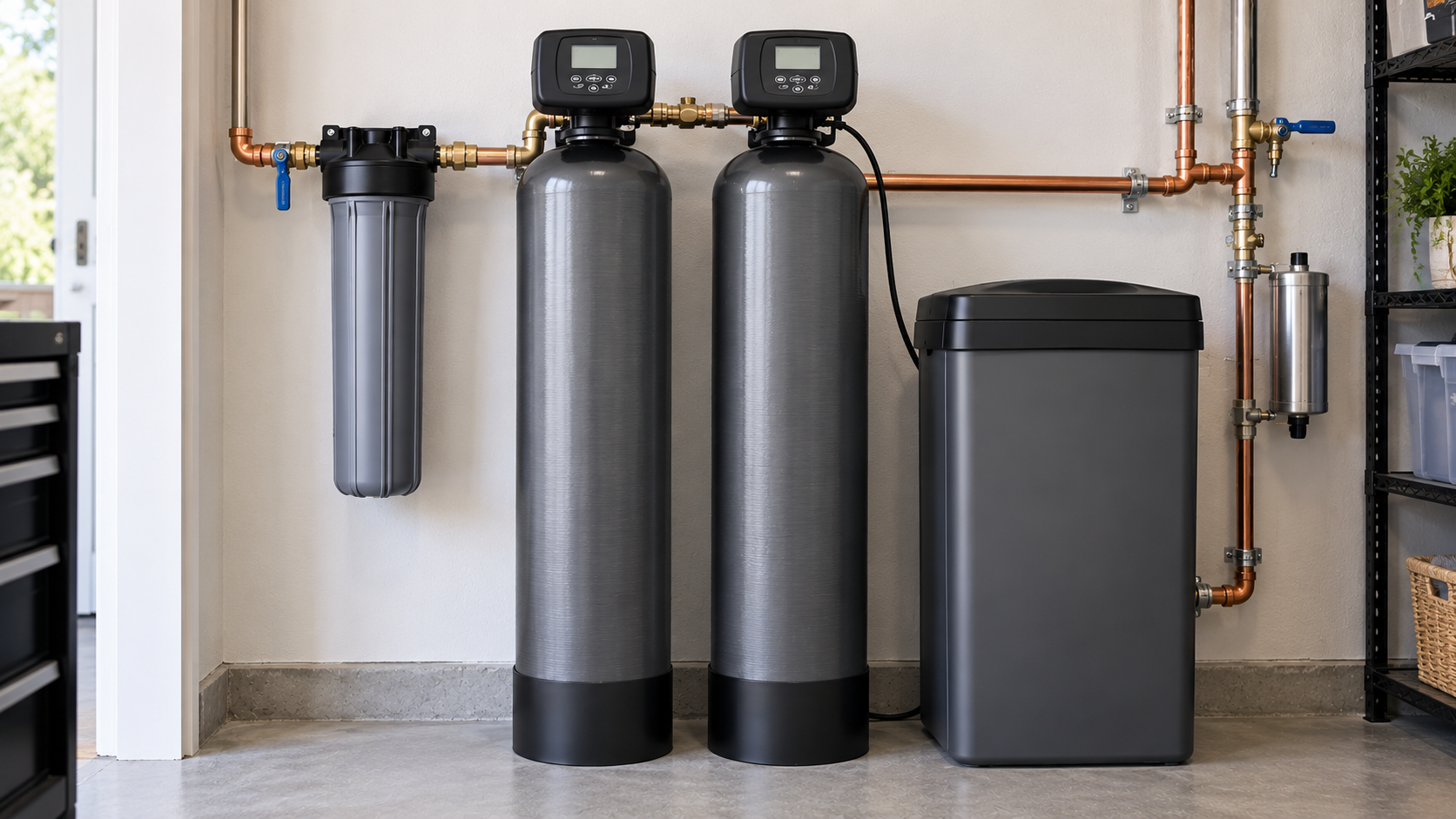
Why Whole House Water Filtration Can Support Cleaner Water Across Every Fixture
Clean water plays an important role in everyday life, from drinking and cooking to bathing, laundry, and cleaning.
If you are concerned about chlorine, sediment, unpleasant odors, or other contaminants entering your home, whole house water filtration may offer a practical solution.
Unlike filters that treat water at a single faucet, a whole-house system is installed where water enters your property, allowing filtered water to reach multiple fixtures and appliances.
What Is Whole House Water Filtration and How Does It Work?
Whole house water filtration treats water before it travels through your home’s plumbing system.
The filtration equipment is generally installed near the main water line, meaning water passes through the system before reaching sinks, showers, washing machines, dishwashers, and other fixtures.
Depending on the system, filtration may involve several stages designed to target different water-quality concerns.
Common stages may include:
- Sediment filtration for dirt, rust, sand, and debris
- Activated carbon filtration for chlorine, odors, and unpleasant tastes
- Specialized media for certain chemicals or heavy metals
- UV treatment for some microorganisms
- Additional filters designed for specific local water conditions
Not every household needs the same setup, so testing your water before choosing a system may help you avoid paying for filtration features you do not need.
Why Homeowners Consider Whole House Water Filtration
A whole-house system can provide more consistent water quality across your property. Instead of relying on separate filters for individual faucets, you can treat incoming water from one central location.
Potential benefits include:
More Consistent Water Quality
Because water is filtered before it reaches your fixtures, you may notice more consistent taste, odor, and clarity throughout your home.
Reduced Chlorine Exposure
Municipal water is often disinfected with chlorine or related compounds. Carbon filtration may reduce chlorine levels, which can improve taste and odor.
Less Sediment in Plumbing Fixtures
Sediment filters can capture particles that might otherwise collect in faucet aerators, showerheads, appliances, and plumbing components.
Better Water for Bathing
Some people prefer filtered water for bathing because reducing chlorine and other substances may make the water feel more pleasant on skin and hair.
Support for Household Appliances
Reducing sediment may help limit buildup in appliances such as washing machines, dishwashers, and water heaters. However, a standard whole-house filter does not necessarily remove minerals that cause hard water.
What Can a Whole House Water Filter Remove?
The contaminants a system can reduce depend on its filters and treatment media. There is no single system that automatically removes every substance found in water.
A typical whole-house filtration system may help reduce:
- Chlorine
- Sediment
- Rust particles
- Dirt
- Unpleasant tastes
- Unpleasant odors
- Certain organic compounds
- Some pesticides or chemicals, depending on the filter
- Certain heavy metals when specialized filtration media is used
If your water contains specific contaminants such as lead, arsenic, nitrates, bacteria, or other substances, you may need a system specifically certified or designed to address them.
Whole House Water Filter vs Water Softener
Whole-house water filtration and water softening are often confused, but they solve different problems.
A water filtration system focuses mainly on contaminants, sediment, chemicals, taste, and odor.
Signs of hard water may include:
- White scale on faucets
- Mineral spots on glassware
- Soap that does not lather easily
- Scale inside water heaters
- Stiff-feeling laundry
If your home has both contaminant concerns and hard water, you might need both filtration and softening equipment.
Common Types of Whole House Water Filtration Systems
Different systems use different technologies. Understanding the main options can make comparing products easier.
Sediment Filters
Sediment filtration is often the first treatment stage. It catches larger particles such as sand, rust, dirt, and debris.
These filters can also help protect later filtration stages from becoming clogged too quickly.
Activated Carbon Filters
Activated carbon is commonly used to reduce chlorine, odors, and chemicals that affect water taste.
Carbon filters are popular for homes connected to municipal water systems.
Catalytic Carbon Filters
Catalytic carbon is designed to treat certain contaminants more effectively than standard activated carbon. Some systems use it to reduce chloramine, which is used by some municipal water suppliers.
UV Water Purification
Ultraviolet systems use UV light to help neutralize certain bacteria, viruses, and microorganisms.
UV treatment does not remove sediment, chemicals, or dissolved minerals, so it is normally combined with other filtration stages.
Specialized Contaminant Filters
Some systems contain media designed to target substances such as iron, manganese, lead, or other contaminants.
Water testing can help determine if specialized filtration is necessary.
How Much Does Whole House Water Filtration Cost?
Whole-house filtration costs can vary considerably depending on system complexity, capacity, filtration technology, plumbing requirements, and installation.
General price ranges may include:
- Basic sediment or carbon systems: around $300 to $1,000
- Multi-stage filtration systems: around $800 to $2,500
- Advanced systems with UV or specialized filtration: around $1,500 to $4,000 or more
- Professional installation: often around $300 to $1,500, depending on plumbing conditions
You should also consider ongoing expenses such as replacement cartridges, filter media, UV lamps, and maintenance.
Annual maintenance costs may range from roughly $100 to $500 or more, depending on the system.
How Long Do Whole House Water Filters Last?
Filter life depends on the type of filter, water quality, household water consumption, and system capacity.
Typical replacement schedules may include:
- Sediment cartridges: every 3 to 12 months
- Carbon cartridges: every 6 to 12 months
- Large carbon media tanks: approximately every 3 to 10 years
- UV lamps: usually about once per year
Your system’s manufacturer recommendations should remain the primary guide for replacement intervals.
A noticeable drop in water pressure, unusual taste, odor, or discoloration may also indicate that maintenance is needed.
Should You Test Your Water Before Choosing a Filter?
Testing your water is one of the most useful steps you can take before buying filtration equipment.
Without testing, you may choose a system that targets contaminants you do not have while overlooking substances that actually require treatment.
If you use municipal water, you can review your local water-quality report and consider additional testing at your home.
If you use a private well, regular testing is especially important because water quality may change over time.
Testing may evaluate:
- Hardness
- pH
- Iron
- Manganese
- Lead
- Nitrates
- Bacteria
- Chlorine
- Total dissolved solids
- Other regional contaminants
Once you know what is in your water, you can choose filtration technologies designed for those conditions.
Where Is a Whole House Water Filter Installed?
Most systems are installed along the main incoming water line.
Ideally, filtration happens before water branches off to fixtures throughout the home.
Common installation areas include:
- Basements
- Garages
- Utility rooms
- Mechanical rooms
- Well equipment areas
The location should provide enough room for maintenance and filter replacement.
Does Whole House Water Filtration Reduce Water Pressure?
A properly sized system should generally maintain comfortable household water flow, but filtration can affect pressure if the equipment is too small or filters become clogged.
To minimize pressure loss, consider:
- Your household’s peak water demand
- Pipe size
- System flow rate
- Number of bathrooms
- Number of occupants
- Filter capacity
If your household frequently uses several showers, appliances, or faucets at the same time, choosing a system with an adequate flow rate becomes especially important.
How to Choose the Right Whole House Water Filtration System
Instead of selecting a system based only on price or the number of filtration stages, focus on the specific needs of your household.
Consider these factors:
Identify Your Water Source
Municipal water and well water often require different treatment approaches.
Test Your Water
Determine which contaminants you actually need to reduce.
Review System Certifications
Look for products tested or certified for the contaminants they claim to address.
Check Flow Rate
Make sure the system can support your household’s typical water demand.
Compare Maintenance Requirements
Some filters need frequent cartridge changes, while larger media systems may require less frequent maintenance.
Calculate Long-Term Costs
Include replacement filters, professional servicing, electricity for UV systems, and other recurring expenses.
Consider Installation Requirements
Some systems may require plumbing modifications, drainage connections, electrical outlets, or professional installation.
Is Whole House Water Filtration Worth It?
Whole-house filtration may be worth considering when your water has recurring problems with chlorine, sediment, odors, chemicals, or other contaminants.
It can be particularly useful if you want filtered water available throughout your home instead of only at the kitchen sink.
However, the best value comes from choosing equipment that matches your actual water conditions. A high-priced system with unnecessary treatment stages may provide little additional benefit.
Testing your water and comparing systems based on contaminant reduction, flow rate, maintenance, certifications, and total ownership cost can help you make a more informed decision.
Create a Cleaner Water Supply Throughout Your Entire Home
The right system depends on your water source, household size, plumbing configuration, and local water conditions.
Start by identifying what is actually present in your water. From there, you can compare filtration technologies, maintenance requirements, system capacities, and installation costs.
Taking this approach can help you choose a filtration setup that provides useful treatment without unnecessary features or expenses.